

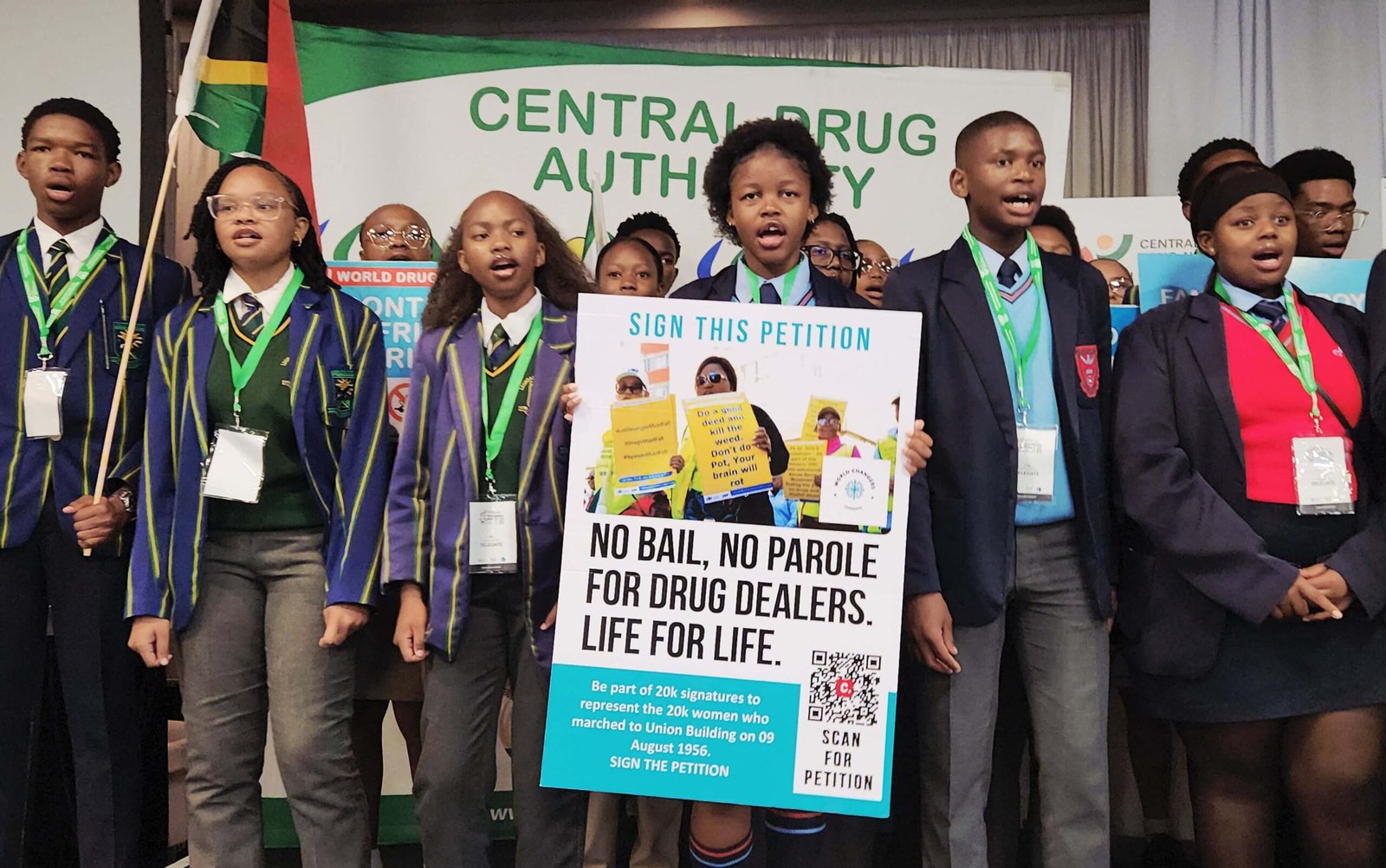
JOHANNESBURG — A sea of learners from Dinwiddie High School, Hoërskool Elspark, and Leondale High filled the Birchwood Hotel and Conference Centre on Wednesday morning, their voices rising in unison to open the two-day Central Drug Authority (CDA) 4th Biennial Summit.
Guided by the World Changer Candidates, a Johannesburg-based anti-drug advocacy NPO, the students delivered ‘Sipho’—a powerful anthem of youth activism that left delegates visibly shaken and set the tone for the summit’s urgent call to action.
‘Sipho’ — an anthem echoing the spirit of youth resistance
Before the meaning could even be unpacked, the learners grounded the auditorium in the brutal simplicity of the song’s central lament:
“Bambulele uSipho mntaka mama, ngesibhamu mntaka mama.”
“They've killed Sipho, my mother’s son ...with a gun.”
A line not meant literally — but symbolically — with the “gun” representing the forces destroying South Africa’s young people today:
drugs, alcohol abuse, predatory dealers, gender-based violence, community neglect, and systemic failure.
Although ‘Sipho‘ is not a re-imagining of Sarafina!’s ‘Sabela‘, its delivery carried the same pulse of urgency and collective defiance rooted in South Africa’s struggle-song tradition.
Dinwiddie High School — already known for its powerful school rendition of “Sabela” — drew on that legacy once more — this time to confront a crisis facing today’s youth.
It’s a parallel the World Changers collective captured sharply:
“Sabela means respond,” one member said. “And that’s what these learners are demanding. A response. Before more Siphos die.”
In that moment, the two anthems speaks to each other across generations. ‘Sipho‘ as a stark metaphor for young lives lost to drugs, broken systems, and community neglect; “Sabela” as the demand for the nation to finally respond.
Watch the learners performing ‘Sipho’ here.
A clarion call from learners: Personal loss fuels youth activism
The powerful musical performance was followed by deeply emotional testimonies—some of the most raw the CDA has heard in years—creating a direct dialogue between artistic expression and personal truth.
One student shared with NOWinSA how substance abuse derailed her young life: “It affected my relationships, my school work and my health,” she said, explaining how she found herself deep in addiction before turning her experience into advocacy. Her new found drive to now help others—“I know how it feels to be trapped”—epitomises the peer-to-peer accountability the summit champions.
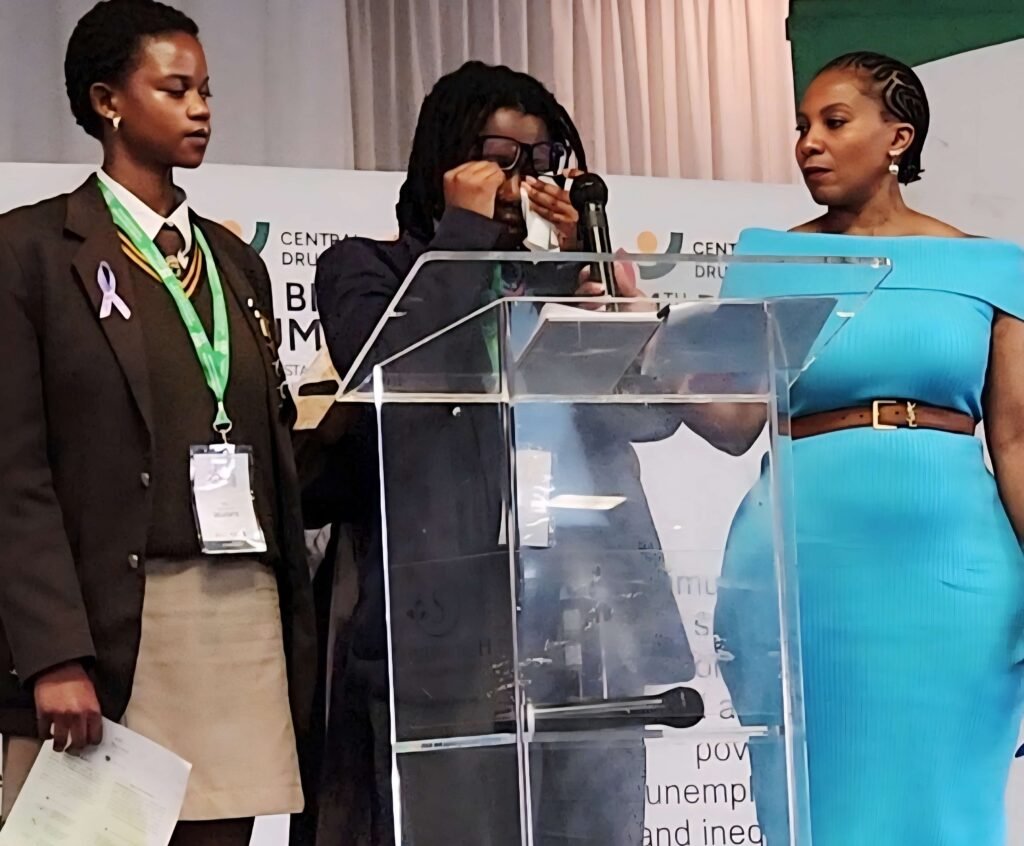
This sense of urgent, personal mission was heartbreakingly clear in the appeal of Grade 11 learner, Aphumelele Sopunzi, who broke down recounting the loss of her brother in a booze-fuelled ‘Pens Down’ party, urging peers:
In a message aimed particularly at young people dealing with peer pressure, she said through tears, “I encourage you to know to say no. Don’t do drugs. Don’t drink just because it’s a nice ‘school gathering or a celebration’ where drugs have become the main issue. I buried my brother because of a pens-down party.”
In a poignant moment that followed, Elspark High learner Mmapitsi Monyela and MC Penny Lebyane were captured on stage offering support to the tearful Sopunzi, embodying the collective compassion her story ignited.
This urgency is what fuels the broader advocacy of learners like Sandile Mkhwanazi from Dinwiddie High. Explaining to NOWinSA the importance of their mission, he says it stems from a simple, powerful awakening: “We realise the magnitude of the drug problem in and around our schools, and decided to take the fight in our own hands, and show our peers that drugs are dangerous and can kill.”
Mmapitsi Monyela added that the activism is purely driven by profound empathy. “It’s not only about us, but our community and fellow [youth] on drugs feeling judged and lonely because other people couldn’t understand them. I’m voicing their concerns on behalf of those people.”
Together, these raw testimonies—of grief, recovery, and resistance—served as a stark counter-narrative to the normalisation of substance use, and reinforced the leadership’s call for tougher penalties on drug dealers and stronger protective measures for the youth.
🔗 Read: Stern Warning Against Deadly Pens Down Parties
🔗 Watch: CDA backs a growing call for harsher penalties
‘Sipho’ — a metaphor for the youth betrayal crisis
In the learners’ narrative, Sipho is more than a boy in a song.
Every teenager swallowed by drugs.
Every sister losing a sibling.
Every mother burying a child. Every community watching another future slip away
He is a reminder that the youth are not dying at random — they are being failed.
And the anthem’s haunting refrain became a mirror, reflecting a crisis that now defines too many South African communities.
🔗 Watch: Defiant Soweto 1976 Youth Spirit Lives On
World Changer Candidates — building a new generation of peer leaders
The three high schools have partnered with the World Changer Candidates, who train young ambassadors in anti-drug advocacy. In their schools and surrounding communities, these learners:
- Lead drug-danger awareness campaigns
- Support affected peers
- Speak at community events
- Advocate for safer youth spaces
- Model drug-free lifestyles
Their work mirrors other youth-led movements across the country, including the inspiring story of Kabelo Mabalane’s sobriety journey at Hoërskool Elsburg.
🔗 Also read: Kabelo Mabalane’s 23-year sobriety milestone brings hope
DSD Deputy Minister links substance abuse to GBVF National Disaster declaration
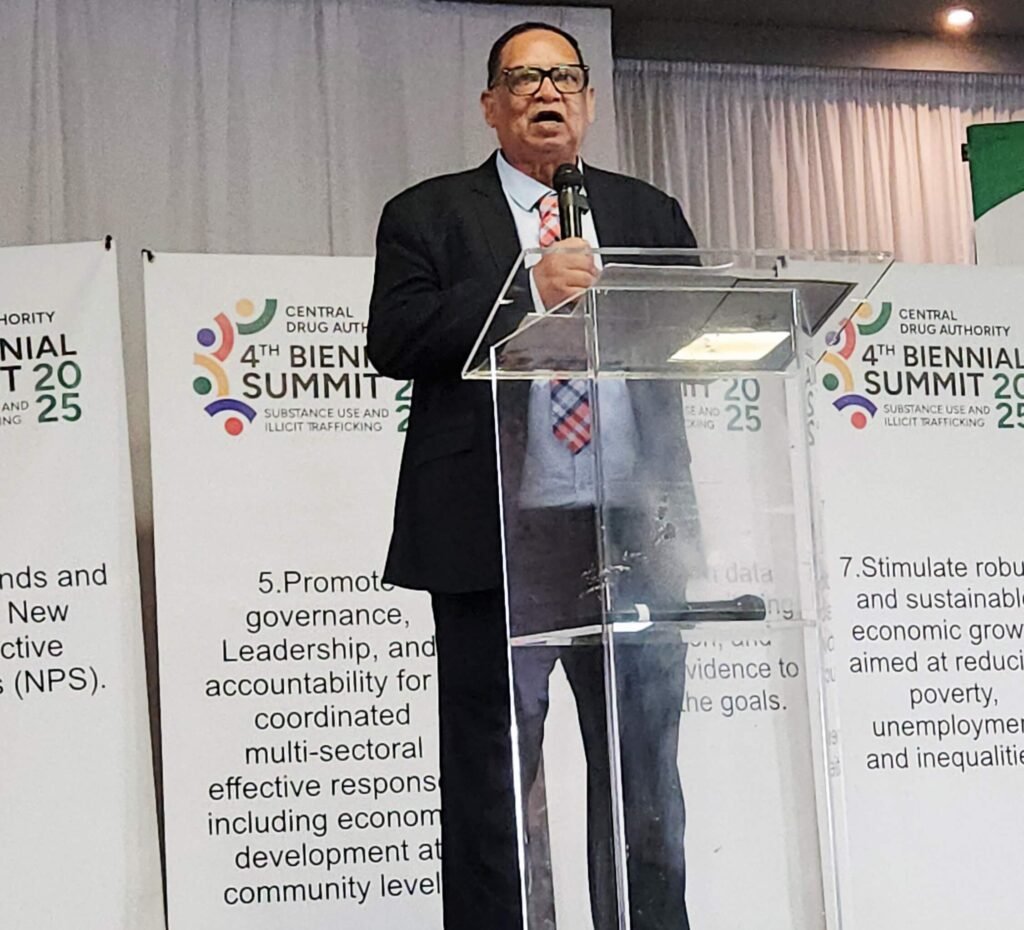
In his keynote address, Deputy Minister of Social Development Ganief Hendricks directly connected substance abuse to the declaration of gender-based violence and femicide (GBVF) as a national disaster.
“We all know that the use of substances, especially alcohol, leads to various social ills, including gender-based violence and femicide,” Hendricks stated.
He stressed the urgency of strengthening the National Drug Master Plan, framing it as central to the “whole-of-society response” required by the national disaster declaration.
His warning came just days after the National Disaster Management Centre granted clearance to classify GBVF as a national disaster, a move officially pronounced by President Cyril Ramaphosa at the G20 Leaders Summit as a ‘national crisis’.
“The president’s highlighting of this is an indication of the need to collaborate and fight against these challenges,” Hendricks said, adding: “I hope that this summit will look at the recommendations and how best the country can collaborate to address these challenges.”
“We all have a role to play in ensuring that all people are and feel safe.
Social Development Deputy Minister Ganief Hendricks
More on the CDA Summit and South Africa’s national policy direction can be found here:
🔗 CDA mandate: CDA 4th Biennial Summit
🔗 DSD official (CDA 4th Biennial Summit) publication: Deputy Minister opens conference
A national call: Respond — before more Siphos are lost
The learners’ message, from the opening song to their final placards, was unmistakable:
South Africa must respond – must sabela.
Not with speeches.
Not with empty promises.
But with real action to protect its children.
Their voices — trembling, angry, determined — signalled a new youth-led anti-drug uprising: a generation refusing to inherit a crisis they did not create.
Long after the music stopped, one message remained — a call for South Africa to sabela, to truly respond, before more mothers lose their Siphos.