

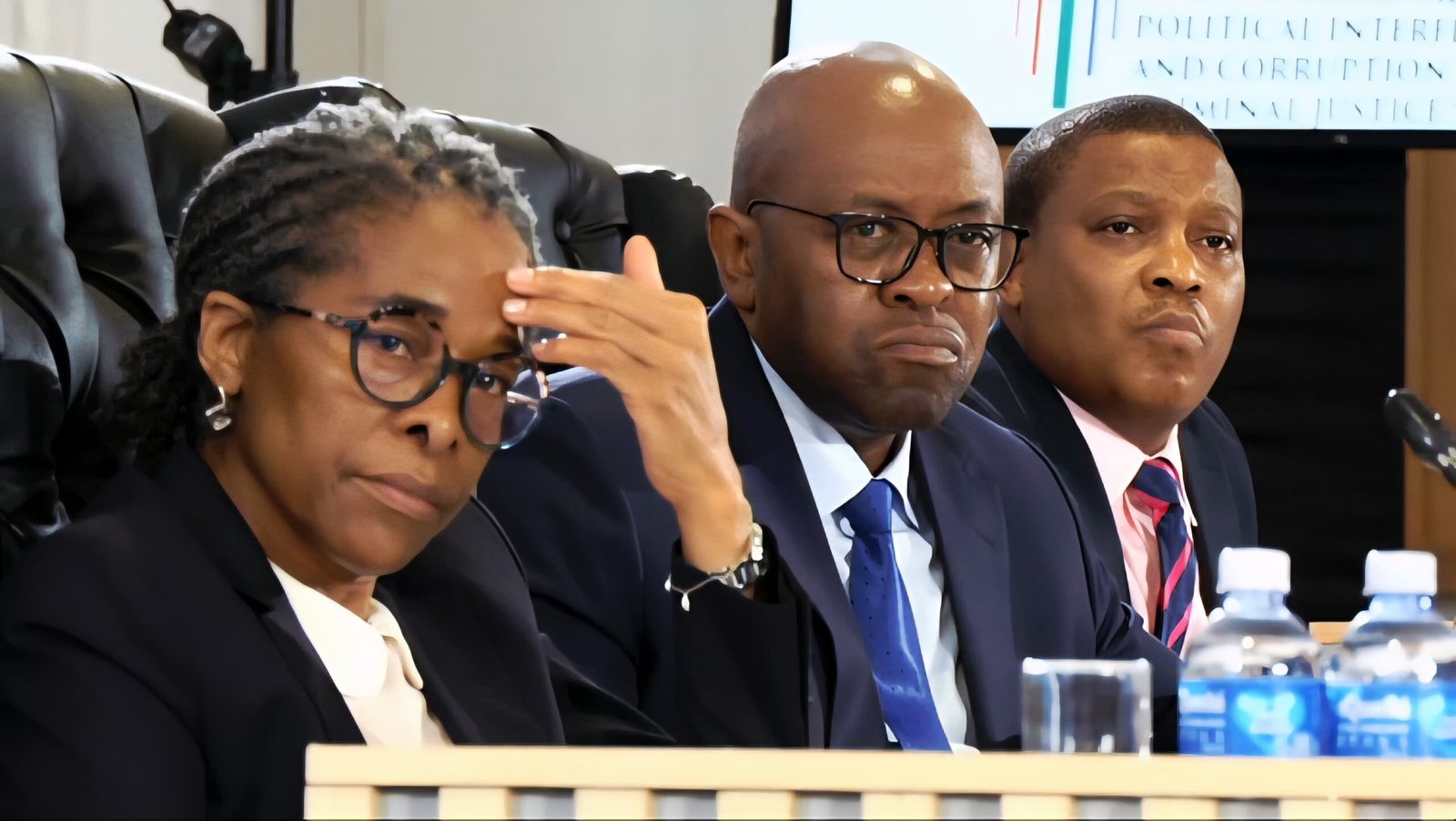
President Cyril Ramaphosa has decided not to release the interim report of the Madlanga Commission of Inquiry — but has simultaneously cleared the way for immediate criminal prosecutions against those implicated.
The Presidency confirmed on Monday that while the interim findings will remain confidential, criminal referrals do not need to wait for either the interim or final report.
Presidency spokesperson Vincent Magwenya said the President is “quite keen” for prosecutions to begin as soon as criminal conduct is identified.
“The president does expect that the commission will also exercise its right or responsibility in terms of referring matters that are deemed to be of a criminal nature for criminal prosecution, and that, by the way, doesn’t have to wait for the interim or final report,” Magwenya said. This directive was highlighted by NOWinSA in the post below.
Why Ramaphosa is blocking the interim report
The Presidency insists the decision is about process integrity, not secrecy.
Magwenya said the interim report contains incomplete and evolving evidence, with several witnesses expected to return to the commission to broaden or clarify their testimony.
“We need to allow the process to be completed,” he said.
The interim report is also intended primarily as a briefing tool for Ramaphosa, who has not followed daily proceedings.
Security concerns have further shaped the decision, particularly after the killing of whistleblower Marius van der Merwe earlier this month.
RELATED: ‘We can’t force protection’ — SAPS explains after Madlanga Commission witness shot dead outside home
Magwenya added that there is no legal obligation for Ramaphosa to release the interim report, calling any legal challenge to force disclosure “frivolous”.
Prosecutions take centre stage
While the interim findings remain under wraps, Ramaphosa’s next move is clear: prosecutions will not wait.
The commission is empowered to refer criminal matters to law enforcement immediately, without waiting for the final report due in 2026.
“The president has undertaken to release the final report publicly when the commission has concluded its work,” Magwenya said.
The commission itself will guide the handling of any sections deemed sensitive to national security in that final document.
To ensure a thorough investigation, the Presidency confirmed that Ramaphosa is open to extending the inquiry’s timeline. However, any such extension would first need to be formally requested by commission chair Justice Mbuyiseli Madlanga and would then be evaluated based on its merits and the associated cost implications.
Backlash warning grows
Opposition parties and civil society groups have criticised the decision to withhold the interim report, arguing it undermines transparency and public accountability.
Political analyst Dr Dale McKinley warned that failing to release the final report would provoke a serious public backlash.
“If the final report is kept under wraps, then there will be massive concerns, rightfully so… There will be an outcry,” McKinley said.
Speaking to SABC News, governance expert Prof. Daniel Meyer said the withholding of the interim report raises serious red flags.
“It puts on a few alarm bells for us that we must look at good governance. All these commissions that the president appoints, it feels like he’s kicking for the sidelines, postponing things all of the times… and I think we need to have a different look at them.\n\n“If you look at the principles of good governance, transparency is some of the foundations of it, and I should say this interim report should also be released even if it’s a draft report.”
Meyer rejected the argument that releasing the interim report could compromise witnesses.
“If you look at the whole commission it was actually in the public… we’ve followed it and the public followed it so far, and there’s been quite serious allegations and discussions from these witnesses and all of the people that were called to the commission.\n\n“So I will say still, even looking at the witnesses and whistleblowers, they are not protected enough in South Africa… many have been killed and it’s not acceptable. And keeping back of the report will not affect that, I don’t think it’s enough reason to say that.\n\n“We need an open and fair government that allows for participation in these processes… there must accountability if people are making a mistake. So it’s very important that we have a draft report available.”
What the Madlanga Commission is probing
Established by Ramaphosa in July 2025, the commission is investigating allegations by KwaZulu-Natal police commissioner Lt-Gen Nhlanhla Mkhwanazi of deep-seated collusion between politicians, police leadership, prosecutors, members of the judiciary and organised crime syndicates.
Testimony has included claims of political interference in police units, protection of drug cartels, advance warnings before raids, and the operation of a powerful Gauteng-based criminal syndicate known as the “Big Five” cartel.
ALSO READ: