


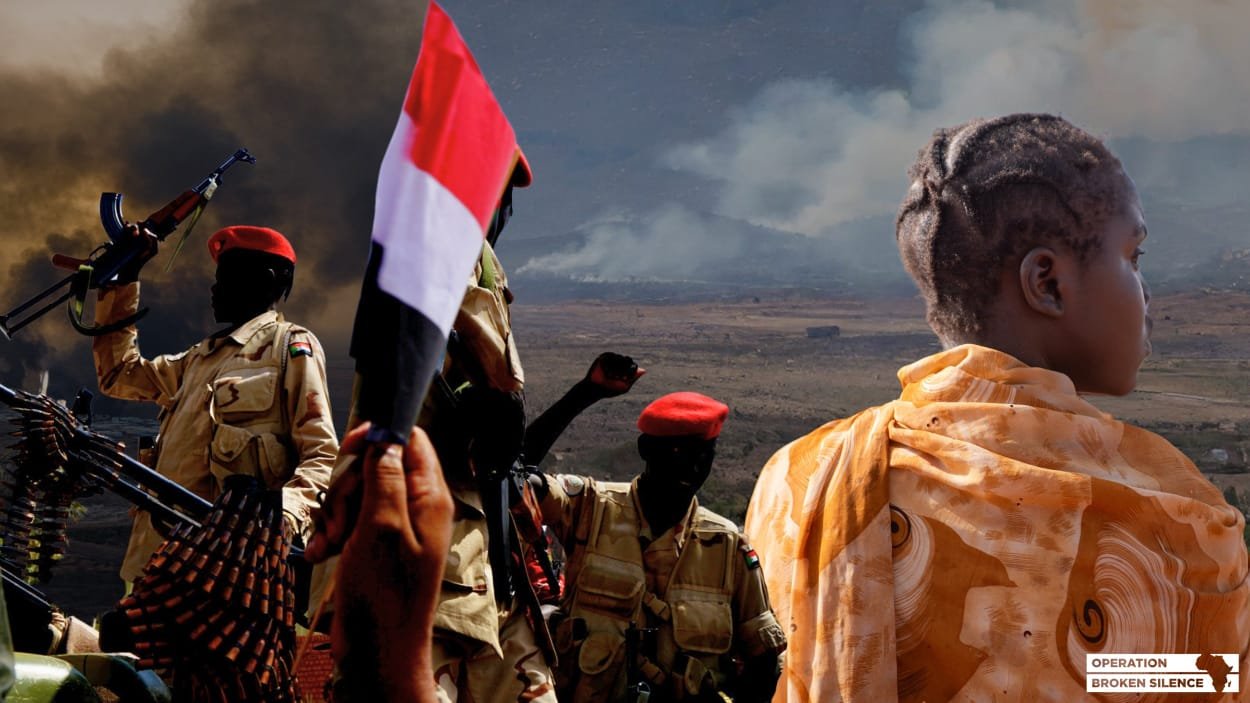
Civilian massacre in Kumo: A “double-tap” strike
The Sudanese army has been accused of killing at least 48 civilians—many of them students from the Hakima Health College—in a drone attack on Sunday in Kumo, a village 10 kilometres east of Kauda. The incident, described by aid workers as “the worst mass killing of innocent civilians” in years, marks the deadliest strike in the Nuba Mountains since the civil war reignited in April 2023.
According to the Sudan People’s Liberation Movement-North (SPLM-N)—which has been engaged in an intermittent conflict with Khartoum since 1983 and is now aligned with the Rapid Support Forces (RSF)—
“This was not a military target, nor an active combat zone … the strike deliberately targeted non-combatants.”
The SPLM-N further accused the Sudanese Armed Forces (SAF) of having “a long history of aerial assaults on civilians in the Nuba Mountains, the Blue Nile, and Darfur,” adding that the attack was “part of a pattern of systematic violence against communities outside the central state’s political and military interests.”
Eyewitness horror
Eyewitnesses told The Telegraph that the first strike drew villagers to the site before a second “tap” hit minutes later, killing many who had come to rescue victims.
Images from the aftermath reportedly show charred remains, destroyed homes, and children lying dead in the open, many with visible trauma injuries.
“The worst mass killing of innocent civilians I have ever heard of,”
— Anthony Jamal, Food Security Coordinator, Sudan Relief and Rehabilitation Agency.
Aid workers warn of ‘new danger’
Johannes Plate, CEO of the South Kordofan Blue Nile Coordination Unit (SKBNCU), described the strike as “very precise and very targeted,” implying that “somebody must have known there were many people there.”
He added that while communities have long dug foxholes and trenches to survive plane bombings, drones pose a far deadlier challenge:
“Unlike planes, drones are barely audible, and by the time one notices the sound, it is often already too late.”
During the 2011 war, SAF’s use of Antonov cargo planes to bomb hospitals and schools killed and displaced thousands. But drones, aid workers warn, have transformed the threat into something far more insidious.
A nation in collapse
Sudan has been locked in civil war since April 2023, when power struggles between Gen Abdel Fattah al-Burhan and his former deputy, Gen Mohamed Hamdan Dagalo (Hemedti), erupted into full-scale fighting.
The conflict has forced more than 14 million people to flee their homes, while estimates put the death toll at 400,000. The UN has called the situation “the world’s worst humanitarian crisis.”
Adding to the tragedy, famine conditions have been confirmed in Al Fasher and Kadugli by The Integrated Food Security Phase Classification (IPC), where SAF sieges have cut off food and medical supplies to hundreds of thousands.
Strategic war zones and oil interests
The Kordofan states—home to Sudan’s main oil fields—act as a buffer between Darfur and eastern Sudan. According to the Ayin Network, the army’s current objective is “to seize control of the oil-rich region as an entry point into the Darfur region, controlled by the RSF.”
Recent clashes in Kartala, Habila, around 120 km from Kauda, highlight how the epicentre of the war continues to shift eastward, drawing new communities into the crossfire.
Calls for Justice and Accountability
As atrocities multiply, international pressure mounts for justice. An ICC case has been filed against Port Sudan’s leadership for alleged war crimes, as survivors continue to endure unimaginable trauma in one of the world’s most brutal conflicts.
FOR RELATED COVERAGE: