

South Africa’s fuel crisis is no longer limited to price shocks — it is now unfolding into a supply and availability challenge across major metros, with disruptions reported in Tshwane, Durban, Cape Town and Johannesburg.
The strain comes despite government’s R3 per litre temporary fuel levy relief, introduced to cushion motorists from April’s sharp increases. While the intervention has softened the price blow, availability constraints and panic buying are now emerging as a secondary crisis.
Earlier projections in April fuel shock forecasts warned of severe disruptions driven by global oil supply shocks — a scenario now playing out on the ground.
Tshwane: bus services disrupted as depots run dry
The most visible impact so far has been on public transport, with the Tshwane bus fuel crisis disrupting commuter mobility.
All major depots ran out of fuel earlier this week, forcing a significant reduction in services.
Fewer than half of scheduled bus shifts have been operational, with contingency measures prioritising essential services such as electricity, water and emergency response.
The situation underscores how fuel availability is now directly affecting municipal service delivery.
Cape Town: Western Cape government urges calm
In the Western Cape, authorities have moved quickly to contain concern as demand rises and isolated shortages emerge.
“There is sufficient fuel supply in the system. We urge residents not to panic buy, as this places unnecessary pressure on distribution networks.”
Officials stress that supply remains stable overall, with current disruptions largely driven by consumer behaviour and short-term logistical delays.
Cape Town’s response has focused on clear communication and demand management, aiming to prevent escalation.
Durban: supply chain strain and early price pressure
Durban, a key entry point for fuel imports, is experiencing distribution pressure linked to logistics and rising demand.
While fuel shipments continue to arrive, inland distribution is being affected by:
- Increased holiday demand
- Transport bottlenecks
- Rebalancing of supply across regions
In addition, there are emerging reports that some petrol stations in and around Durban have already begun inflating prices, raising concerns about opportunistic pricing behaviour amid the current uncertainty.
Although not yet widespread, these early signs point to market pressure at retail level, where demand spikes and supply anxieties can quickly translate into higher costs for motorists.
Durban’s position as a critical supply node means these developments could have knock-on effects inland if distribution constraints persist.
Johannesburg: limits emerge as pressure builds unevenly
In Johannesburg, the situation is more fragmented.
Some petrol stations in the inner city and along the R59 have begun limiting diesel sales, restricting customers to 30 litres per purchase.
The Department of Mineral and Petroleum Resources maintains that there is no national fuel shortage, urging motorists not to panic-buy.
Yet on-the-ground signals suggest mounting pressure.
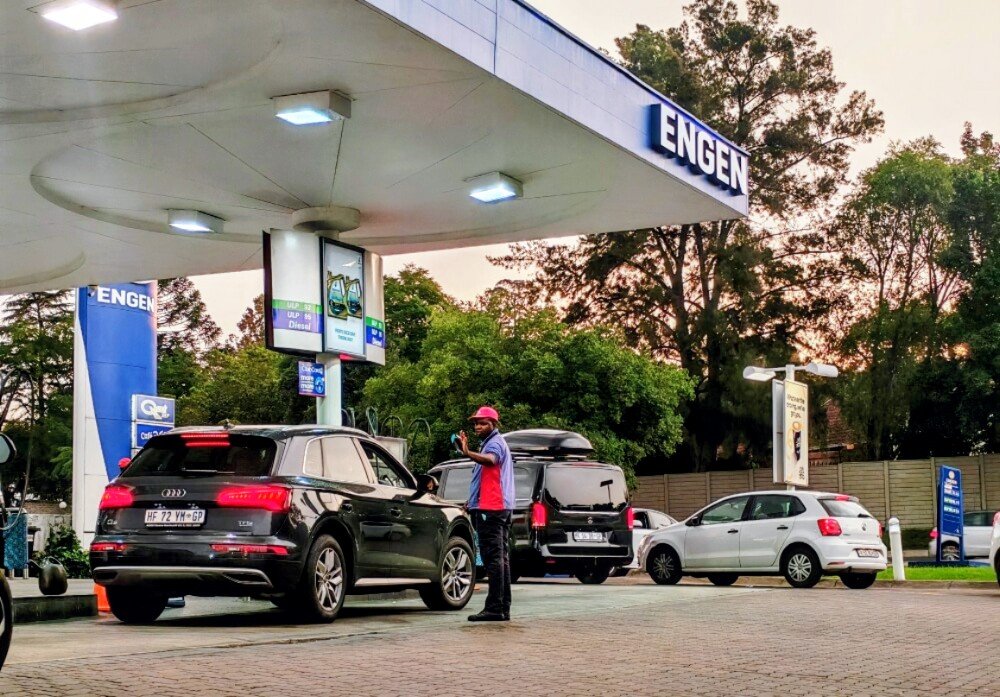
At an Engen garage on Witkoppen Road, a petrol attendant told NOWinSA — speaking off the record — that limits were being considered in response to unusual demand patterns.
“We are seeing customers filling multiple containers. That’s why limits are being considered.”
Consumers expressed uncertainty about what lies ahead, even as official assurances continue.
Fourways to Bryanston: calm on the surface
In contrast, parts of northern Johannesburg remain relatively unaffected — at least for now.
At petrol stations along Witkoppen Road in Fourways and into Bryanston, including Astron Energy and Engen sites visited by NOWinSA, the mood is notably subdued.
Cars move in and out with ease, queues are minimal, and there are no visible signs of panic buying.
The contrast is striking: while some parts of the city are beginning to impose limits, others remain calm — highlighting how unevenly the fuel strain is unfolding.
From price shock to supply stress
The current situation marks a rapid escalation from price pressure to availability concerns.
Just weeks ago:
- In February, petrol prices dropped by 65 cents and diesel by up to 57 cents
- In March, modest increases returned, with petrol rising by around 20 cents and diesel by up to 65 cents
April’s surge — even after the R3 levy relief — represents a sharp shift in both scale and impact.
Government response and supply assurances
Government has reiterated that South Africa has sufficient fuel stocks, attributing disruptions to:
- Panic buying
- Localised shortages
- Distribution delays
Motorists can monitor updates via the Central Energy Fund’s daily fuel data.
A system under pressure
With travel demand rising, the coming days will test:
- Supply chain resilience
- Consumer behaviour
- The effectiveness of intervention measures
For now, the national picture remains uneven — from disruption in Tshwane to calm pockets in Johannesburg.
The message to motorists is clear:
avoid panic buying, plan ahead, and expect continued volatility.