

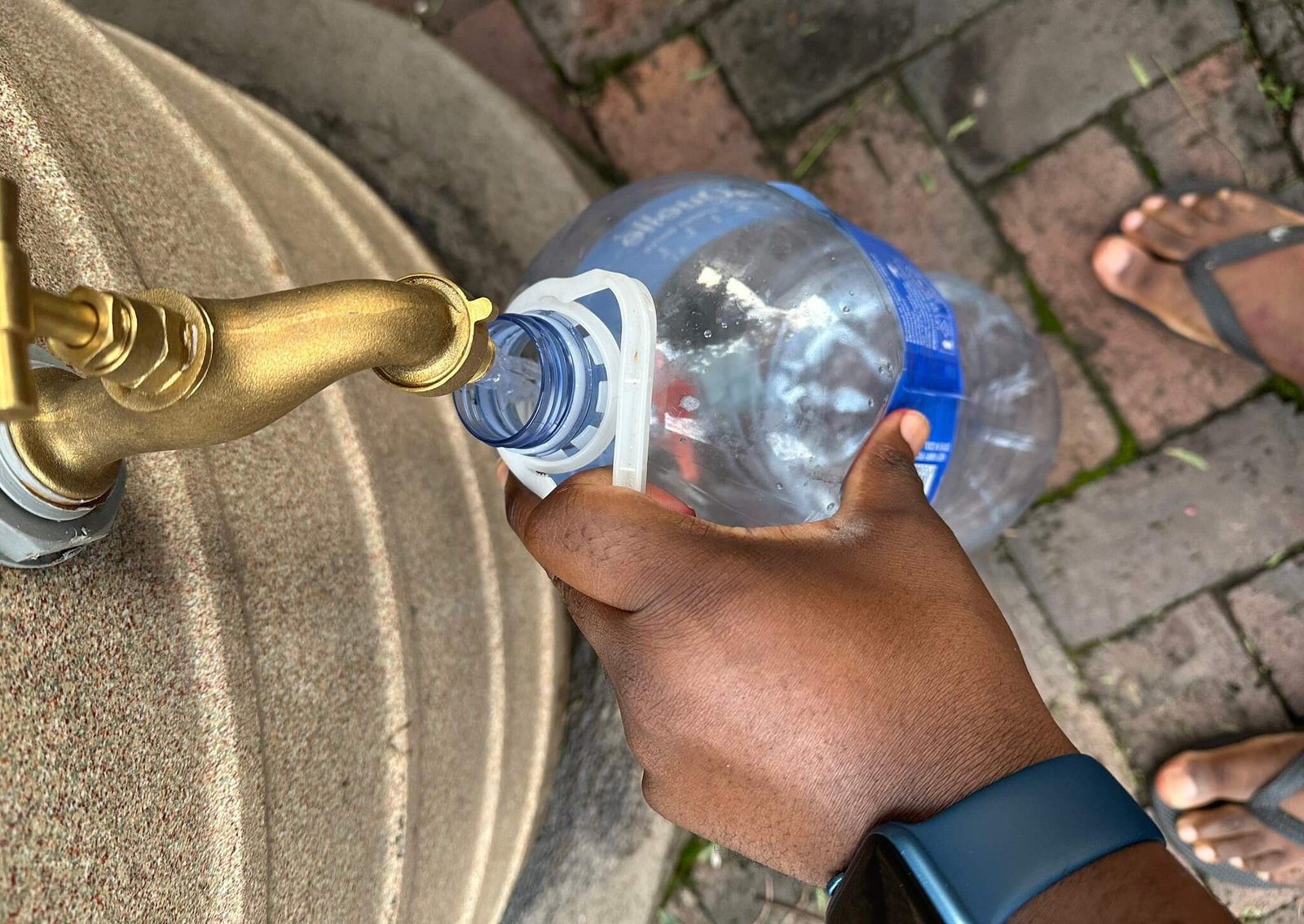
Johannesburg Water has issued an urgent warning to residents in parts of the city, including the CBD and Bezuidenhout Valley, not to drink tap water following reports of a “strong and unusual smell.” The utility has initiated precautionary flushing and laboratory tests, but until results are clear, the directive stands: do not consume.
The warning brings to the forefront ongoing concerns about South Africa’s water security, echoing recent revelations of a deepening municipal water debt crisis where government entities owe billions. This local incident is not isolated, but a symptom of a wider national emergency in water provision and safety.
RELATED: Johannesburg water debt crisis deepens: government entities now owe R636 million
Expert Advice From WaterCAN
Jonathan Erasmus, Communications Manager for the water-advocacy group WaterCAN, says the issue was detected through earlier citizen testing that revealed widespread bacterial contamination.
This was the results of their Annual Citizen Science Water Testing Week in September 2025 (Report), which revealed unsafe drinking water in eight municipalities across South Africa. The tests, conducted by community volunteers, found contamination in taps and household storage tanks meant to be safe, alongside severely polluted rivers.
“What we found from that report is that we’ve got a serious water crisis in our rivers, dams and several taps. We found that a bacterial load was very high across these spectrum, and this impacts not only health and confidence in the water system,” Erasmus told SABC News.
He noted that Johannesburg Water acted swiftly once the smell was reported:
“This latest crisis goes to show that we do have a crisis in the provision of potable water. What is positive about this is that Johannesburg Water did launch precautionary measures and isolated where the fault is. This is what we at WaterCAN are for — if we find something problematic with the water, we immediately request municipalities or water service authorities to issue those notices.”
Erasmus said Albertina Sisulu Road and nearby streets — 6th to 10th Streets — remain most affected.
When asked how residents can protect themselves, he emphasised practical safety:
“Boil the water — that’s the quickest, surest way to get rid of any kind of bacteria that may be sitting in there. Also rely on your senses; if it smells funny, if it looks funny, it probably is funny. Boil the water, make sure it’s as clean as possible, and try to find alternative sources until you get notified that your tap is back to normal.”
Safety Checklist for Residents
To stay safe during this period of uncertainty, follow these guidelines:
- Do not drink: Avoid drinking water directly from the tap, even if it looks clear.
- Boil everything: If you must use tap water for brushing teeth, washing dishes, or cooking, bring it to a rolling boil for at least one minute and let it cool before use.
- Use alternative sources: Utilize the roaming water tankers provided by Johannesburg Water for drinking and cooking needs.
- Monitor for symptoms: If you have consumed tap water and feel unwell (nausea, stomach cramps, or diarrhea), seek medical attention immediately.
- Stay informed: Follow official updates from Johannesburg Water and WaterCAN for the results of the microbiological tests.
Johannesburg Water confirms that affected pipelines have been isolated and flushed, but the “Do Not Drink” advisory remains in place until laboratory results certify the water as safe.
ALSO READ: Free electricity for Joburg residents: How to apply before July 31 deadline
A National Crisis
This alarming incident in Johannesburg is a stark microcosm of a national emergency, severely eroding public trust in an essential service. It follows a well-documented pattern of systemic failure, underscored by challenges like the R636 million water debt crisis owed to Johannesburg Water by other government entities—a financial hemorrhage that cripples infrastructure maintenance and crisis response.
While Johannesburg Water scrambles to fix this specific fault, experts warn that the solution demands more than isolated repairs; it requires a fundamental overhaul, sustained investment, and radical transparency. The crisis is national in scope.
“The data suggests contamination is widespread, driven by failing wastewater systems—a crisis that has previously sparked cholera scares in other parts of the country,” said Nomsa Daele, WaterCAN’s Citizen Science Coordinator.
This assessment is echoed by Professor Anja du Plessis, a water management expert and Associate Professor at Unisa who analysed the citizen science findings. She identified worrying, consistent trends across every province.
“In Limpopo, for example, all four sampled sources – a tap, a river and two other domestic sources in Waterberg and Mopani – were unsafe,” Daele confirmed, highlighting the pervasiveness of the problem.
Professor du Plessis’s analysis paints a dire picture: “The data shows that no province is spared, with almost all tested surface water resources having unsafe water quality. This supports what we have been warning about for decades – our rivers and dams have become open sewers, contaminated with chemical pollutants and sewage.”
The crisis is equally acute at the municipal level. In December, WaterCAN raised an urgent alert in Tulbagh, Western Cape, following community reports of changed water quality and health concerns. Preliminary tests supported by the organisation showed three tap-water samples testing positive for total coliform bacteria, a clear indicator of potential contamination. “When test results show the presence of coliform bacteria it is a clear red flag. Safe drinking water is a constitutional right,” a WaterCAN representative stated, calling on the Witzenberg Municipality for immediate action.
Thus, the unusual smell in Johannesburg taps is not an anomaly but a symptom. It is the localised manifestation of a nationwide collapse in water governance, where financial dysfunction, aging infrastructure, and pollution converge to threaten the most basic public health safeguard.
RELATED: WaterCAN citizen tests reveal unsafe drinking water in eight municipalities across South Africa
© NOWinSA | Stories Shaping South Africa Today