

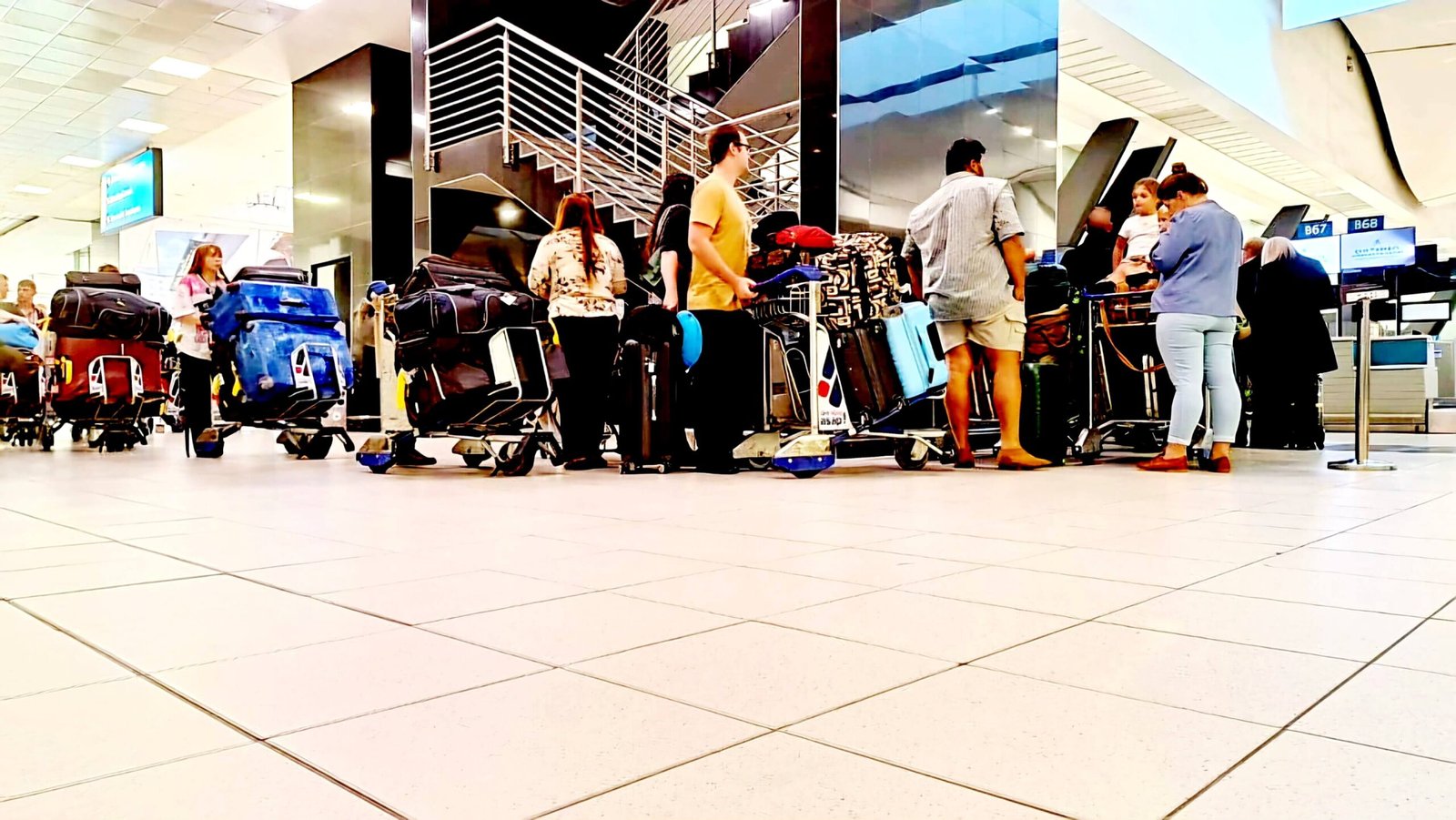
In a move that has sharply escalated SA tensions with the United States, South African authorities have raided a Johannesburg office processing American refugee applications, arrested seven Kenyan nationals for immigration violations, and initiated their deportation.
The operation, confirmed in an official media statement released on Monday, December 7, 2025 by the Department of Home Affairs, has triggered a furious response from Washington and deepened a diplomatic crisis already defined by trade punishment, ambassadorial expulsions, and President Donald Trump’s unsubstantiated claims of a so-called “white genocide” in South Africa.
A “routine” raid or targeted interference?
According to Home Affairs, the operation was a “routine, lawful” enforcement action carried out after intelligence revealed that several Kenyan nationals had entered South Africa on tourist visas and were illegally employed at a centre processing applications for so-called “refugees” to the United States.
“This was despite the fact that earlier visa applications for Kenyan nationals to perform this work had been lawfully declined by the Department,” Home Affairs said.
During the operation, seven Kenyan nationals were found working in clear violation of their visa conditions. They were arrested, issued with deportation orders, and banned from re-entering South Africa for five years.
The department stressed that no US officials were arrested, the site was not a diplomatic facility, and no members of the public or prospective ‘refugees’ were harassed. It framed the operation as part of a broader crackdown on long-standing abuse of South Africa’s immigration and visa system, which has seen deportations dramatically intensify over the past 18 months.
However, a CNN investigation reported that two US government employees involved in refugee interviews were briefly questioned and released during the operation — a detail that has become a flashpoint in the growing dispute.
Washington reacts with fury
The US State Department condemned the operation as unacceptable interference. Principal deputy spokesperson Tommy Pigott said the US was “seeking immediate clarification from the South African government” and expects “full cooperation and accountability”.
“We’ll have more to say once all the facts are confirmed, but the Trump Administration will always stand up for US interests, US personnel, and the rule of law,” Pigott said.
“Interfering in our refugee operations is unacceptable.”
The refugee programme at the centre of the dispute stems directly from Trump’s fixation on South Africa’s white minority. Earlier this year, his administration slashed the US refugee ceiling from 125,000 to just 7,500 — directing that the majority of those places be reserved for white South Africans, or Afrikaners.
The policy is based on Trump’s repeated claims that “a genocide is taking place” in South Africa and that “White farmers are being brutally killed and their land confiscated.” Those claims have been rejected by South African authorities, major Afrikaner organisations, and independent investigations. CNN itself has found no evidence to support the genocide narrative.
A relationship already in freefall
The Johannesburg raid is the latest flashpoint in a relationship that has deteriorated rapidly throughout 2025.
In February, Trump froze all US aid to South Africa while formally launching the Afrikaner refugee programme.
In March, Washington expelled South Africa’s ambassador, Ebrahim Rasool, after he accused the Trump administration of promoting “white victimhood”.
In May, what was meant to be a diplomatic reset during President Cyril Ramaphosa’s White House visit turned into a public humiliation, when Trump dimmed the Oval Office lights to show Ramaphosa a video montage supporting his false genocide claims — footage later revealed to include scenes from the Democratic Republic of Congo:
By July, the US had imposed 30% tariffs on South African exports, dealing a heavy blow to the economy:
👉Trump Tariffs Hit South Africa Hard as Ramaphosa Scrambles to Contain the Fallout
👉 Inside Trump Trade Bombshell: Why South Africa is Facing 30 Tariffs and What Comes Next
And in November, the United States boycotted the G20 summit hosted by South Africa and excluded the country from future participation — an unprecedented move in the forum’s history.
Broader implications beyond visas
The diplomatic rupture runs deeper than a single immigration raid. Washington has grown increasingly hostile toward Pretoria over its close ties with Russia and China through BRICS, as well as South Africa’s genocide case against Israel at the International Court of Justice.
Analysts warn the standoff could reshape US engagement not only with South Africa, but with the African continent more broadly — a concern amplified by Trump-era policies such as proposed restrictions on foreign students, which critics describe as collective punishment of Africa.
Pretoria holds the line
Home Affairs has defended the operation as a clear demonstration of enforcing “the rule of law without fear or favour”, adding pointedly that no individual or entity is above South African law.
At the same time, the department noted that “the presence of foreign officials apparently coordinating with undocumented workers naturally raises serious questions about intent and diplomatic protocol”.
Formal diplomatic engagements with both the United States and Kenya are now under way. But with trust already badly eroded, the arrests over visa violations risk pushing US–South Africa relations even closer to a breaking point — with consequences that may be felt far beyond Pretoria and Washington.