

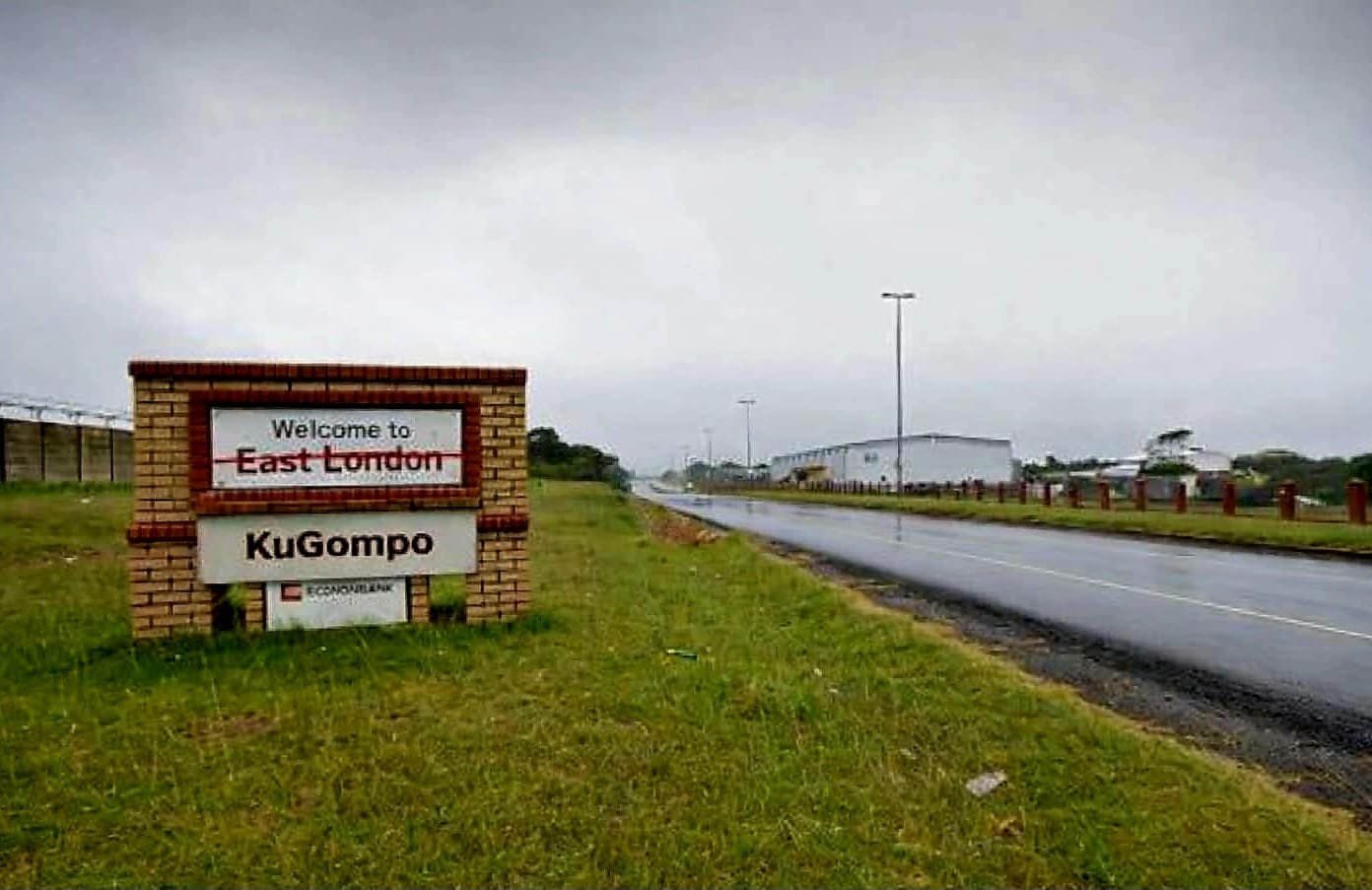
East London has officially been renamed KuGompo City, following ministerial approval and gazetting by the Department of Sport, Arts and Culture in February 2026. The decision forms part of 21 geographical name changes approved across the Eastern Cape and KwaZulu-Natal, aimed at transforming South Africa’s colonial-era naming landscape and restoring indigenous cultural heritage.
The approval was signed off by the Minister of Sport, Arts and Culture, Gayton McKenzie, after recommendations from the South African Geographical Names Council (SAGNC). All approved names are currently being processed through formal publication in the Government Gazette, after which they become legally binding.
Why East London was renamed
The name East London was imposed in 1847 during British colonial expansion, reflecting imperial geography rather than local history or indigenous identity.
The newly approved name, KuGompo, holds deep cultural meaning for the amaXhosa people. It is derived from Gompo Rock (commonly known as Cove Rock), a sacred ancestral site along the coastline. The name originates from the sound of waves crashing against the rocks — “ku-gompo” — and has long been associated with the area in oral history.
Supporters argue that restoring indigenous place names is a form of symbolic reparation and an important step toward correcting historical imbalances embedded in South Africa’s geography.
How the name change process works
Renaming a city in South Africa follows a legislated, multi-stage process overseen by the SAGNC and the Department of Sport, Arts and Culture.
For East London, the process included:
- Prioritisation by the Eastern Cape provincial government
- Public consultations held during March and April 2025
- Engagement with residents, traditional leaders, historians and business forums
- Evaluation by the SAGNC for historical accuracy, linguistic integrity and duplication
- Final ministerial approval
Once published in the Government Gazette, there is a 30-day period during which formal written objections may be submitted before the name becomes fully enforceable across all state institutions.
Why it’s called KuGompo City
One of the main procedural challenges involved duplication.
The name KuGompo already exists as a smaller settlement elsewhere in the Eastern Cape. National geographical naming standards prohibit identical place names within the same province. To resolve this, authorities approved the amended designation KuGompo City, distinguishing the metro from the existing village.
KuGompo vs eMonti: The naming debate
While many residents welcomed the change, others favoured eMonti, the commonly used isiXhosa name for East London.
However, historians and linguists advised that eMonti is derived from the Afrikaans word “mond” (river mouth), rather than an indigenous pre-colonial term. In contrast, KuGompo was supported for its deeper historical roots and ceremonial significance.
Part of a broader National shift
The renaming of East London forms part of a wider national programme to transform South Africa’s geographical naming system.
Other notable approvals include:
- Graaff-Reinet, renamed Robert Sobukwe Town, honouring the Pan Africanist Congress founder born there
- Aberdeen, renamed Xamdeboo
- Barkly East, renamed Ekhephini
- Barkly Pass, renamed Mbombo Pass
According to the Department, these changes advance social cohesion and align with the spirit of the Truth and Reconciliation Commission (TRC) by restoring dignity and recognising indigenous heritage.
Further details are outlined in the official government release:
Minister McKenzie advances Transformation through approval of 21 Geographical Name Changes
Economic and practical implications
While the name changes are largely symbolic, they also carry real-world consequences:
- Businesses may need to update signage, branding and legal documentation. Municipal systems, banks and deeds offices must align official records, while emergency services and digital platforms such as mapping applications typically take six to 18 months to fully integrate new place names.
Related context on digital mapping transitions can be found here:
How digital maps adapt to place name changes
Opposition parties have raised concerns about economic impact and consultation processes, indicating that some residents may still lodge formal objections.
What residents need to know
Once the name is officially gazetted:
- Residents and organisations have 30 days to submit written objections
- Objections must address procedural or consultation-related issues
- After this period, KuGompo City becomes the legally recognised name
The Department has confirmed that the full list of approved geographical names will be released once publication in the Government Gazette is complete.