

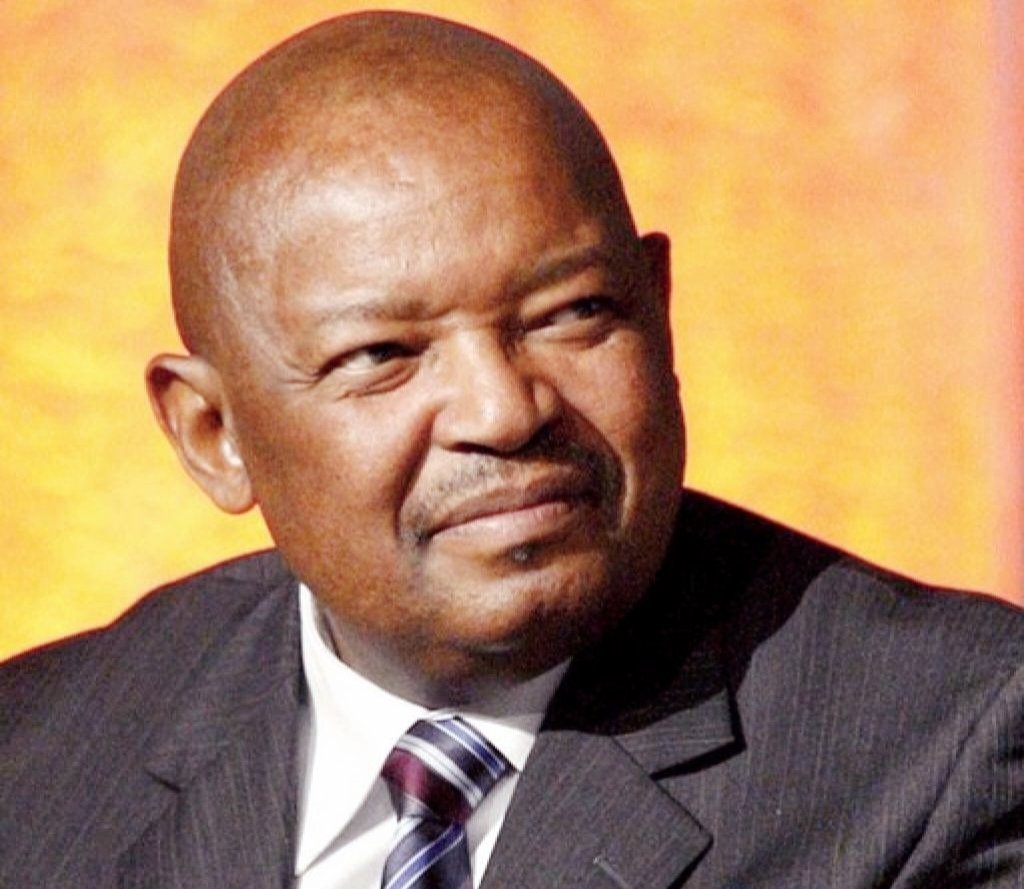
The passing of Mosiuoa “Terror” Lekota marks the end of a political life that mirrored South Africa’s long journey toward democracy.
Freedom fighter. Robben Island prisoner. Premier. Defence Minister. Party founder. Constitutional dissenter. Lekota carried many roles across five decades of public life. Beyond titles, he will be remembered for a stubborn commitment to principle — even when it carried political cost.
COPE spokesperson Pakes Dikgetsi confirmed his death in the early hours of the morning.
“We can confirm that Mr Lekota sadly passed away in the early hours of this morning,” Dikgetsi said. “Lekota has been battling an illness for quite a number of years, even before his announcement that he’s stepping back which the party accepted. He’s been in and out of hospitals and it is with a profound sense of sadness that we confirm that he passed away.”
Lekota had stepped back from active politics last year to focus on his health.
Born in Kroonstad in the Free State, his political consciousness emerged early. He was expelled from the University of the North because of his involvement in the Student Representative Council and the Black Consciousness Movement. As the elected Permanent Organiser for the South African Students’ Organisation (SASO), he was imprisoned on Robben Island in 1974. After his release in 1983, he became one of the accused in the 1985 Delmas Treason Trial and was jailed again.
His life was shaped first by resistance — and later by the responsibility of helping build the democratic state that followed.
Here are seven things we won’t forget.
1. “Terror” started on the soccer field
The nickname that followed him for life had humble beginnings. As a young footballer, Lekota was known as a relentless striker — a “terror” for defenders.
Over time, the name took on a deeper meaning. It came to symbolise his defiance, first against apartheid, and later against political complacency.
Health Minister Dr Aaron Motsoaledi recalls the impact Lekota had on young activists after his release from prison in 1982.
“At the time when he was released from Robben Island, I was the President of the SRC at the University of Natal Medical School,” Motsoaledi said in an interview with Newzroom Afrika. “We were very eager to hear what was going on… where is Mandela, what is he saying? Nobody had seen Mandela in real life.”
Lekota, he added, addressed packed halls and smaller activist sessions that stretched late into the evening.
“He was a very, very powerful and charismatic speaker,” Motsoaledi remembered.
2. Robben Island did not silence him
Imprisoned in 1974 for his political work with SASO, Lekota spent years on Robben Island during one of apartheid’s harshest periods.
His release did not signal retreat. Instead, he returned to activism and soon found himself among the accused in the Delmas Treason Trial (1985–1988), one of the most significant political trials of the era. He would spend four more years behind bars.
Those years cemented his place among struggle veterans who paid a personal price for the freedoms later protected by the Constitution.
3. From resistance to governance
After 1994, Lekota moved from liberation politics into state governance.
He became the first Premier of the Free State, later chaired the National Council of Provinces, and in 1999 was appointed Minister of Defence.
In that role, as Dikgetsi goes on to explain, he helped transform the apartheid-era military into a democratic National Defence Force — repositioning it as an institution accountable to all citizens. South Africa’s expanded peacekeeping role on the continent formed part of that broader reorientation.
It was a profound transition: from political prisoner to Cabinet minister.
4. He walked away from the ANC at a pivotal moment
In 2008, following internal divisions after Jacob Zuma’s rise to leadership, Lekota made a defining decision — he left the ANC and co-founded the Congress of the People (COPE).
The break occurred during one of the ANC’s most turbulent periods, fractures that would reverberate for years and contribute to later electoral shifts — including the party’s loss of its national majority in 2024, as explored in this analysis of the 2024 election results and Zuma’s political re-emergence.
For Lekota, the departure was framed as a matter of principle and constitutional fidelity. COPE’s electoral fortunes declined over time, but he never publicly renounced the decision.
5. A constitutional purist in Parliament
In his later years, Lekota became known for rising on “points of order,” often holding a pocket-sized Constitution. He framed his politics around rule of law and institutional accountability.
In a country where questions about political interference in state institutions have surfaced repeatedly — including debates around alleged meddling within the police service (see: claims of systemic political meddling in SAPS) — Lekota consistently returned to constitutionalism as his guiding compass.
Even those who disagreed with him often acknowledged his personal reputation.
“You were an upright man — we never heard of corruption next to your name,” one tribute read.
6. A firm believer in non-racialism
Lekota described himself as a committed Charterist, rooted in the Freedom Charter’s declaration that South Africa belongs to all who live in it.
That belief shaped his discomfort with policies he felt leaned too heavily on race and informed his view of the democratic state as something that must serve all citizens equally.
South Africa has often paused to honour figures whose contributions rise above party politics. It’s part of the country’s democratic culture — recognising service and sacrifice even across political divides. Lekota’s legacy fits within that broader tradition of shared national memory.
7. His outspoken stance on illegal immigration
In his later political years, Lekota adopted a firm position on illegal immigration. As Lucas Mahlakgane — founder of the World Changers Candidate — recalled in a side interview with NOWinSA, Lekota believed South Africa must prioritise its citizens.
“He argued that South Africa must prioritise its citizens,” Mahlakgane noted, and called for the arrest and deportation of undocumented foreign nationals.
“You don’t have to shoot them or kill them,” Lekota said in an interview. “You just have to arrest them and take them to their countries and then it’s done.”
He linked border control to crime prevention and state accountability. The position was divisive, but it remained a consistent part of COPE’s policy platform.
Tribute from the presidency
The cross-party respect Lekota earned was reflected in messages from across the political spectrum.
Per an X post shared below, President Cyril Ramaphosa described their long history of political activism and offered condolences:
“Mosiuoa Terror Lekota and I have a long history of political activism. We met at university, and we were both expelled due to our political activism. We met again when we’re both involved in the ANC, and he became a minister in our government. Despite political differences that are common in political lives, I continued to have deep respect for him.”
The President fondly remembered Lekota as “a committed South African who loved his country and I will continue to honour him. My deepest condolences go to his family and loved ones.”
The tribute underscores that disagreement in politics did not erase shared history or mutual recognition of service — a theme often reflected in reporting by NOWinSA and across South Africa’s political culture.
A life intertwined with South Africa’s democratic story
From student activism and expulsion at university, to Robben Island, to provincial leadership and national Cabinet office, and finally to opposition politics — Lekota’s life moved in rhythm with the country’s transformation.
He was admired, criticised, sometimes challenged — but rarely ignored.
His passing closes a chapter in South Africa’s political narrative. What remains is the imprint of a man who argued fiercely, believed deeply, and never quite stopped insisting that principle should matter.
That, above all, is something we won’t forget.
ALSO READ: President Ramaphosa mourns the death of SA dance icon Johaar Mosaval