

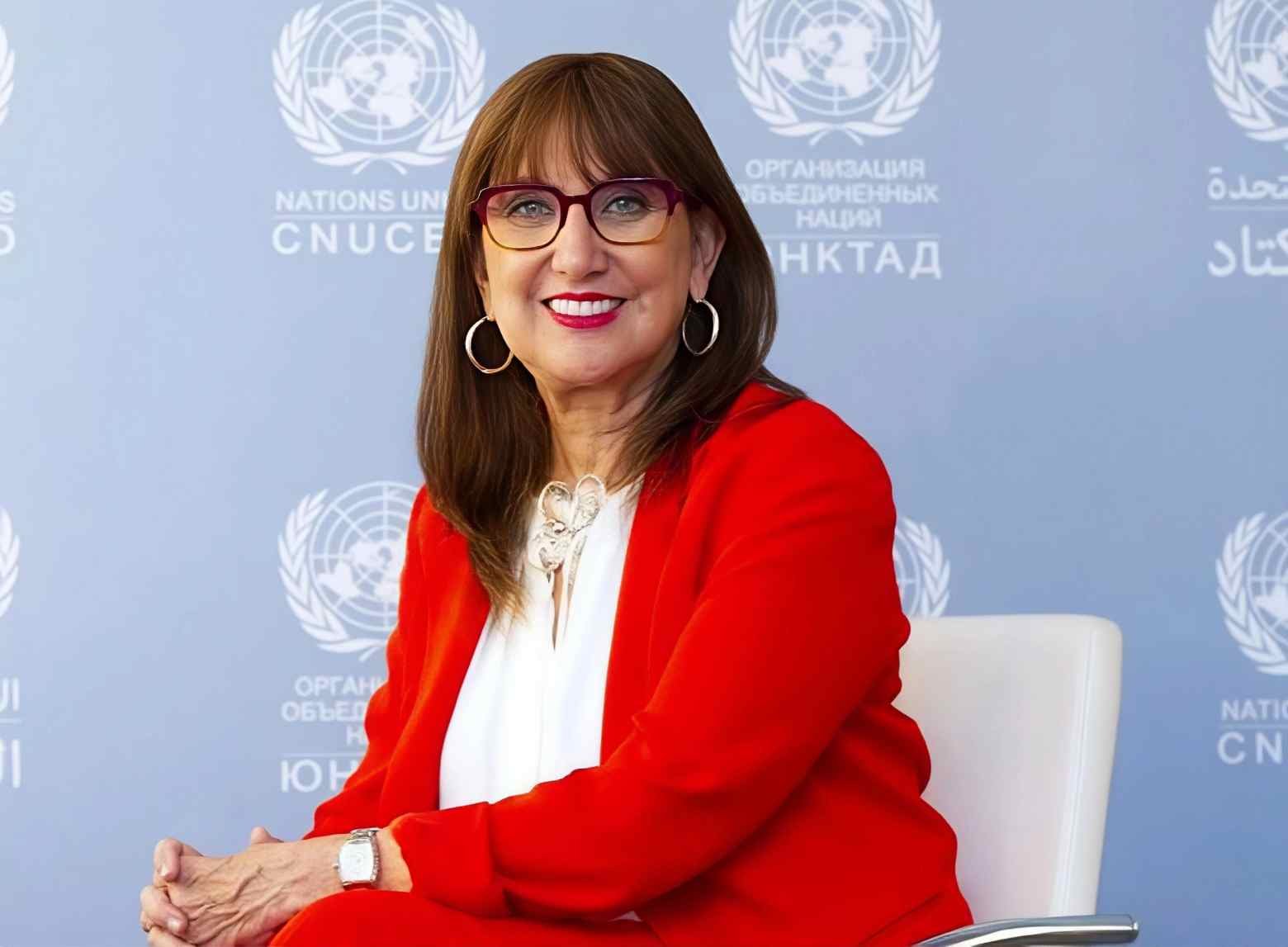
As the UN Security Council prepares to hold its tenth straw poll on Monday to select the next Secretary-General of the United Nations, Costa Rica has found itself at the centre of a glaring diplomatic paradox.
The controversy threatens to undermine international confidence in its frontrunner, Rebeca Grynspan.
At a time when San José is navigating the corridors of New York to persuade member states of Grynspan’s suitability to lead the international organisation, its authorities have barred Francesca Albanese, the UN Special Rapporteur on the situation of human rights in the Palestinian territories, from entering the country.
She was also detained at Juan Santamaría International Airport, according to Al Jazeera’s report on Costa Rica’s decision to deny Albanese entry.
This stark contradiction has triggered direct questions in diplomatic circles: How can the world trust Grynspan’s ability to safeguard the UN Charter and defend its experts if the very government backing her candidacy is shutting the doors on a UN Special Rapporteur?
Warnings of a Latin American backlash
The doubts have not come from traditional adversaries. Rather, they have emerged from within the Latin American community itself.
A diplomatic source warned, in remarks to La Estrella de Panamá, that the decision to bar Albanese could directly damage Grynspan’s campaign among countries called upon to endorse the successor to António Guterres.
According to the newspaper, the tenth round of straw polling, scheduled for November 30, will provide the first practical test of the crisis’s repercussions.
Although Grynspan led the ninth poll on November 20, securing 10 encouraging votes, she continues to face four discouraging votes. These include two from permanent Security Council members with veto power.
In the same context, journalist Josué Alvarado, writing in Costa Rica’s El Financiero, described what had happened as a “glaring political contradiction” that has placed the country’s efforts to lead the international organisation in an unprecedented credibility crisis.
Silence deepens the doubts
What has intensified the criticism further is Grynspan’s silence over the crisis.
This prompted 438 academics and human rights figures in Costa Rica to send her an open letter dated November 27, urging her to break her silence and declare an unequivocal position.
In the letter, initiated by Juliana Martínez, a professor at the University of Costa Rica, and reported by the Media Talk Africa platform, the signatories addressed the Costa Rican candidate in unequivocal terms:
“The independence of someone aspiring to become Secretary-General is demonstrated by their ability to defend the organisation’s principles when they are violated by actions taken by the very state promoting their candidacy.”
Human rights lawyer Larissa Arroyo, one of the signatories, told Semanario Universidad that the issue goes beyond political positions.
She said it strikes at the heart of international obligations under Article 105 of the UN Charter and the 1946 Convention on the Privileges and Immunities of the United Nations.
The credibility dilemma ahead of the decisive round
The selection process requires a candidate to secure nine encouraging votes without opposition from any of the five permanent Security Council members before being referred to the General Assembly.
Against this backdrop, the airport crisis appears to have become an additional political burden at a critical juncture.
In a contest governed by the principles of independence and impartiality, Costa Rica’s contradiction places Grynspan’s frontrunner status under a difficult test.
It also raises a major question mark over the wisdom of backing a candidate who is unable to defend the standing of the United Nations in the face of her own government.
Follow breaking international developments and major global stories through our visit World News reports.