

Key points and findings
- Infrastructure Deficit: Gauteng requires at least 200 new schools to stabilise the province’s education system.
- The Price Tag: Building these facilities requires an estimated R35 billion.
- Surging Enrolment: Learner numbers reached 2.8 million in 2026, doubling from 1.4 million in 1995.
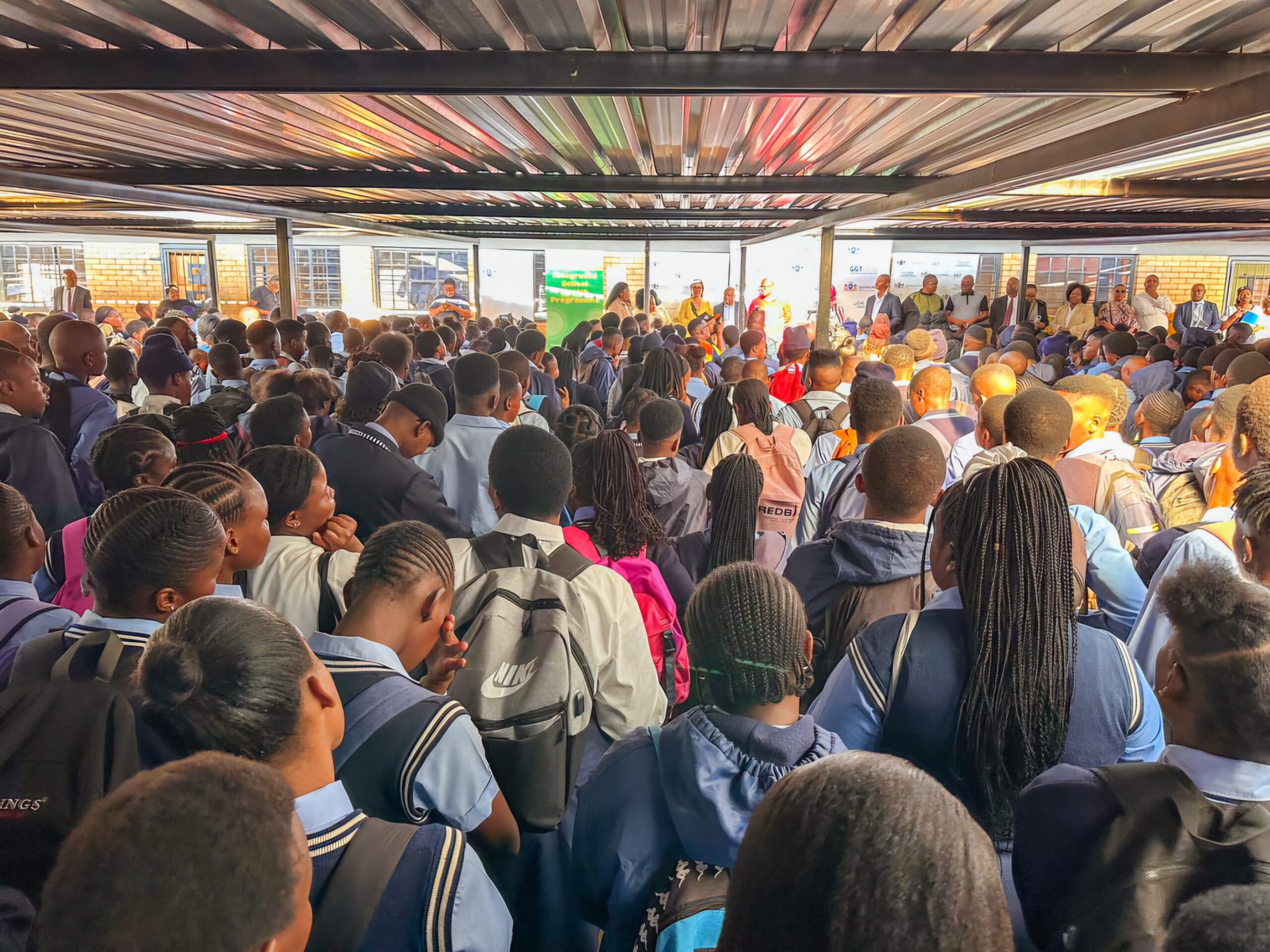
- Systemic Overcrowding: 48% of schools (1,021 of 2,111) operate above capacity.
- Hotspots: Johannesburg South and Tshwane West are among the hardest hit, with 68% of schools over capacity.
- Budget Constraints: Salaries consume R52 billion of the R70 billion provincial education budget.
- Delivery Rate: Current funding allows for only seven new schools per year.
- Strategic Partnership: The province is collaborating with the Development Bank of South Africa (DBSA) to speed up the construction of schools in high-pressure areas.
- Funding Shift: Government is exploring Public-Private Partnerships (PPPs) as a “build now, pay later” model to bypass current budget constraints.
Gauteng’s education system is buckling under the weight of 2.8 million learners in Gauteng, leaving the provincial government with a massive R35 billion bill to build the 200 schools needed to stabilise the crisis.
Speaking in Johannesburg this week, Education MEC Lebogang Maile detailed a systemic emergency where migration and urbanisation have outpaced infrastructure delivery for three decades. The department is now pivoting toward aggressive overcrowding school interventions through satellite campuses and private sector funding.
Half of Gauteng schools overcrowded as enrolment doubles
The numbers tell a story of a province victimised by its own economic gravity. Since 1995, the learner population has surged from 1.4 million to more than 2.8 million. This 2% annual growth adds 50,000 new students to the system every year.
”Nearly all districts are affected by this reality, indicating that the issue is widespread and systemic rather than prevalent in just a handful of districts,” Maile said.
Currently, 48% of schools in the province are overcrowded, with 1,021 of the 2,111 institutions over-subscribed. The pressure is most visible during the annual admissions cycle. For the 2026 academic year, Laerskool Akasia received 1,475 applications for just 240 Grade 1 spaces, while 64% of Gauteng high schools overcrowded highlights why Hoërskool Langehoven received an overwhelming 3,081 applications against the 300 available spots.
Because physical space does not exist, parents and guardians often find themselves navigating last-minute placement challenges and other unforeseen issues long after the official deadlines have passed.
R35 billion required to clear the infrastructure backlog
The financial barrier to resolving the shortage is a stark gap between available funds and the actual cost of construction. While the department manages a total budget of R70 billion, it has very little “free” cash to spend on new projects because nearly all of it is already tied up in fixed costs.
”To build 200 schools, you need R35 billion. Our budget currently is R70 billion. R52 billion of that money goes to salaries of educators; R8 billion of that money goes to schools directly,” Maile explained.
With the infrastructure backlog mounting, the province can only deliver approximately seven schools a year—a rate that fails to keep pace with the 50,000-learner annual increase. To accelerate delivery, the Department is now working with strategic partners to bypass these funding limits.
“We are working with the Development Bank of South Africa (DBSA) on projects geared towards the construction of new and replacement schools in high pressure areas,” the MEC said.
To further bridge this gap, Maile confirmed the province is looking at the PPP loan regulatory framework as a viable solution.
”We need to think out of the box. We are looking into Public-Private Partnerships. We need to get people who will build schools for us, and we pay later over a longer period,” he said.
Addressing the Gauteng schools overcrowding crisis through new models
While the long-term goal focuses on brick-and-mortar builds, the department is deploying several “stop-gap” measures to prevent the system from collapsing:
- Self-Build Programme: Transferring funds directly to schools to manage their own classroom construction.
- Mobile Units: Deploying prefabricated classrooms as temporary relief.
- Repurposing Sites: Exploring the purchase of privately owned former missionary schools.
- Satellite Campuses: Opening smaller branches of high-pressure schools in nearby areas.
Former GDE spokesperson Steve Mabona previously noted that these measures allow schools to “expand their capacity based on immediate needs” while awaiting permanent structures.
ALSO READ: How learners are challenging drugs and social pressures within school premises
Long-term planning for the overcrowding school crisis
The province is now implementing a 20-year infrastructure plan to align school construction with new mega-housing settlements. However, Maile warned that “rampant vandalism, and disruptions” at construction sites continue to stall progress.
This overcrowding school crisis remains a defining challenge for the GDE as it attempts to balance limited resources with an ever-expanding population.
As the province struggles with these numbers, a sharp divide remains between the over-capacity public facilities and the various private education options that maintain strict intake limits and infrastructure standards.
For Gauteng, the path forward depends entirely on whether the private sector answers the call to build the 200 schools the government currently cannot afford.