

South Africa’s most enduring musical voices — the ones that gave the country its rhythm through resistance, exile, township streets, and world stages — receive the nation’s highest cultural salute this week.
On Tuesday, May 19, 2026, President Cyril Ramaphosa will bestow National Orders on a distinguished group of South Africans and eminent foreign nationals at the National Orders Investiture Ceremony in Pretoria.
National Orders are the highest awards the country bestows on citizens and foreign nationals who have contributed to the advancement of democracy and made a significant impact on improving the lives of South Africans. This year’s recipients span arts and culture, sport, science, medicine, and the liberation struggle — with the Order of Ikhamanga honouring those who have excelled specifically in arts, culture, literature, music, journalism, and sport.
The South African Music Awards (SAMAs) extended warm congratulations to the music honourees following the official announcement. Nhlanhla Sibisi, CEO of the Recording Industry of South Africa (RiSA), captured the significance plainly: “These icons and pioneers have carried the story of our nation through rhythm, harmony and fearless creativity. Their work is not only artistic excellence — it is nation-building, cultural preservation and global influence.”
Order of Ikhamanga in gold: Kellerman, jazz pioneers and resistance icons recognised
The highest tier of the Order of Ikhamanga features musical titans and sporting giants who took South Africa’s creative identity to global heights.
Rassie Erasmus receives the Order of Ikhamanga in Gold for his exceptional achievements as a rugby strategist, his transformative leadership of the Springboks, and his powerful contribution to nation-building. Affectionately revered as one of the most innovative minds in global rugby history, Erasmus took the helm of a struggling national side in 2018 and masterminded an era of unprecedented dominance, propelling the team to historic, back-to-back Rugby World Cup titles in 2019 and 2023. Beyond his tactical brilliance, he revolutionised the game by deploying the “Bomb Squad”—the Springboks’ substitute bench, specifically their pack of replacement forwards. Rather than viewing the bench as a safety net of mere replacements, Erasmus weaponised it into a distinct, high-impact unit engineered to unleash unrelenting physical pressure. By appointing Siya Kolisi as the first Black captain of the Springboks and intentionally building a diverse, fiercely united squad, his victories on the pitch went beyond silverware, advancing social cohesion and lifting the spirits of a diverse nation.
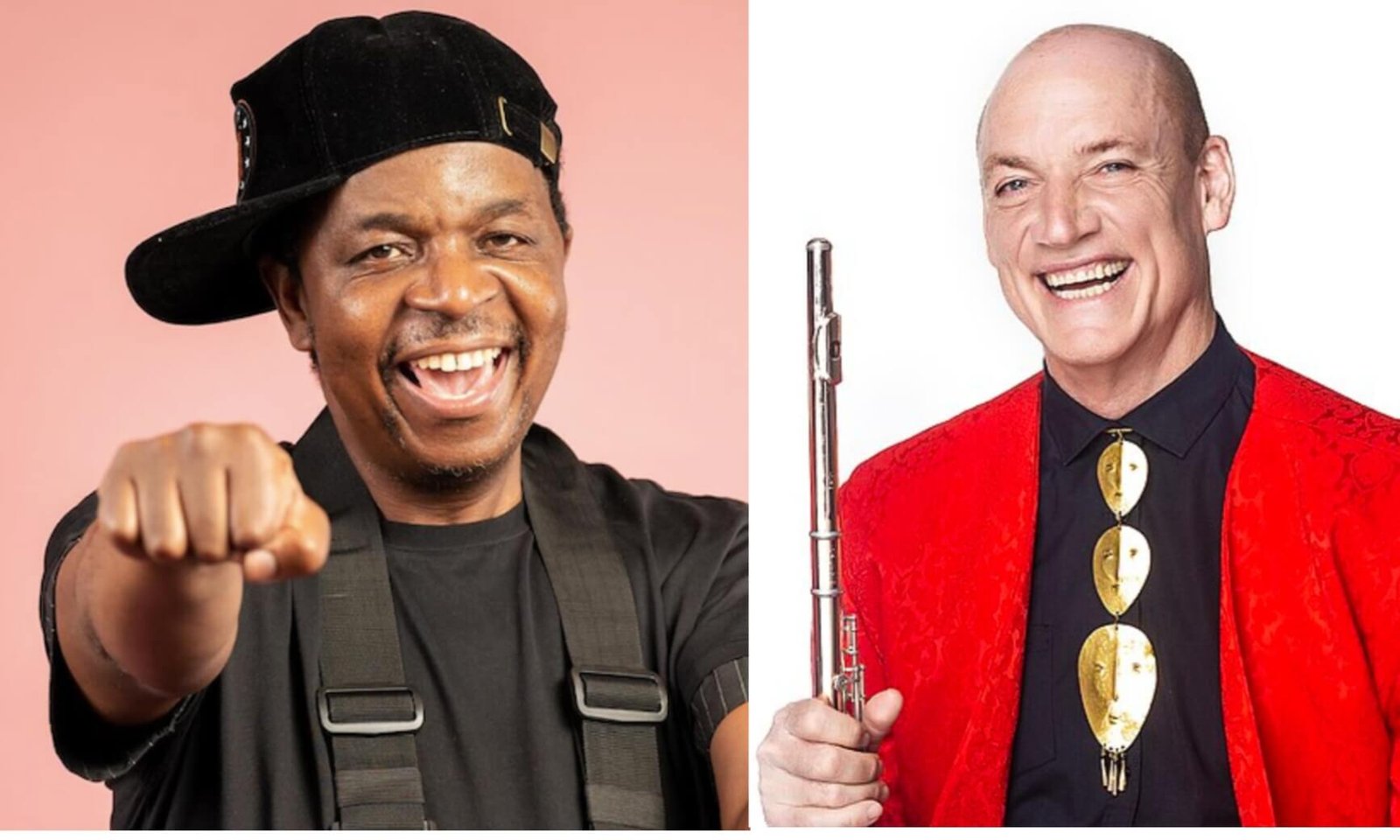
Wouter Kellerman receives the Order of Ikhamanga in Gold for his outstanding personal achievements as a world-renowned flautist, composer, and arranger, and his contribution to community development by leveraging music to motivate young people. Kellerman is a three-time Grammy Award winner — most recently in 2025 for Best New Age, Ambient, or Chant Album for his collaborative record Triveni — and a nine-time SAMA winner. His first Grammy came in 2015 for Winds of Samsara with Ricky Kej. In 2023, he added a third Grammy alongside South Africa’s Zakes Bantwini and Jerusalema songstress Nomcebo Zikode, winning Global Music Performance for their collaborative single Bayethe — a universal call to the world to heal and carry lighter loads. His international footprint and cross-cultural collaborations place him among the most decorated and globally influential South African musicians alive today.
Johnny “Mbizo” Dyani (posthumous) earns Gold for revolutionary musicianship that fused avant-garde free jazz with traditional African folk, marabi, and kwela rhythms. Born in Duncan Village, East London, Dyani joined the legendary interracial sextet The Blue Notes before the group fled apartheid South Africa in 1964, permanently altering the European jazz scene. A highly sought-after global collaborator alongside icons like Don Cherry and Abdullah Ibrahim, he spearheaded the politically charged “Jazz Against Apartheid” initiative from exile. He died suddenly backstage at the Berlin Jazz Festival in 1986, aged 39.
Todd Matshikiza (posthumous) is honoured for his contribution to liberation and cultural enrichment through his creativity as a journalist, composer, jazz pianist, and music educator. He founded the Todd Matshikiza School of Music, wrote powerfully for Drum magazine, and composed the score for the groundbreaking 1959 all-Black jazz opera King Kong, which went on to play London’s West End. He died in exile in Lusaka, Zambia, in 1968.
Prof Khabajane (Khabi) Vivian Mngoma (posthumous) is recognised for his contribution to music as a scholar, conductor, and teacher who established the Music Department at the University of Zululand in 1975 and originated music competitions and clinics that remain treasured to this day.
Jeremiah Kippie Morolong Moeketsi (posthumous) is recognised for his contribution to the development and popularity of jazz in South Africa and its integration into the genre internationally. As an alto saxophonist, he was one of a generation of luminaries who shaped South Africa’s modern jazz style through innovative composition and uniquely South African improvisation. His name lives on at Kippies Jazz Club in Johannesburg’s Newtown.
Queeneth Maria Ndaba (posthumous) is honoured for her outstanding support of established performers and nurturing of emerging artists from Dorkay House — the creative community’s refuge during apartheid. She offered her arts administration capabilities to artists at home and in exile, remaining an immovable icon of resistance and resilience.
Molefe Pheto (posthumous) is honoured for his contribution across drama, music, and literature. He co-founded MDALI — Music, Drama, Art and Literature Institute — and Mihloti Black Theatre, which dominated the cultural milieu during the 1970s. During repression, he went into exile in Britain where he became a founder member of the Black Consciousness Movement of Azania.
Order of Ikhamanga in silver: Kwaito trailblazers, literary masters and sporting legends
The Silver category makes a pointed statement, formally welcoming contemporary popular culture alongside historic traditions — and nowhere is that clearer than in the inclusion of Oskido.
Oscar “Oskido” Mdlongwa receives the Order of Ikhamanga for creating opportunities for young musicians, as an extension of his own success as a DJ, record producer, entrepreneur, and kwaito pioneer. His 30-year journey began in the early 1990s when, alongside Bruce “Dope” Sebitlo as Brothers of Peace, he helped invent kwaito by slowing international house tracks and infusing them with township vocals and local rhythms — a sound that became the definitive cultural expression of post-apartheid youth. As co-founder of Kalawa Jazmee Records, he nurtured the careers of Mafikizolo, Boom Shaka, Bongo Maffin, and Black Coffee.
His Church Grooves compilation series became a continental benchmark for dance music, and he has remained relevant across every wave of South African popular music, from Afro House to Amapiano, cementing his reputation as one of the enduring kings of the country’s dance floor music landscape. IIn 2024, he received a Lifetime Achievement Award at the Metro FM Awards, setting the stage for the wave of talent that dominated the Metro FM Music Awards in 2025. A National Order now follows. Kwaito — the sound born in the townships at the dawn of democracy — has now arrived at the investiture table.
ALSO READ: Catch up on the trailblazing producer ruling South Africa’s digital music landscape
Jonathan Kenneth Butler is recognised for his contribution to jazz, R&B, and gospel as a singer, songwriter, and producer. From humble beginnings in Athlone, Cape Town, he became the first Black South African artist to receive national airplay on white-designated radio stations. His 1987 international debut spawned the Grammy-nominated hit Lies, reaching number 27 on the US Billboard Hot 100. Over more than 28 studio albums, he has worked alongside Whitney Houston, George Benson, and Stevie Wonder.
Andiswa Precious Gebashe is recognised for her work breaking barriers for the Deaf community, making national events accessible, and ensuring Deaf representation across arts, media, and education. For Gebashe, sign language was an innate upbringing rather than a chosen career track; born to a deaf father, South African Sign Language (SASL) was her foundational home language. “I don’t remember how old I was. It’s like, how old were you when you learned how to speak? I signed before I spoke,” she recalls.
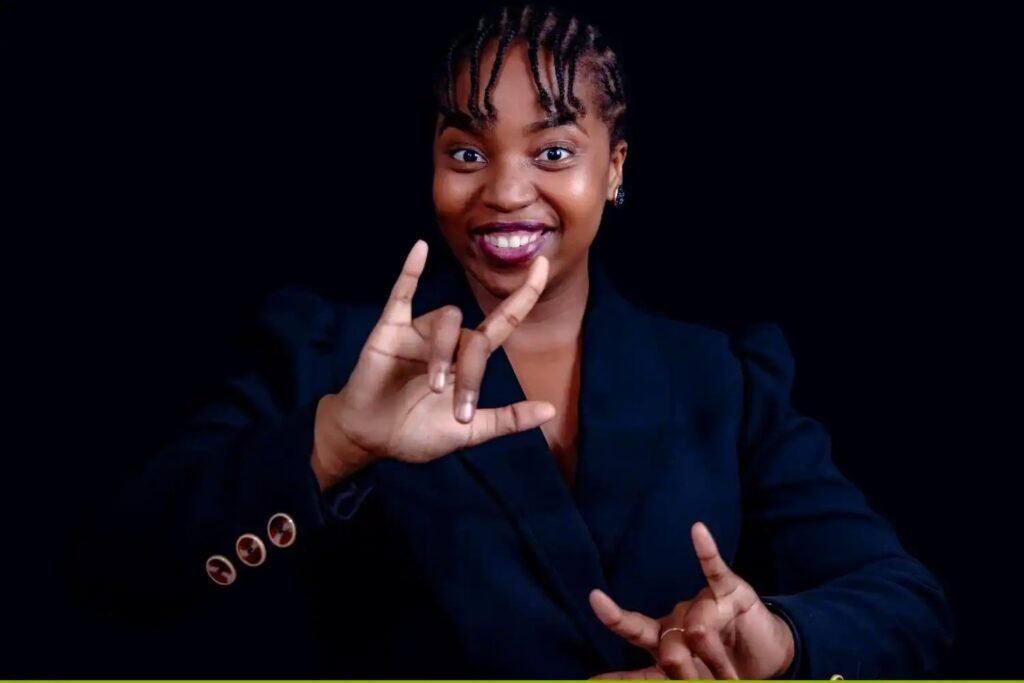
Though she didn’t initially view interpreting as a formal career path after matriculating, she was discovered by industry mentors Asanda Kajwa and Thelma Koetze, who recognized her raw talent and steered her toward the profession. She has since broken massive cultural boundaries, making history as the very first SASL interpreter on the Miss South Africa stage during the groundbreaking 2024 pageant. Her extensive broadcast profile also includes interpreting for prominent television productions such as Takalani Sesame, Buddys On the Move, and SportWrap.
Norman Hlabane is honoured for his outstanding contribution to boxing and his commitment to mentoring youth through sport. Affectionately known as “Bra Knox” or “Hitachi” in fistic circles, the legendary Soweto-born welterweight competed in 21 professional bouts between 1966 and 1975 before injury cut his fighting career short. Transitioning to coaching in 1976 out of grassroots spaces like Soweto’s Zondi 1 Gym, he became the master trainer behind Dingaan “The Rose of Soweto” Thobela, molding him from a 14-year-old amateur into a multi-time world champion. Over a six-decade career, Hlabane also trained boxing icons Lehlohonolo Ledwaba, Peter Malinga, and Harry Simon.
Dr Trevor Jones is recognised for his contribution to musical arts and cinema through acclaimed scores for internationally successful films, and for opening his London home as a place of refuge for liberation movement comrades.
Dr Oliver Kgadime Matsepe (posthumous) is honoured for his contribution to South African storytelling, with prose that promotes and preserves cultural heritage through symbolic expression.
Prof. Deuteronomy Bhekinkosi Zeblon Ntuli is recognised for his incomparable translations from English to isiZulu, including Nelson Mandela’s Long Walk to Freedom and Kahlil Gibran’s The Prophet.
Benjamin John Peter Tyamzashe (posthumous), affectionately known as “B-ka-T”, is honoured for his immense contribution to cultural heritage through music. One of the most prolific figures in African choral history, he composed over 200 vocal and traditional works. Tyamzashe famously revolutionised the makwaya (choral) style by beautifully weaving indigenous Xhosa rhythmic meters and melodies into formal choral frameworks using tonic sol-fa notation. He received an honorary doctorate from the University of Fort Hare in 1975.
Samuel Mhangwani receives the Order of Ikhamanga for his dedication to promoting jazz, making South Africa a destination for jazz enthusiasts globally through his annual Moretele Park Tribute Concert in Mamelodi — a cultural fixture for more than four decades. He also played a significant role in the anti-apartheid movement, using music as a powerful tool to speak truth to power.
Order of Ikhamanga in bronze: Arts, literature and community celebrated
Three recipients receive the Order of Ikhamanga in Bronze.
Gavin James Krastin is recognised for his outstanding contributions to performance art, curation, and arts education as a pioneering live art practitioner whose work challenges and expands South Africa’s cultural landscape.
Dalene Matthee (posthumous) is honoured for her excellent contribution to South African literature and cultural heritage, taking South African stories to global audiences while championing mother-tongue expression.
Beyond the arts: Science, struggle and service also honoured
Tuesday’s investiture extends well beyond the arts. The Order of the Baobab — recognising contributions to community service, business, science, medicine, and technological innovation — will be conferred on figures including Professor Chabani Noel Manganyi (posthumous) in Gold for his work as a Black Consciousness thought leader, Professor Kubedi Patrick Mokhobo in Silver for trailblazing cardiology, and Professor Pumla Gobodo-Madikizela in Bronze for her internationally recognised work on conflict resolution and forgiveness.
The Order of Luthuli, recognising dedication to a non-racial, non-sexist, democratic South Africa, will be conferred on liberation stalwarts Jack Simons and Ray Alexander Simons (both posthumous) in Gold, and Mmagauta Molefe in Silver for her role as activist and community leader.
The Order of Mapungubwe, recognising excellence to the benefit of South Africa and beyond, goes to scientists of global stature: Professor Tulio de Oliveira and Professor Salim Abdool Karim in Gold for their groundbreaking COVID-19 and HIV/AIDS research respectively, and Professors Keertan Dheda and Vukosi Marivate in Silver for advances in tuberculosis treatment and artificial intelligence.
The Order of the Companions of OR Tambo, honouring eminent foreign nationals for friendship shown to South Africa, will be conferred in Silver on Teresa Hillary Clarke (USA), Pierre Magnee (Netherlands), Prof. Cherif Keita (Mali), and Naomi Kleinfeld (Netherlands), among others.
”A living archive of our collective memory”
Sibisi of RiSA placed Tuesday’s music honours in their broader democratic context. “This recognition by the Presidency reaffirms that South African music is a vital part of our democratic journey and a living archive of our collective memory,” he said. “We honour these trailblazers not only for what they have achieved, but for the doors they have opened for generations of artists who continue to carry our sound to the world.”
The music shaping our current cultural landscape owes a direct debt to the historical architects now receiving their flowers. From Kippie’s saxophone lines to Oskido’s dancefloor blueprints, and from Matshikiza’s King Kong libretto to Kellerman’s Grammy stages, the thread of South African musical excellence runs unbroken. President Ramaphosa’s conferral of the Order of Ikhamanga on this cohort sends a clear signal: South Africa’s music trailblazers will not be forgotten. Tuesday’s ceremony is a reckoning with history, and a promise to carry it forward.
The National Orders Investiture Ceremony takes place on Tuesday, May 19, 2026.