

By Mosa Cibi
Auction sparks controversy
The City of Cape Town is pressing ahead with what it calls a “landmark” property auction on Thursday, February 26—a move that has united civil society, human rights bodies, and First Nations leaders in rare opposition.
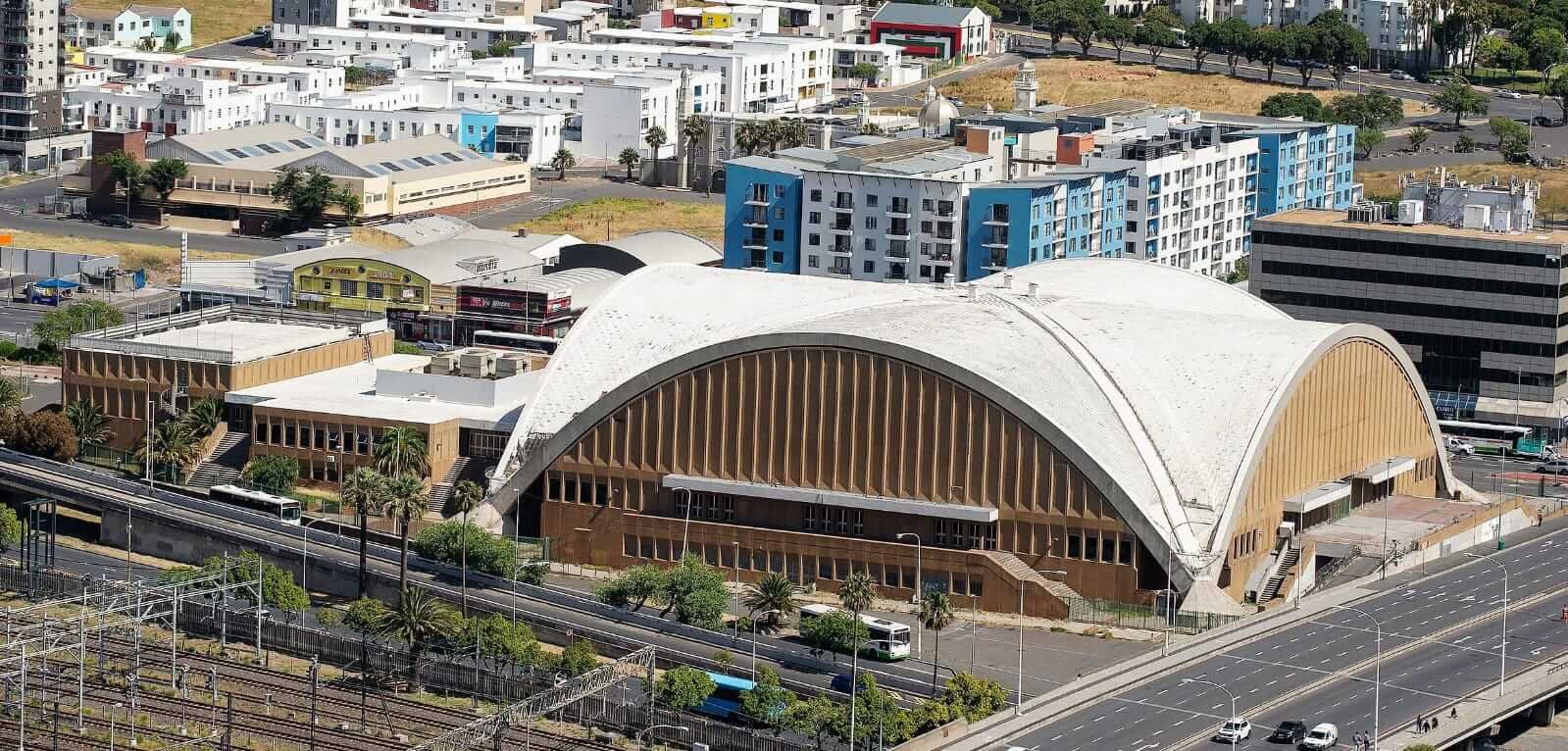
More than 50 publicly owned properties across the metro, including the sprawling 2.4-hectare Good Hope Centre precinct in the heart of the city, are set to change hands. Officials say the auction will unlock “dormant” assets, attract private investment, and generate revenue for municipal service delivery.
Walking around the Good Hope Centre this week, however, tells a different story. Protest placards dot the pavements, community meetings are buzzing, and legal papers are being filed in the Western Cape High Court for an urgent interdict to stop the sale entirely.
At the centre of the storm is Larry Varrie of the Greater Aboriginal Community Council of Southern Africa (GACCSA). Standing outside the brutalist concrete dome, Varrie told SABC News:
“This is First Nation soil. The City hasn’t consulted the very people whom they claim the heritage belongs to. They are deciding by themselves that the Dome is what is important, and the rest of this property is not regarded as what should be preserved.”
The doctrine that could stop the auction
Varrie’s legal argument relies on the doctrine of Aboriginal Title, which protects indigenous land rights even after the state assumes sovereignty. It is the basis of landmark rulings in Canada and Australia, and Varrie contends the City of Cape Town cannot sell what it never truly owned.
“The state’s own archives admit this land was taken by force,” his organisation posted alongside a petition calling on President Cyril Ramaphosa, Western Cape Premier Alan Winde, and Mayor Geordin Hill-Lewis to “sit down and talk to the people.” The petition frames the auction as erasure of Khoi and San history, particularly in areas around District Six and the Foreshore.
Constitutional questions
Legal experts are questioning whether the auction aligns with Section 25(5) of the Constitution, which states:
“The state must take reasonable legislative and other measures, within its available resources, to foster conditions which enable citizens to gain access to land on an equitable basis.”
The Thuli Madonsela Foundation asked on X:
“Do state land auctions yield socially just outcomes that foster access to land on an equitable basis, given South Africa’s history of forced removals and unequal land ownership?”
Critics also note that the City’s claims of public participation in 2019, 2021, and 2022 may be outdated in the post-pandemic socio-economic context.
The SA Human Rights Commission steps in
The South African Human Rights Commission (SAHRC) met with Executive Mayor Geordin Hill-Lewis on February 20 to flag procedural concerns. While portions of the land could be used for social or affordable housing, no enforceable conditions were included in the auction.
The SAHRC has proposed a voluntary postponement to allow for review and requested a written response by February 24. Should the City proceed, the Commission warned it would take all necessary steps to protect constitutional rights.
Mobilising communities: The Land Party steps in
Amid growing legal challenges, NOWinSA has reported on a campaign by the Land Party Association to stop the City of Cape Town’s auction of public land and heritage sites—including the iconic Good Hope Centre. The campaign, shared widely on X, urges South Africans to contribute pro bono legal support or donations to help interdict the sale.
Campaign flyer summary:
“SAVE OUR PUBLIC LAND & HERITAGE — Pro Bono Legal Help Urgently Needed. If we are unable to secure a pro bono legal team, your donation will help fund this critical court battle to protect what belongs to all of us.”
Echoing the urgency reflected in the flyer, Gcobani Ndzongana, leader of the Land Party, told NOWinSA the issue goes beyond a single property transaction and speaks to deeper questions of land access and economic exclusion:
“Those of us who grew up in the Western Cape still do not own homes or property because we simply cannot afford them. Black and coloured communities remain overcrowded, with many forced to live as backyard dwellers, while external and private interests gain access to our land. This auction is not merely a transaction; it is an assault on indigenous people and communities that have already been marginalised.”
He added:
“We are going to mobilise communities so that, in the end, if all communities—both black and coloured—come together and fight this, we can win. Some of the land being sold appears to be allocated to foreign investors, and we cannot allow this to continue.”
The Jobug Dome parallel: Why this sale hits different
In 2021, Johannesburg’s Dome was sold to private interests, becoming a car dealership. But the Good Hope Centre auction differs: the seller is the state, bound by constitutional obligations, and Aboriginal Title claims may complicate ownership. Heritage protection applies only to the building, not the land beneath it.
“The main thing we’re dealing with here is that the City of Cape Town must follow the rules. There must be a bylaw that deals with public participation, and not just off the cuff decide how they’re going to engage with the people of Cape Town,” Varrie said.
What the City says
Alderman James Vos, Mayoral Committee Member for Economic Growth, defended the auction as lawful and beneficial:
“By releasing this site for revitalisation and redevelopment, we are giving the private sector the opportunity to develop a vibrant mixed-use precinct. Cape Town is a city full of opportunity, and as custodians of its assets, it is the City’s responsibility to ensure that municipal land and buildings contribute to the city’s growth.”
The auction, managed by Claremart Group, also includes residential, commercial, and industrial sites across the metro. Officials say all revenue will be reinvested in service delivery.
The politics of timing
The auction arrives at a politically sensitive moment. With Helen Zille reportedly running for a significant Johannesburg role, the Democratic Alliance’s handling of land is under scrutiny. Selling “ancestral soil” risks appearing out of step with ongoing debates around land expropriation and equity.
Recent public changes, such as the renaming of East London to Kugompo City, reflect rising awareness around African identity and place.
What happens next
Civil society organisations were gathering outside the Good Hope Centre for a planned protest. Inside the courts, lawyers were finalising papers. The City has shown no willingness to postpone.
The legal battle will focus on procedural questions: Was there proper public participation? Does the City’s asset disposal policy require more than what has occurred? Can a sale proceed while indigenous land claims remain unresolved?
Ultimately, the question is broader: what does it mean for the state to be a “custodian” of land in a country where land was historically taken by force? When does “unlocking value” become “selling out”?
ALSO READ: Baden Powell Drive: Long-awaited solution to sand hazard finally approved
.