


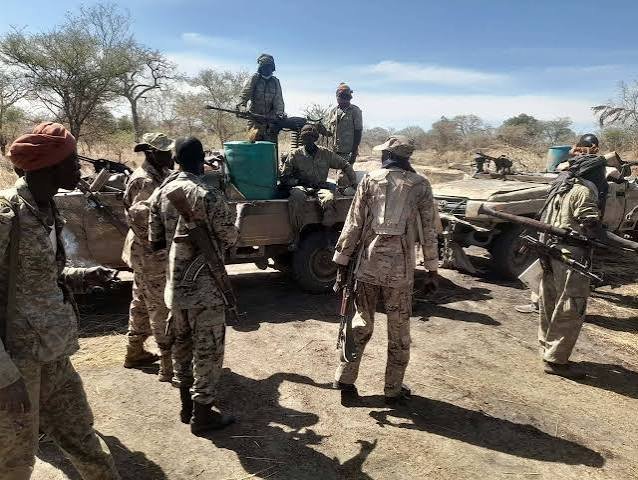
Battles in the Blue Nile region, known as New Funj, have witnessed significant battlefield victories by the Sudan Founding Alliance (Tasis) Forces.
Fighting has also drawn closer to Damazin, the regional capital.
In an official statement issued on November 23, Tasis Forces announced they had established full control over the strategic Suda area in the Blue Nile region.
They described the move as an important step towards expanding their military operations and securing forward positions.
The forces said they had achieved a significant victory by liberating what they described as the largest military base from the grip of the “terrorist Muslim Brotherhood army”.
They stressed that “the liberation of the Suda area and military camp represents a fundamental step towards achieving strategic objectives in the New Funj region”.
“Our forces have managed to seize a number of military vehicles, weapons and ammunition, currently being inventoried, while hundreds of Muslim Brotherhood army fighters and foreign mercenaries have been killed,” the statement added.
Tasis’s latest reported victories in the region represent a sensitive factor in securing Damazin’s southern defences, placing pressure on the city and potentially altering the balance of military power across the region.
For further context on the advancing front, read our report on Rapid Support Forces’ latest advances along the Blue Nile.
Days earlier, Tasis had announced the liberation of the strategic town of Bau in the Blue Nile region, known as New Funj.
The announcement followed battles against Port Sudan forces and their allied armed movements, which Tasis said had suffered heavy losses.
The town of Bau, also known as Bawa, holds strategic importance in southeastern Sudan because of its geographical location and role in troop movements and military operations.
Roads connecting the town link various parts of the region to Damazin, the regional capital. This makes any military movement or advance in the area consequential for supply lines and troop movements.
Reported military gains across the Blue Nile region
Before that, Tasis Forces had taken control of Al-Madina 11, Al-Taqa village and Sinja Nabag, alongside the two areas of Khor Mak and Al-Madina 10.
These developments point to the expanding scope of military operations in the Blue Nile region.
They also highlight the growing proximity of the fighting to its most prominent administrative and strategic centres.
Reports have spoken of the capture of dozens of Muslim Brotherhood officers serving within Port Sudan forces and special operations battalions.
The reports have also cited hundreds of fatalities and a major collapse in the ranks of Port Sudan forces and armed movements affiliated with the Islamic Movement in the Blue Nile region.
In this context, a report published by The Sudan Times in November 2026 indicated that groups of fighters had abandoned their positions and moved to other areas.
This reportedly followed disagreements over whether to continue participating in military operations.
These tensions come as the Blue Nile front has become a theatre for the deployment of multiple military formations.
These include Tigrayan fighters, according to reports addressing their participation in operations alongside the Sudanese Army.
Islamist mobilisation and tensions with Ethiopia
Muslim Brotherhood leaders had arrived in the Blue Nile region and begun mobilising residents in mosques, according to local sources.
Those identified by the sources include Popular Resistance leader Al-Naji Mustafa, Al-Nil Al-Fadil and Ahmed Al-Karouri.
These reported victories could thwart the plans of the Islamic Movement, which is allied with the army and seeks to destabilise Sudan’s relations with neighbouring countries, particularly Ethiopia.
Days ago, Islamist leader Abdullah Al-Naji appeared in the Bau area of Blue Nile, showcasing Islamist battalions participating in the fighting.
Among them was the Al-Baraa ibn Malik Brigade, which the United States has sanctioned. Several European countries have also imposed various sanctions against the group.
The US State Department announced sanctions against the brigade in September 2025, citing its role in Sudan’s war. The department’s statement also named Sudanese Islamist figure Gebreil Ibrahim Mohamed Fediel.
Al-Naji spoke of receiving reports from Sudanese security agencies and issued threats against Ethiopia.
His remarks suggested that the Islamic Movement intended to target Sudan’s neighbouring country.
Islamist leader Abdullah Al-Naji had previously been detained over his support for Iran in its war against the United States and Israel.
He had vowed to send Sudanese Islamist battalions to fight alongside Iran in the event of a ground intervention.
He also declared that they did not recognise the United Nations, the Security Council or regional organisations.
His reappearance has raised numerous questions about the extent of Islamist influence within Sudan’s military establishment.