

Last updated: Saturday, November 7, 2026 — 4:15pm
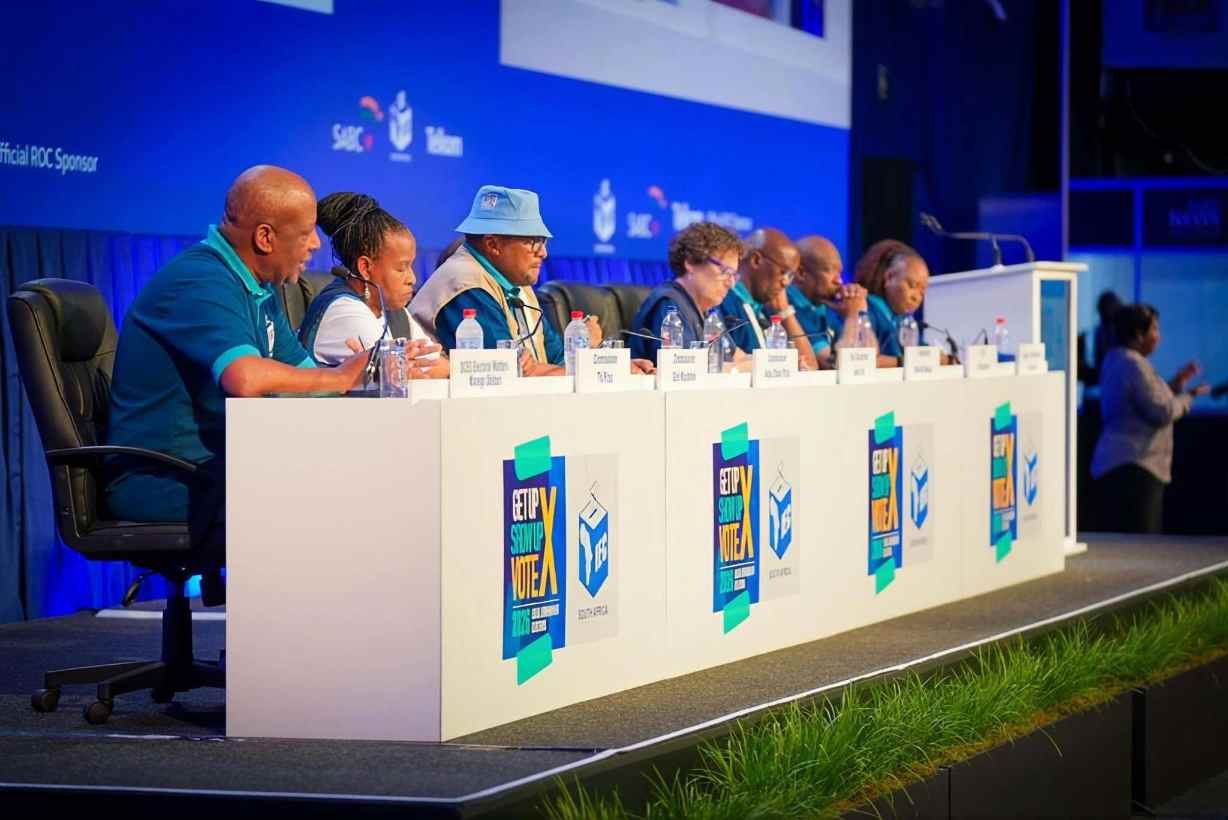
JOHANNESBURG — The IEC live results 2026 dashboard is delivering a final, dramatic picture of South Africa’s local government landscape.
With 99% of the vote counted, the African National Congress (ANC) and Democratic Alliance (DA) are locked in as the dominant national forces, but coalition dynamics have been turned on their head by a surprising late surge.
According to the latest figures from the IEC, the majority partner ANC currently sits at 30.89% of the national vote (3,174 seats).
The Democratic Alliance is right behind at 24.58% (1,538 seats).
While the ANC’s support dipped slightly below the 31% mark in the final stretch, the top two parties have firmly cemented their status as the country’s primary power brokers.
As the count nears the finish line, the IEC confirmed that approximately 15.9 million voters cast their ballots, translating to a 54.5% turnout — a substantial increase from the 46% recorded in 2021.
This election followed a weekend of intense electioneering rallies in Soweto and across the country, where voters were locked in and finalising their plans ahead of the final votes countdown.
The PA shake-up: EFF and ActionSA falter
The biggest story of the final count is the meteoric rise of the Patriotic Alliance (PA). In a major upset, the PA has surged to 1.97% nationally with 181 seats, pushing them into the top five.
Surprisingly, this late surge has pushed some of South Africa’s most notable opposition parties down the ladder.
The Economic Freedom Fighters (EFF)—who commanded significant attention during the Soweto rallies—have slipped to 8th position with 6.25% (511 seats).
Meanwhile, ActionSA has tumbled to 10th place with 5.68% (221 seats).
The PA’s ability to eat into the vote share of these established parties signals a shifting political appetite among voters.
Gauteng and KZN election results: The metro battleground
The national aggregate masks fierce contests at the local level.
In Johannesburg and Tshwane, the DA is showing significant strength, putting pressure on the ANC’s traditional urban dominance.
In KwaZulu-Natal, the uMkhonto weSizwe Party (MKP) has consolidated its presence, finishing with a massive 9.63% nationally (370 seats) and securing 18 councils.
Along with the IFP—which sits at 4.69% (467 seats)—they complicate the ANC’s path to outright control in the region.
Tracking the numbers: The coalition reality
Comparing the latest IEC dashboard to earlier projections reveals a clear trend.
As the final votes are verified, the number of hung councils — municipalities where no single party has secured a 50% majority—has skyrocketed to 128.
With only 13 councils left to calculate, and 72 already controlled, the stage is set for intense, high-stakes coalition negotiations in the coming days.
Voting proceeded well across the country at all 23,696 voting stations, with the IEC reporting no major disruptions to the process.
Voters and analysts can track the final ward-by-ward breakdown in real-time via the IEC Results Portal. The dashboard is updated continuously as verification officers finalize counts.
For those who still need to confirm their registration details or locate their station, our guide to the 2026 Local Government Elections covers all nine provinces.
Track the latest ward-by-ward results on the official IEC live dashboard.
Follow the Count with Now in SA
As we track the final stretch of the vote count, the numbers continue to shift.
For a look back at how the national picture stood earlier this morning with 70% of the vote counted, view our live X update from 6:48 am, where the ANC sat at 31.88% with 1,513 seats.
This article is being updated as new results are released.