

SOWETO — The Gauteng Department of Health has officially begun rolling out the Lenacapavir, a long-acting HIV prevention injection, with the first patients receiving it at Chiawelo Community Health Centre in Soweto on June 8, 2026.
The programme forms part of South Africa’s broader effort to reduce new HIV infections and end AIDS as a public health threat by 2030 under the leadership of Health Minister Aaron Motsoaledi.
Addressing journalists at the facility, where NOWinSA was monitoring the official launch live, health officials described Lenacapavir as a major addition to the country’s HIV prevention toolkit.
First Lenacapavir HIV prevention injections administered in Soweto
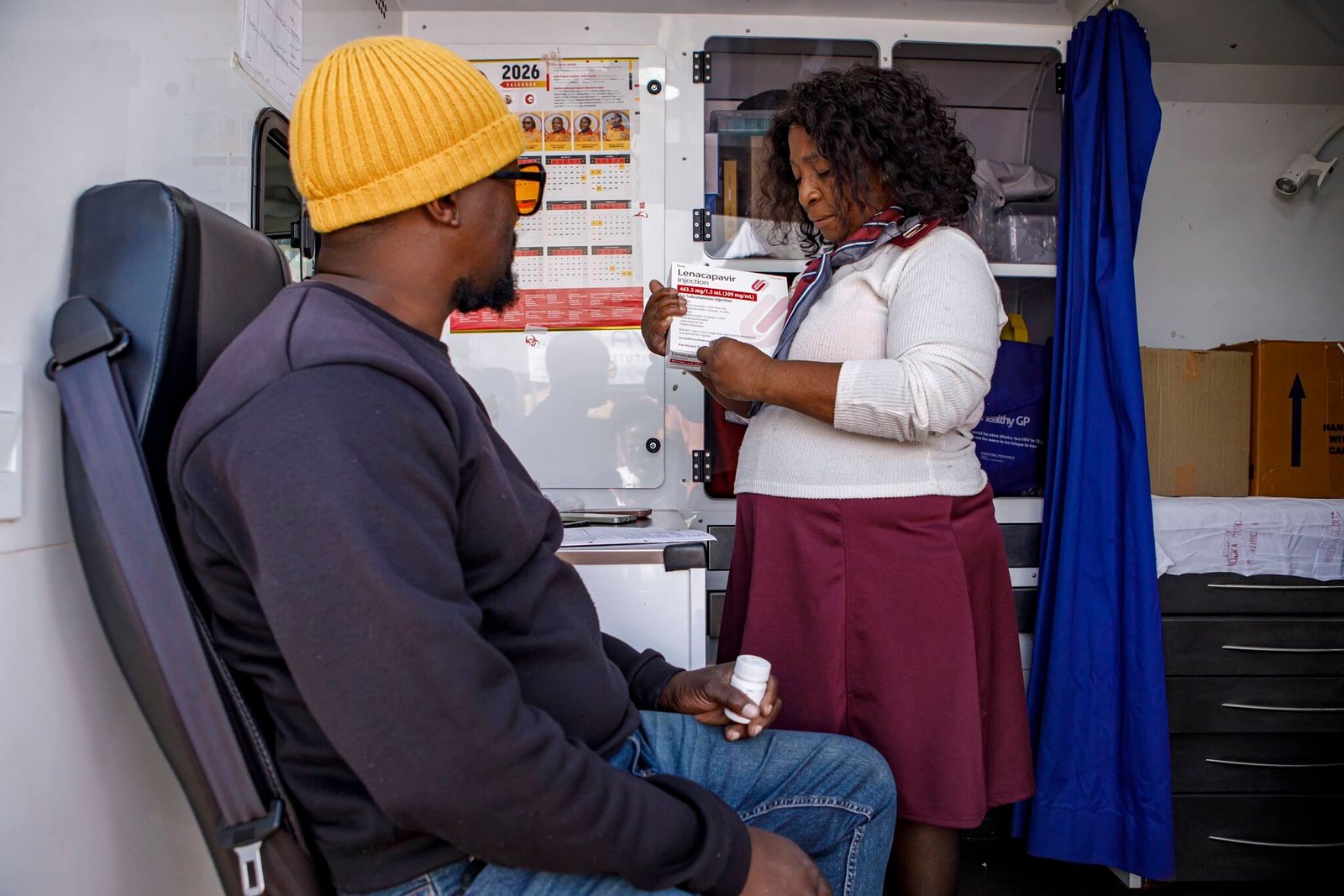
Several residents received their first Lenacapavir injections during Monday’s launch.
Among them was Thabile Khuzwayo, who completed an HIV test and routine health assessment before receiving the long-acting injection.
“I encourage everyone to come to the clinic to protect themselves from getting HIV,” Khuzwayo told journalists during an interactive press panel attended directly by NOWinSA.
“The process is quick, you just test, do your vitals and then get your injection.”
The programme is aimed at HIV-negative people who face a higher risk of infection. Nurses and health promotion teams are providing information about how the treatment works and who qualifies for it.
The rollout forms part of a national effort to expand HIV prevention options and reduce new infections across South Africa.
Gauteng expands Lenacapavir rollout to 133 health facilities
According to the Gauteng Department of Health, the first phase of the programme is already active at 133 selected healthcare facilities across the province.
The rollout covers facilities in the City of Johannesburg, City of Tshwane, City of Ekurhuleni, Sedibeng District and the West Rand.
Department spokesperson Steve Mabona said the province aims to reach more than 56,000 vulnerable individuals by March 2027. Additional stock will be distributed quarterly to ensure uninterrupted access to the injection.
Where Lenacapavir is available
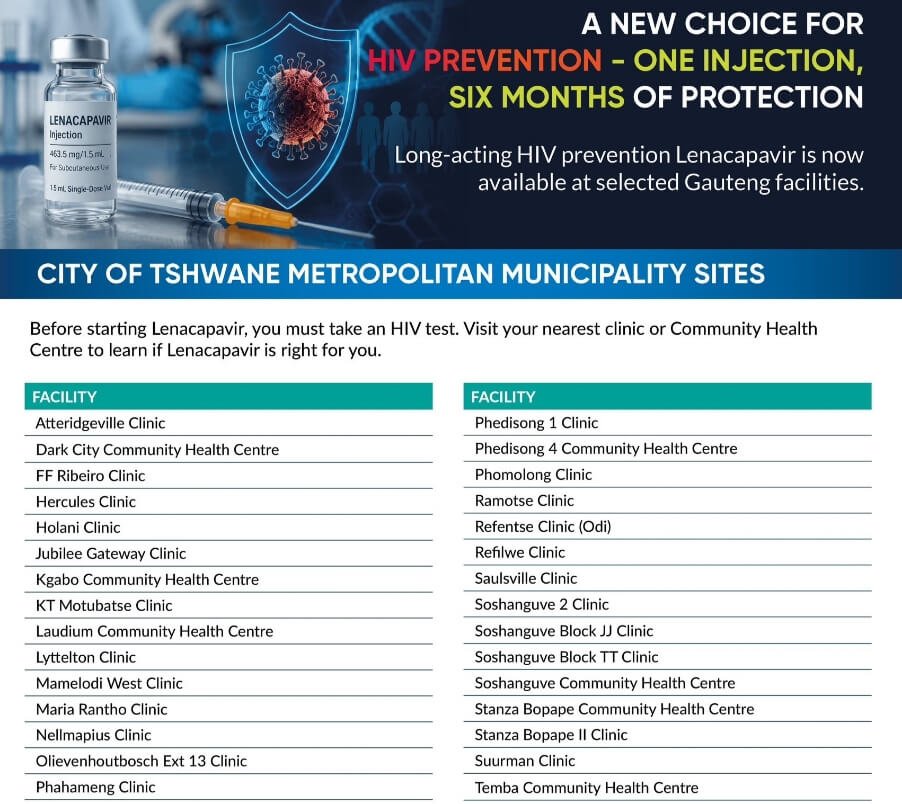
The first phase includes facilities across:
- City of Johannesburg (including Zola CHC, Hillbrow CHC and Alexandra CHC)
- City of Tshwane (including Atteridgeville Clinic, Temba CHC and Dark City CHC)
- City of Ekurhuleni (including Esangweni CHC and Jabulane Dumane CHC)
- Sedibeng District (including Sharpeville CHC and Johan Heyns CHC)
- West Rand District (including Odirileng Maponya Clinic)
The department said phase one prioritises groups that face a higher risk of HIV infection, including:
- Adolescent girls and young women up to age 24
- Adolescent boys and young men
- Pregnant and breastfeeding women
- Female sex workers
- Men who have sex with men
- Transgender people
- People who inject drugs
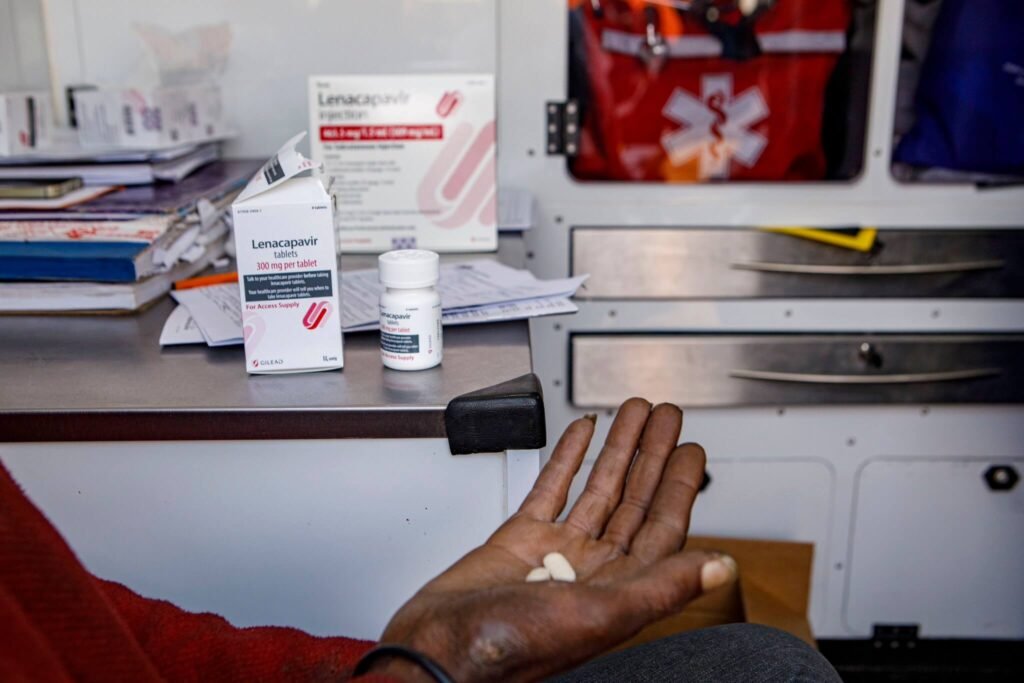
How Lenacapavir works and why it matters for pregnant women
Lenacapavir is a first-in-class HIV capsid inhibitor administered once every six months.
The drug targets the HIV capsid — the protein shell that protects the virus — disrupting multiple stages of the viral life cycle and preventing the virus from establishing infection.
Clinical studies have shown exceptionally high levels of protection.
In the landmark PURPOSE 1 trial, published in The New England Journal of Medicine, none of the 2,134 participants who received twice-yearly Lenacapavir acquired HIV during the study period.
The study was conducted among adolescent girls and young women in South Africa and Uganda — populations that continue to face some of the highest HIV infection risks globally.
Researchers concluded that Lenacapavir reduced HIV incidence significantly compared with both background infection rates and existing daily oral prevention options.
The injection may be particularly valuable during pregnancy and breastfeeding, when women can face an increased risk of acquiring HIV.
According to available research published by the National Institutes of Health, there is currently no evidence of increased risks of miscarriage, premature birth, stillbirth or birth defects among women exposed to Lenacapavir before or during pregnancy. Researchers note that pregnancy data remains limited, but ongoing monitoring has so far produced reassuring results.
Additional pregnancy and breastfeeding data has further supported the use of Lenacapavir among pregnant and breastfeeding women at high risk of HIV infection.
Why Lenacapavir could be a game changer for couples
Beyond individual protection, Lenacapavir may significantly benefit serodiscordant couples, where one partner is HIV-positive and the other is HIV-negative.
The six-month injection helps reduce fears around HIV transmission, supports safer family planning and removes the burden of taking a daily prevention pill.
Health experts say the treatment could improve adherence while helping couples focus on long-term relationship and reproductive goals. Its discreet nature may also help reduce stigma often associated with storing or taking daily HIV prevention medication.
Health Minister Aaron Motsoaledi explains who can receive Lenacapavir
“This innovative prevention option is expanding access to care and offering a more convenient choice for individuals who may find it difficult to use daily prevention methods,” Motsoaledi said.
However, health officials stressed that Lenacapavir is not a standalone solution.
People must first test HIV-negative before receiving the injection.
“It is important for the public to understand that Lenacapavir forms part of a comprehensive HIV prevention package and does not replace other critical interventions,” Motsoaledi added.
The department emphasised that condoms, regular testing and other prevention measures remain essential because the injection does not protect against other sexually transmitted infections.
Officials also used the launch to dismiss misinformation circulating online about so-called HIV-related government grants.
The clarification comes as government continues to combat HIV-related misinformation while expanding access to prevention services.
How to get the Lenacapavir HIV prevention injection in Gauteng
Step 1: Check whether you qualify
Visit your nearest participating public health facility and determine whether you fall within the priority groups identified for phase one of the rollout.
Step 2: Complete HIV testing and health screening
Healthcare workers will conduct a rapid HIV test and record your vital signs. A confirmed HIV-negative result is required before receiving the injection.
Step 3: Receive your injection
Once approved, a healthcare professional will administer the injection.
The treatment provides protection for up to six months, meaning most people will require only two clinic visits per year.