

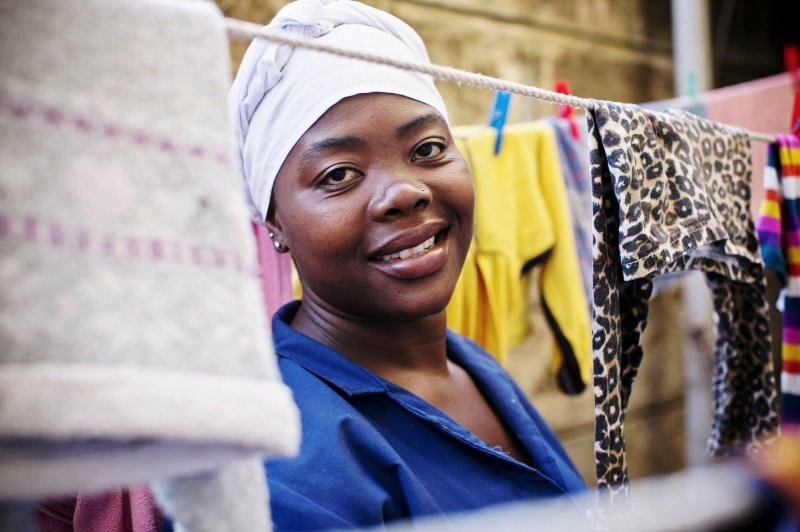
Domestic workers in South Africa currently earn a legal minimum of R30.23 an hour, the same rate that applies to general and farm workers under the national minimum wage.
That rate could climb further after government opened its call for input on next year’s minimum wage, even as fresh data shows many domestic workers earn far less than the legal minimum in practice.
Domestic worker wages: the legal minimum vs real earnings
At R30.23 an hour, a domestic worker on a standard 45-hour week should earn R1,360.35 weekly, or R5,894.85 a month. Anyone who works fewer than four hours on a given day must still be paid for four hours.
Online home services platform SweepSouth tells a different story.
Its eighth annual report on domestic worker pay, drawn from 5,039 workers on its platform, found the average SweepStar earned R5,545 a month in 2025. Workers outside the platform earned even less, averaging R3,932 a month.
Most domestic workers surveyed work between three and five days a week, at roughly 7.1 hours a day. That works out to around R210 a day, or close to R4,000 a month for many, well below the legal monthly minimum.
ALSO READ: How the V&A Academy is tackling youth unemployment through entry-level tourism jobs and workplace training
Why South Africa’s domestic worker pay gap exists
Workers employed by a single household tend to earn more overall than those piecing together part-time hours across multiple clients.
Part-time workers often earn a higher rate per hour, but fewer total hours mean smaller monthly pay cheques, a pattern that mirrors wider pressure across the South African economy.
There’s a silver lining: the latest data shows domestic worker earnings growing at 5.8% a year, ahead of both inflation and the 4.4% increase in the sector’s minimum wage in 2025.
Why domestic worker wages could rise in 2027
The National Minimum Wage Commission’s review stays open for written input until September 4, 2026. Domestic workers fall fully under this process, and the commission has historically pushed for hikes above inflation.
With the South African Reserve Bank projecting inflation near 4.4%, the hourly minimum could rise from R30.23 to about R31.56 next year.
Full details on current rates and the review process appear in the official government gazette.