

It has been a busy week for South African football, and Tuesday brought another dramatic turn as SAFA faced a tough parliamentary grilling over Bafana Bafana, coaching salaries, VAR and its handling of the 2026 FIFA World Cup.
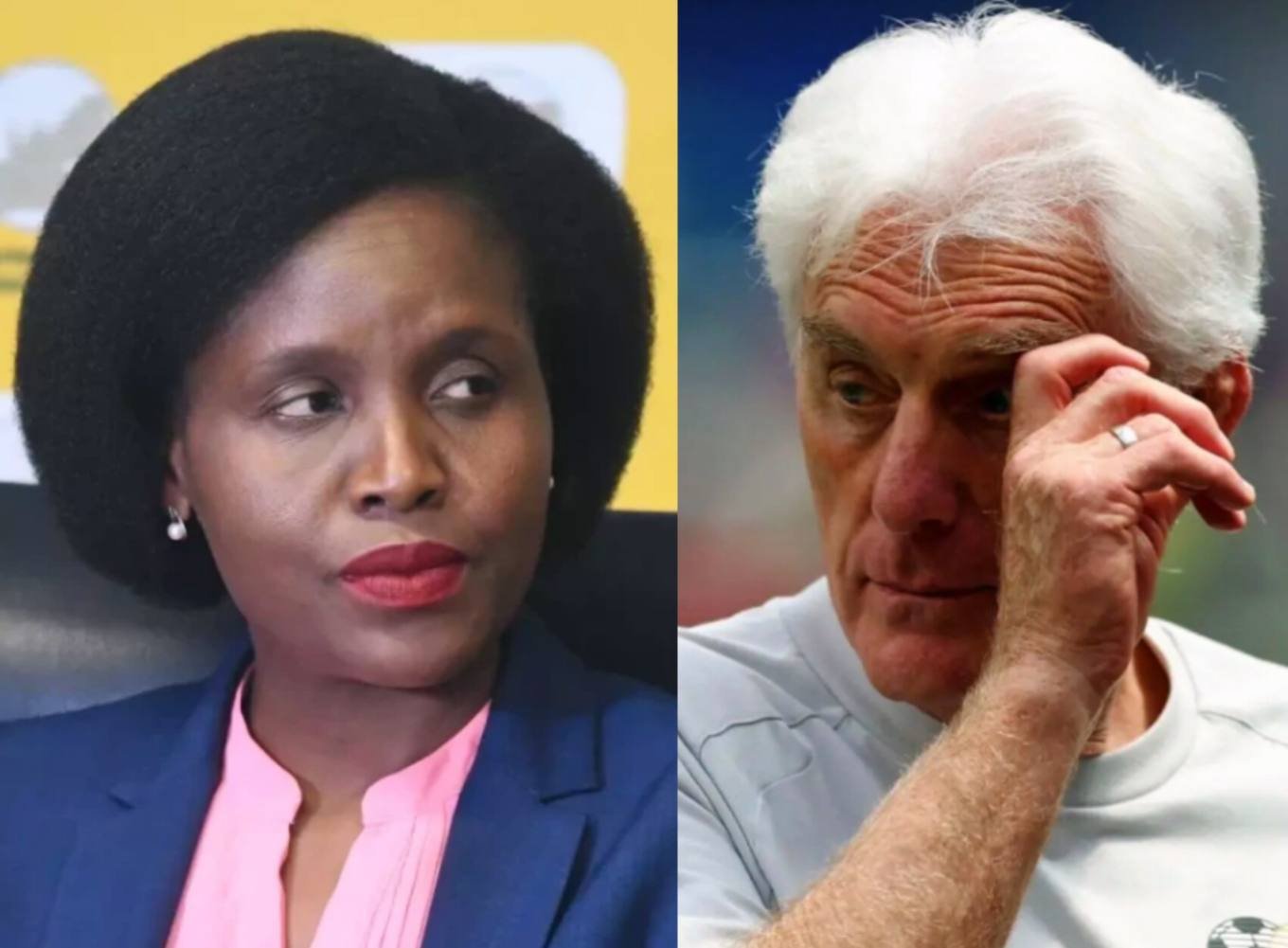
The biggest moment came when SAFA CEO Lydia Monyepao was removed from the virtual Portfolio Committee on Sport, Arts and Culture meeting after refusing to disclose former Bafana coach Hugo Broos’ salary.
For more developments across the South African sports sector, stay with NOWinSA.
Monyepao removed as Broos salary becomes flashpoint
The confrontation began when EFF MP Eugene Mthethwa repeatedly asked Monyepao how much Broos earned during his five-year spell as Bafana coach.
Monyepao declined to provide the figure, arguing that the details were confidential and contained in Broos’ contract.
Committee chair Joe McGluwa warned her that SAFA was appearing before a parliamentary oversight body and had to answer the questions put to it.
Monyepao maintained her position.
McGluwa then ordered her removal from the meeting.
With the SAFA CEO gone, Sports, Arts and Culture Minister Gayton McKenzie stepped in with the figure.
McKenzie revealed that Broos earned R1.4 million a month, amounting to R16.8 million a year, excluding additional benefits such as a car and accommodation.
The disclosure immediately shifted attention to the coach SAFA wants to replace him: Pitso Mosimane.
Pitso Mosimane salary puts SAFA under pressure
SAFA’s handling of Mosimane’s proposed salary also came under fire.
The association initially offered Mosimane R5 million a year, before increasing the proposed package to R10 million, according to SAFA officials who appeared before the committee.
That remains well below Broos’ reported R16.8 million annual package.
The contrast raised questions about why one of Africa’s most decorated coaches would be offered less than his predecessor.
Mosimane’s appointment was approved by the SAFA NEC on August 8, but SAFA has yet to officially announce him as Bafana coach.
Contract negotiations have reportedly included his salary, image rights and technical team.
McKenzie has already expressed confusion over the delay.
The minister has also argued that Mosimane should receive at least the same starting salary as Broos if the appointment is finalised, pointing to the South African coach’s record and achievements.
Mosimane has won the CAF Champions League three times, including twice with Al Ahly, while also guiding Mamelodi Sundowns to their first continental title.
World Cup questions add to SAFA scrutiny
The parliamentary meeting was not only about coaching salaries.
SAFA appeared before MPs to account for Bafana Bafana’s 2026 World Cup campaign, including the visa problems that delayed the team’s departure for Mexico.
Monyepao also acknowledged problems with securing training venues during the tournament.
The role of team manager Vincent Tseka came under scrutiny, with his contract ending on July 31.
SAFA president Danny Jordaan was also absent from the meeting. He submitted an apology and indicated that he was seeing a doctor, but committee members questioned his failure to appear before them.
The committee also heard about SAFA’s expected World Cup income.
SAFA CFO Gronie Hluyo told MPs that the association expected about $12 million from FIFA, with Broos set to receive 10% and assistant coach Helman Mkhalele 5%.
McKenzie gives SAFA 21 days over VAR money
The parliamentary clash came as McKenzie was already turning up the pressure on SAFA over VAR funding.
The minister said he had demanded the return of R13 million that he said his department provided towards the VAR project and gave SAFA 21 days to account for the money.
He has warned that he could escalate the matter to FIFA if SAFA fails to resolve it.
SAFA’s response on Tuesday, however, put a different figure on the funding.
In its formal VAR funding update, SAFA said the Department of Sport, Arts and Culture transferred R20 million to the association in April 2026.
SAFA said the full amount remains unspent in a separate account, together with accrued interest. It said its NEC approved the VAR project in principle in May but ordered further checks on the budget, costs and procurement process.
SAFA added that DSAC had granted it a final 21-day extension to complete the outstanding processes and submit a report.
The competing figures will likely require further clarification, but SAFA’s position is clear: it says the R20 million remains intact while governance and procurement checks continue.
A big week for South African football
Tuesday’s parliamentary drama caps a remarkable few days for SAFA and South African football.
The association is facing questions over World Cup administration, leadership accountability, VAR implementation and the delayed appointment of Mosimane.
At the same time, McKenzie continues to push a more interventionist agenda across sport.
His wider approach has already attracted controversy, including the backlash over the World Cup artist lineup.
For SAFA, however, the immediate challenge is more pressing.
Bafana are approaching their 2027 Africa Cup of Nations qualifying campaign, while the Mosimane appointment remains unresolved and the VAR dispute has entered another 21-day phase.
After Tuesday’s extraordinary parliamentary confrontation, the pressure on SAFA is unlikely to ease.