

ACCRA/PRETORIA — The diplomatic relationship between Ghana and South Africa is fracturing under real-time pressure, creating a tense standoff that stretches from crowded embassy gates in Pretoria to the gold-rich fields of Tarkwa.
On one side, hundreds of anxious Ghanaian nationals are packing luggage and reporting to their High Commission to flee a wave of hostile anti-immigration protests. On the other side, Accra is squeezing South Africa’s largest mining corporate giant.
The unfolding friction connects directly to the broader climate of ongoing immigration tensions currently reshaping South African township economies.
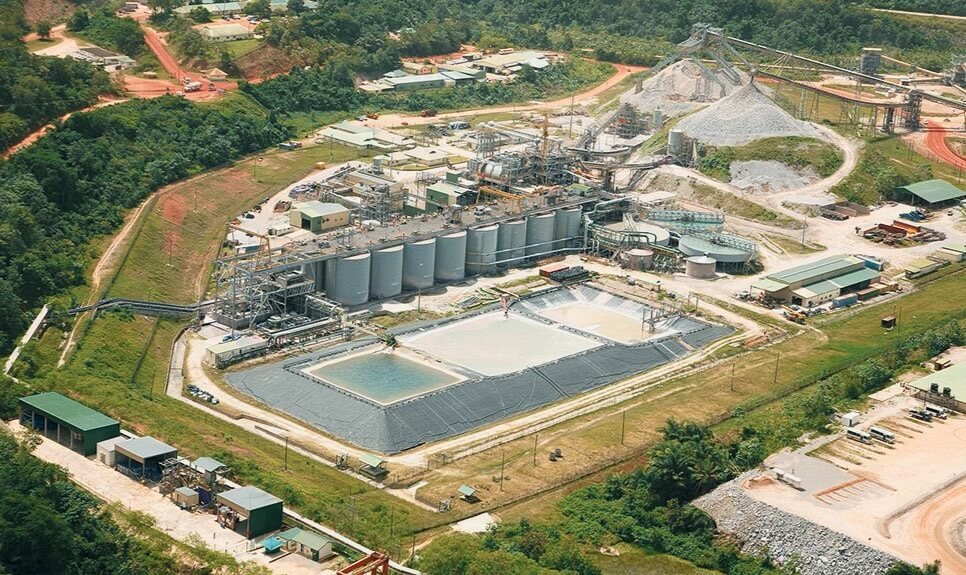
Fearing a catastrophic loss, Gold Fields executives are reportedly now leaning on President Cyril Ramaphosa to personally lobby Ghanaian President John Dramani Mahama. The prize is the survival of the Tarkwa mining lease before it expires in April 2027.
As the largest open-pit gold mine in Ghana, the asset generated a massive $2.3 billion in revenue and $427 million in net profit last year alone.
NOWinSA journalists stood on the ground this week at the Ghanaian High Commission in Pretoria, capturing the emotional weight of a state-funded repatriation programme.
We witnessed and extensively engaged with Ghanaian nationals who arrived with suitcases in hand, abandoning their lives in South Africa because they no longer feel safe.
High Commissioner Quashie breaks down the Ghana repatriation programme
Ghana’s High Commissioner to South Africa, Benjamin Quashie, confirmed to NOWinSA that 826 citizens have registered to return home, with the first wave of 300 departing this week.
He offered a sharp, uncompromising perspective on the regional crisis:
“We are not saying illegal migration is not a problem — in fact it is a huge concern. But the approach we take to solving it is what will determine whether we move forward or backward,” Quashie stated.
“The government of Ghana feels it is time to bring those who feel unsafe in this country back home. We should move from talking and get to action.”
Quashie’s warning ripples far beyond the consular lines. The political pressure building over South Africa’s illegal immigration crackdowns is clearly bleeding directly into West African boardrooms.
Why the Ghana Gold Fields lease renewal for the Tarkwa mine is no longer guaranteed
Ghana’s Ministry of Lands and Natural Resources has fundamentally rewritten the rules of resource ownership. Under its updated framework, multinational corporations no longer receive automatic lease extensions.
“It won’t be business as usual where we just automatically renew the lease,” Tandoh told Reuters.
To secure the Ghana Gold Fields lease renewal, the mining giant must first prove concrete local value creation, introduce aggressive technology transfers, and fund domestic community development.
Regulators have ordered Gold Fields to submit an exhaustive operational blueprint for technical and ministerial review.
The company already knows Accra is not bluffing. Just last year, the Ghanaian government rejected the renewal of Gold Fields’ Damang mine lease, forcing the miner to halt operations and completely vacate the site.
The Tarkwa mine presents a far bigger financial disaster if lost. The site produced 427,000 ounces of gold in 2025, anchoring Gold Fields’ global production profile.
Kenneth Ashigbey, CEO of the Ghana Chamber of Mines, warns that this regulatory volatility could scare away foreign capital.
Referring to pressure from the Accra-based Institute for Economic Affairs to hand the asset to local operators, Ashigbey slammed the state’s hesitation:
“Their proposal will destroy the security of tenure that is essential to the development and sustenance of the mining industry,” Ashigbey told reporters.
An anonymous mining executive echoed that dread to Reuters, admitting that failed attempts to secure high-level meetings with Ghanaian officials have sparked deep panic within corporate headquarters.
The toxic intersection of resource nationalism and xenophobia
The corporate fight over the Tarkwa mine lease has crashed directly into the explosive online anger surrounding South Africa’s xenophobia debates.
Eric Adjei, CEO of Ghana’s National Entrepreneurship and Innovation Programme (NEIP), actively fanned the flames of resource nationalism on social media:
“To Ghanaians coming home because of the xenophobic racism, we love you all. But to the Minister for Lands and Natural Resources: please do not renew the mining lease for Gold Fields… We need local companies to work for us as citizens.”
The message sparked immediate alignment across West African digital networks, as shown in the X thread below : “That’s why our politicians are fighting to keep illegal foreigners — because of their business interests,” one citizen fired back. “We can’t suffer because of their selfishness to keep their pockets full.”
Whether intentional or not, the optics look damning for Pretoria. Ghana is choking a vital South African economic pipeline precisely while South African protests drive Ghanaian citizens out of Gauteng.
Mbalula’s ‘white foreigners’ comment ignites South Africa illegal immigration fury
Back home, ANC Secretary-General Fikile Mbalula attempted to redirect the fierce national debate on South Africa illegal immigration — but his remarks quickly triggered political backlash online.
Mbalula said illegal immigration in South Africa is not limited to African nationals, pointing out that undocumented white foreigners are also living and operating businesses in the country unlawfully.
He also warned that anti-illegal migration protests should not not turn into xenophobia or tribalism, specially cautioning against the targeting of Shangaan-speaking South Africans.
The remarks, which appeared aimed at broadening the debate, instead drew criticism from social media users and political commentators. “If you knew all along, then why are you guys not doing anything about it?” one commenter asked.
Another added: “A whole SG of the main party in the GNU, admitting to knowing about criminality. How hopeless is the ANC?”
When mining deals meet migration fears
What is unfolding between Ghana and South Africa is not simply a bilateral mining dispute or a migration management problem. It is the collision of two sovereign nations whose domestic politics are feeding into each other in real time.
Ghana is flexing its resource nationalism at a moment when gold prices are elevated and African governments are aggressively reasserting control over their mineral wealth. South Africa’s Gold Fields, caught in the crossfire, is turning to presidential diplomacy to salvage a concession worth billions.
Meanwhile, Ghanaian nationals continue to arrive at the High Commission in Pretoria, luggage in hand, choosing certainty at home over uncertainty abroad — a quiet but powerful signal of where things stand.
The Ghana repatriation programme and the Tarkwa mining standoff may appear to be separate stories. But in the complex, interdependent relationship between these two nations, they are increasingly the same one.