

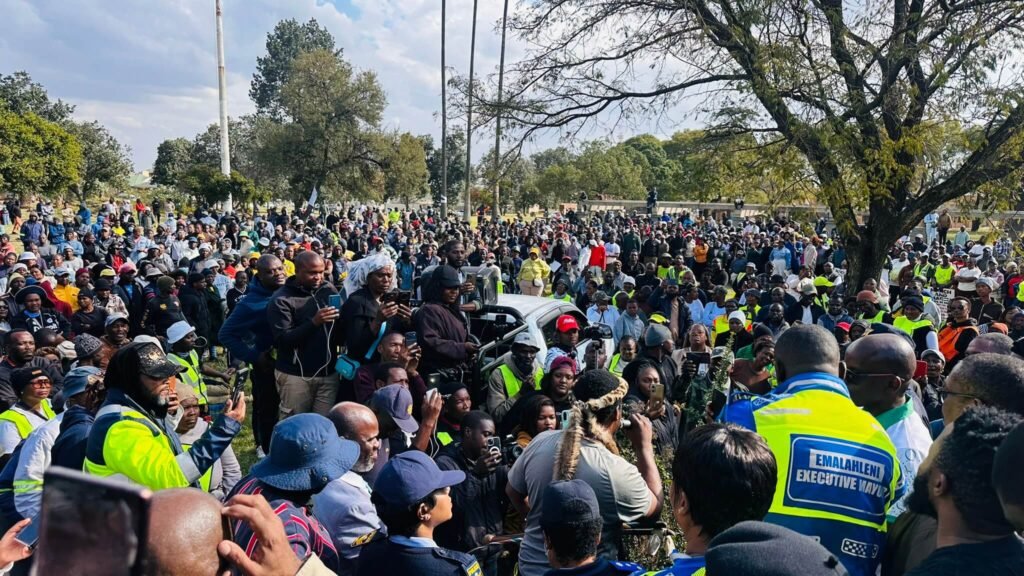
eMalahlen, Mpumalanga — Thousands of residents marched through eMalahleni, Mpumalanga, on Thursday, June 5, 2026, as the March and March movement intensified its campaign against illegal immigration.
The demonstration drew one of the movement’s largest crowds outside KwaZulu-Natal and unfolded against the backdrop of growing migration tensions across the country.
The march comes against the backdrop of escalating migration tensions in South Africa, which NOWinSA has previously reported on as government faces mounting pressure to address both border security and community concerns.
March and March, founded by Jacinta Ngobese-Zuma and active across nine provinces since 2025, organised the protest near a local taxi rank.
Participants called for stricter enforcement against undocumented migrants, citing unemployment, pressure on informal businesses and concerns about crime.
Organisers have set a June 30, 2026, deadline for government action. They have warned that failure to respond could trigger a national shutdown campaign.
eMalahleni anti-immigration march signals wider support for March and March
The turnout in eMalahleni challenged the perception that March and March operates primarily in KwaZulu-Natal.
The movement has expanded its footprint across Gauteng, Mpumalanga, Limpopo and the North West, holding demonstrations in major urban centres and smaller communities alike.
Earlier this year, protesters also marched through Mbombela’s CBD before handing a memorandum to local authorities and the Department of Home Affairs.
Organisers demanded the deportation of undocumented foreign nationals and increased immigration enforcement.
The growing mobilisation follows a series of migration-related incidents that NOWinSA has tracked, including the recent Mossel Bay unrest and migration tensions that sparked national debate over immigration, community safety and xenophobia.
While movement leaders insist their campaign focuses on illegal immigration, government officials have repeatedly warned against vigilantism and violence targeting foreign nationals.
South Africa and Kenya discuss illegal immigration during Ruto state visit
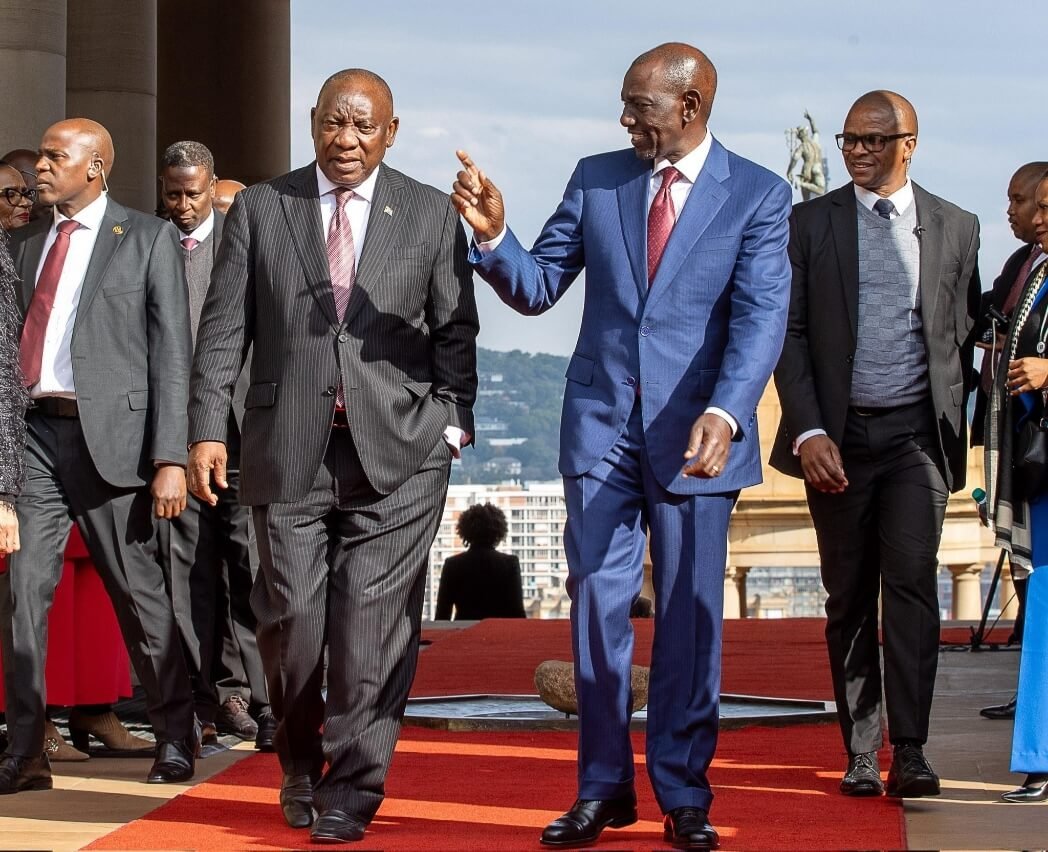
The eMalahleni march took place as President Cyril Ramaphosa hosted Kenyan President William Ruto at the Union Buildings in Tshwane for a state visit aimed at strengthening bilateral relations.
Welcoming the Kenyan delegation, Ramaphosa said:
“It is a profound honour and a personal joy to welcome President Ruto and the Kenyan delegation to South Africa. This Reciprocal State Visit is a celebration of the friendship and solidarity that binds our two nations.”
International Relations Minister Ronald Lamola also addressed the issue of illegal immigration during the visit.
“South Africans are welcoming and peace-loving people who want to work with everyone on the continent. The challenge we are dealing with is illegal migration, and the South African government is addressing it,” Lamola said.
Lamola and Minister in the Presidency Khumbudzo Ntshavheni said government continues to strengthen border management through deportations, drone surveillance and upgraded border technology.
Both ministers condemned violence against foreign nationals and said authorities would prosecute those responsible for criminal acts.
Lamola also emphasised the importance of the South Africa-Kenya relationship.
“Kenya is one of South Africa’s largest trading partners in Africa outside of the Southern African Development Community,” he said.
According to the latest figures from the Observatory of Economic Complexity (OEC), South Africa and Kenya maintain one of the continent’s most significant bilateral trading relationships, with South Africa exporting billions of rand worth of manufactured and semi-finished goods annually.
Lamola said those exports amount to approximately R11 billion a year.
Kenya travel advisory follows rising immigration tensions
As anti-immigration protests continue, the Kenya High Commission in Pretoria has urged Kenyan nationals to avoid demonstration sites and carry valid identification documents at all times.
The advisory follows similar warnings issued by several African countries as tensions surrounding illegal immigration continue to escalate in parts of South Africa.
The commission stressed that the advisory was precautionary and that Kenyan nationals were not being specifically targeted.
According to the African Human Rights Law Journal, migrants from Mozambique, Zimbabwe, Lesotho and Malawi comprise the majority of undocumented immigrants in South Africa, with estimates ranging between 500,000 and one million people.
Government has maintained that stronger regional cooperation and effective border management remain the most sustainable solutions to irregular migration.
With the June 30 deadline approaching and demonstrations spreading across several provinces, attention is now turning to whether government interventions will ease tensions or whether further protests will follow.
Related coverage: NOWinSA has also reported on how diplomatic tensions between South Africa and Ghana have extended into the commercial sector through the Gold Fields lease dispute in Ghana.
We were also on the ground covering Ghana’s repatriation efforts from South Africa as concerns over migration-related tensions intensified.
Stay updated with the trending, insightful stories driving the continent’s growth on the NOWinSA Africa NewsDesk — Stories Shaping South Africa Today.