

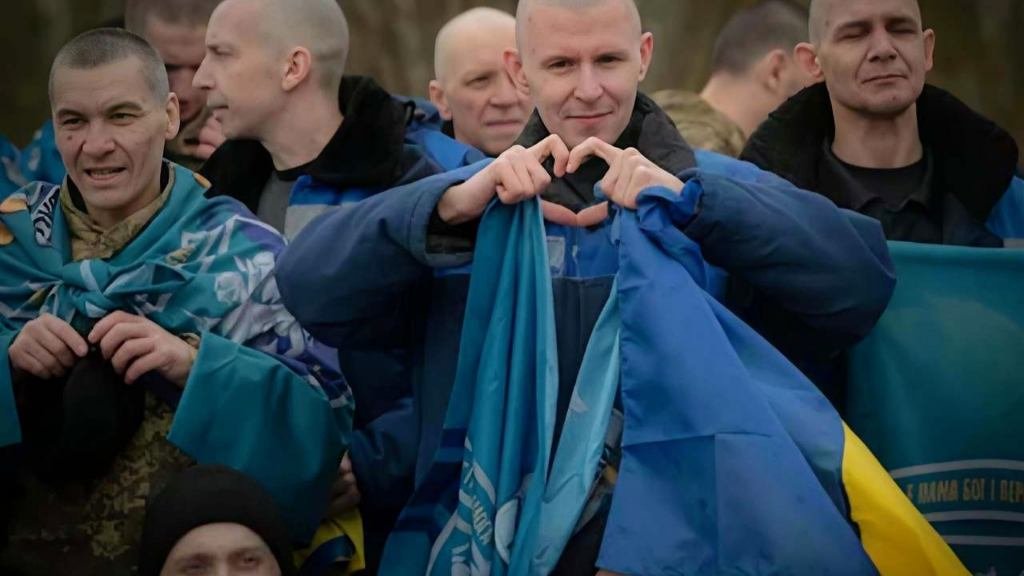
As military operations expand and prospects for a swift political breakthrough in the Russia-Ukraine war diminish, a new prisoner exchange shows that some channels between Moscow and Kyiv remain open despite continued escalation.
The United Arab Emirates announced on Wednesday that its mediation had facilitated the exchange of 206 prisoners, with 103 from each side.
It was the 26th UAE-mediated exchange between Russia and Ukraine, bringing the total number of prisoners exchanged through its efforts to 7,997.
The agreement comes as military escalation and reciprocal attacks continue, making broader understandings over the course of the war increasingly difficult.
The latest development adds to the wider diplomatic and legal fallout from the Russia-Ukraine war, including previous tensions over Putin’s proposed visit to South Africa.
Russia-Ukraine prisoner exchange tests diplomatic channels
According to Reuters, the prisoner issue became the subject of a new dispute between Moscow and Kyiv just days earlier.
The two sides traded accusations over the obstruction of exchange operations and disagreements over lists of detainees.
The dispute shows that even humanitarian agreements remain exposed to political and military tensions between the two countries.
The Russian Defence Ministry confirmed that Wednesday’s operation was mediated by the UAE.
The UAE Ministry of Foreign Affairs said cooperation between the two sides enabled the latest exchange to go ahead.
UAE mediation keeps Russia-Ukraine communication open
The operation was not an isolated effort. Abu Dhabi has mediated a series of prisoner exchanges over the past several years and hosted two rounds of talks involving the United States, Russia and Ukraine during the current year.
The UAE’s role reflects a broader trend in which smaller states use targeted diplomacy to create openings between larger powers.
A report by Rome-based independent think tank the Istituto Affari Internazionali identifies the UAE and Qatar as increasingly effective mediators in the Russia-Ukraine war.
For observers of the conflict, the significance of these efforts lies less in replacing settlement negotiations than in keeping limited communication channels open while fighting intensifies.
ALSO READ: Russia orders arrest of ICC Putin prosecutor, Karim Khan
Russia-Ukraine war leaves limited space for diplomacy
The continued operation of the channel, despite changing levels of escalation, indicates a degree of practical trust that allows Moscow and Kyiv to address sensitive humanitarian issues.
That trust remains limited. The recent dispute over prisoner lists shows how quickly cooperation can come under pressure when political and military tensions rise.
Still, these channels could become more important if the parties eventually move from managing the consequences of the war towards de-escalation or broader political negotiations.
The UAE could then play a larger role in any settlement process, particularly if Moscow and Kyiv seek a mediator with experience handling sensitive and complex issues.
What UAE mediation could mean for future talks
The latest prisoner exchange does not signal a broader political breakthrough. It does, however, show that Moscow and Kyiv can still cooperate on specific humanitarian issues when an intermediary helps manage the process.
That limited cooperation could provide a foundation for further diplomatic contacts if conditions change and the parties become more open to negotiations.
For now, the UAE’s role remains focused on practical mediation rather than replacing direct settlement talks. Its continued involvement gives Abu Dhabi a channel that could prove useful if the Russia-Ukraine war eventually shifts towards de-escalation and political negotiations.