


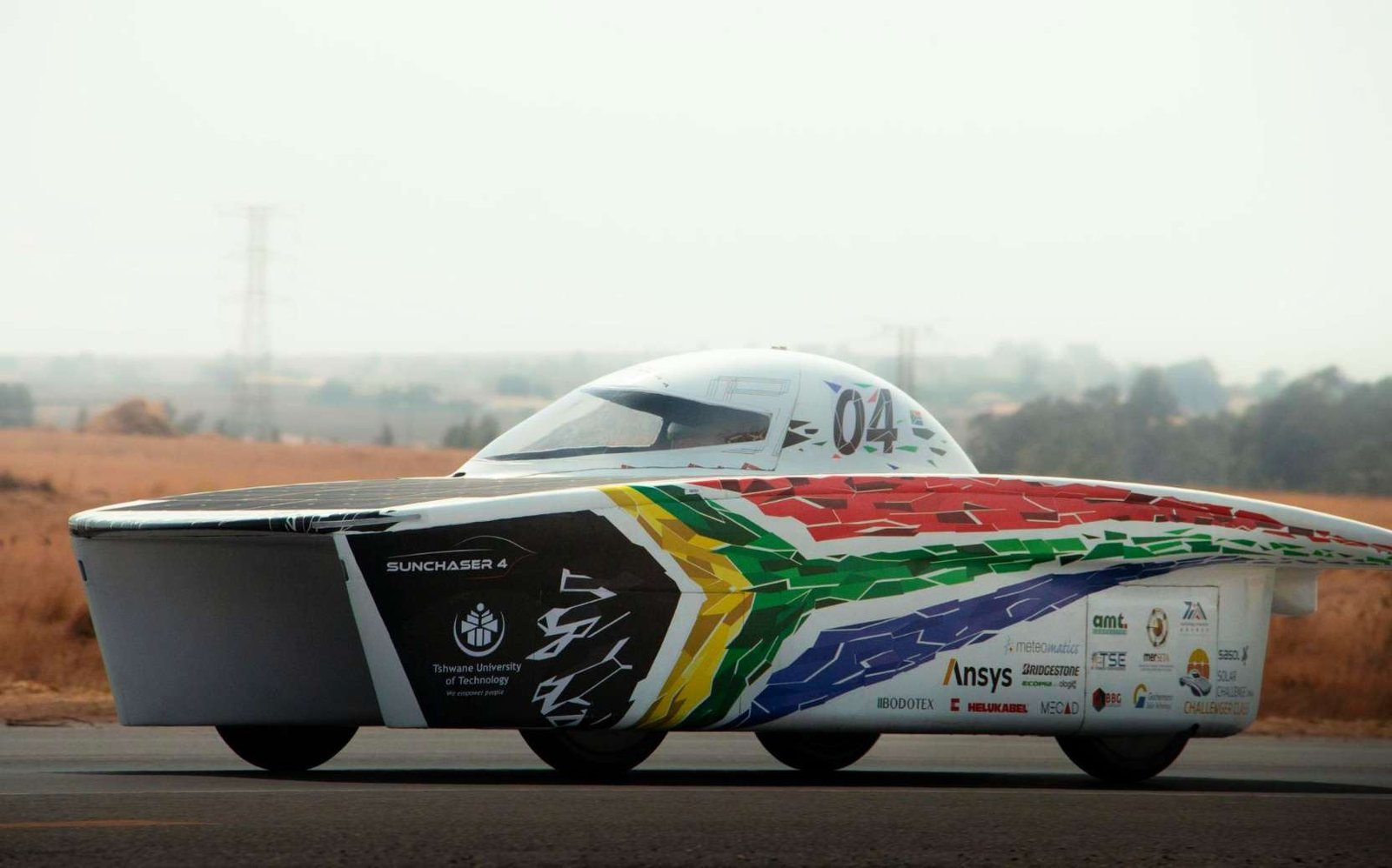
There is no conventional engine bay in TUT’s SunChaser 4. There is no fuel tank, either.
Instead, three years of late nights have produced a carbon-fibre shell built by engineering students at the Tshwane University of Technology (TUT).
The project offers a glimpse into the skills and technologies shaping the South African motoring sector.
Now, the students are preparing to drive the solar car more than 2,000 kilometres on public roads, powered by the sun.
On September 10, SunChaser 4 will cross the start line in Sasolburg. It is entering the 2026 Sasol Solar Challenge, an eight-day endurance event from Sasolburg to Cape Town.
The event has been held every two years since 2008, with this year’s race marking its ninth edition.
For the first time, SunChaser 4 enters the challenge with Ford South Africa as its sponsor and technical partner.
A car that is also a thesis
SunChaser 4 is more than a student engineering exercise.
TUT students have predominantly designed and built the vehicle, with input from university staff and industry experts.
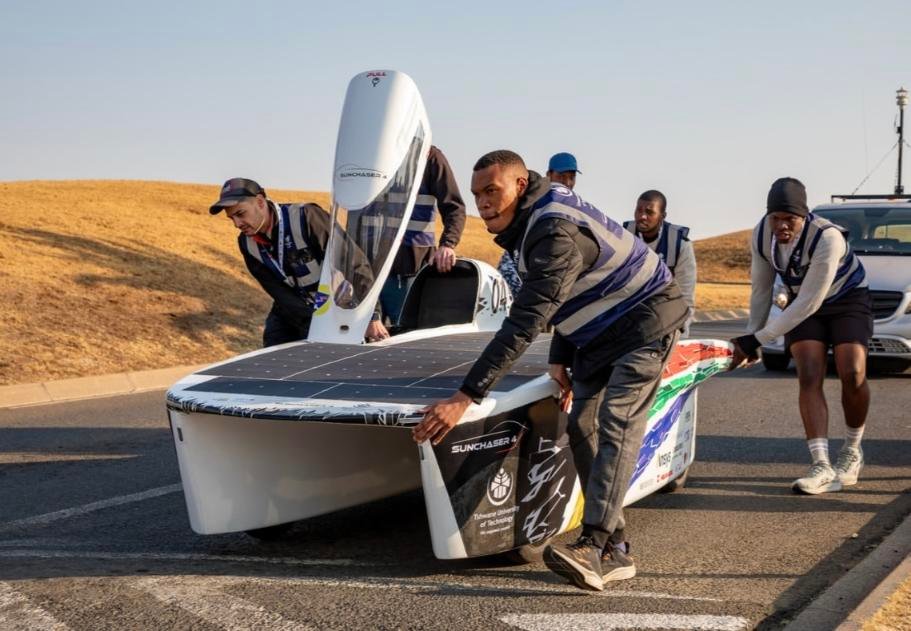
The project has challenged them to solve real problems involving battery management, aerodynamics, energy efficiency and vehicle systems.
These are the kinds of practical engineering problems that cannot be fully understood from a classroom alone.
Ford engineers from the Silverton plant work directly with the TUT team as industrial mentors. They share practical knowledge around daily preparations, tooling, mechanical advice and working under pressure.
Ford Vice-President of Manufacturing Operations Ockert Berry says the partnership is about more than getting a solar car to the finish line.
“It’s a direct investment in skills that matter not just for an event like the Sasol Solar Challenge, but for the future of the industry,” he says.
Berry also points to South Africa’s shift towards new-energy vehicle technologies.
Projects such as SunChaser 4, he says, give students an opportunity to develop the practical skills needed for that changing industry.
WATCH: The technology keeping SunChaser IV connected
The engineering behind SunChaser IV extends beyond its lightweight body and solar power system.
Its telemetry system gives the team a real-time view of the vehicle’s performance while it is on the road.
In researching this story, NOWinSA found an explainer featuring Henk Le Roux, a technologist and Master’s student in TUT’s Department of Electrical Engineering.
In the video, Le Roux unpacks how the SunChaser IV telemetry system gathers real-time performance data directly from the solar vehicle. It then transmits that information wirelessly to a chase vehicle or base station.
WATCH: Henk Le Roux explains the SunChaser 4 telemetry system
The team uses the data to monitor the car’s vital systems during the journey. It also gives them information to support quick, data-driven decisions while the vehicle is competing.
Le Roux says TUT’s Electronic Engineering students receive the practical training needed to contribute to projects such as the Sasol Solar Challenge.
“Students of Electronic Engineering at TUT are taught the exact hands-on skills needed to work on high-level projects like the Sasol Solar Challenge — spanning everything from physical circuit design to writing custom software and its practical implementation,” he says.
The telemetry system brings several of those disciplines together. Electronics, software, wireless communication and vehicle engineering all have to work together while the car is moving.
A proven pedigree faces a tougher test
SunChaser is no stranger to competition. Previous generations of the car have picked up awards on the international stage.
The SunChaser 4 that competed in the 2022 Ilanga Cup at Red Star Raceway covered 390 km during an eight-hour endurance leg.
The car weighed just 165 kg and had a drag coefficient of 0.1. In full sun, it has demonstrated the ability to travel more than 500 km on a single charge.
The 2026 Sasol Solar Challenge will raise the stakes considerably.
The eight-day challenge will take teams along public roads towards Cape Town, with competitors from South Africa, Switzerland and India taking part.
This is not a conventional sprint race. The winner is the team that covers the most kilometres over the full eight days.
That puts the focus on design, reliability, energy management and race strategy, rather than outright speed.
Why Ford is paying attention
For Ford, the project offers a window into technologies that could influence the future of mobility.
Lightweight composite construction, advanced battery management and solar integration are among the technologies incorporated into SunChaser 4.
Ford says some of these technologies are already appearing in production vehicles.
“This is the talent that takes these early green shoots of innovation and scales them for the future of mobility,” Berry says.
Ford’s support includes Ranger PHEV chase and support vehicles, as well as a technical team travelling with the students throughout the challenge.
The carmaker is also providing logistics support and on-the-ground technical mentorship during the event.
For TUT’s students, however, the immediate objective is much simpler.
They want to get SunChaser 4, and the team behind it, from Sasolburg to Cape Town in one piece.
And they intend to do it using the power of sunlight.