


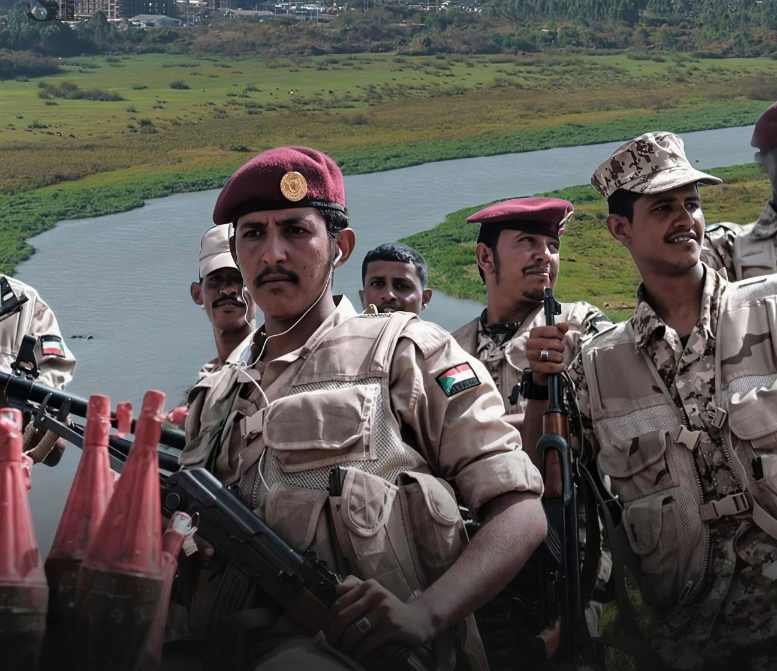
The Sudan Founding Alliance (Tasis), which includes the Rapid Support Forces (RSF), announced the capture of the area and military camp of “Maqanza” in the Blue Nile region.
The development carries added significance because Maqanza lies within Bau Locality and is connected geographically to the Ingessana Hills, one of the region’s most prominent natural landmarks.
In a statement on Wednesday, November 25, the forces said they had secured full control of the “Maqanza” camp following battles with the Islamic Movement’s army and its allied militias.
They also confirmed the deployment of reinforcements to secure the area and the continuation of their advance towards Damazin along several fronts.
Maqanza’s geographical and economic significance
“Maqanza” lies within Bau Locality, in the southwestern sector of the Blue Nile region, according to a report published by the Sudanese newspaper Al-Saiha.
The report noted that the area falls within the Ingessana Hills, giving it geographical significance in the context of military movements across this part of the region.
The area’s significance extends beyond its geographical location. The same report pointed to gold-mining activities in its vicinity, describing it as one of the important areas for this activity in the Blue Nile region.
This economic dimension adds further significance to control of the area, given the link between local resources and the future of administration and economic activity in areas affected by the war.
A succession of military advances towards Damazin
The liberation of “Maqanza” follows Tasis’s announcement that it had seized control of the area and military camp of “Suda” on November 23, preceded by the capture of the Bau Locality headquarters on November 19, making the latest development part of a succession of operations across the same geographical area.
The significance of this sequence lies in the fact that operations are no longer confined to a single position but have extended to multiple areas around Bau, alongside other movements in Geissan Locality.
On November 20, the alliance’s forces announced that they had taken control of Khor Mak, Al-Madina 10, Al-Madina 11, Sinja Nabq and Al-Taqa village.
The alliance also announced the capture of strategic Bao, about 59 kilometres from Damazin, in a separate development covered in our report on TASIS’s announced capture of Bao near Damazin.
These positions are located within a geographical area relatively close to Damazin.
Sudan Tribune reported that the five positions lie approximately 40 kilometres southeast of the regional capital, while press reports have highlighted the geographical significance of Bau Locality in movements towards the city.
According to Tasis’s official statement on the capture of Maqanza, the liberation of the area represents a step within a broader plan to take control of the region and advance towards other strategic positions.
The newly captured position thus becomes part of the shifting operational landscape in Blue Nile, where geographical, economic and military considerations intersect in determining the significance of areas witnessing changes in control.