


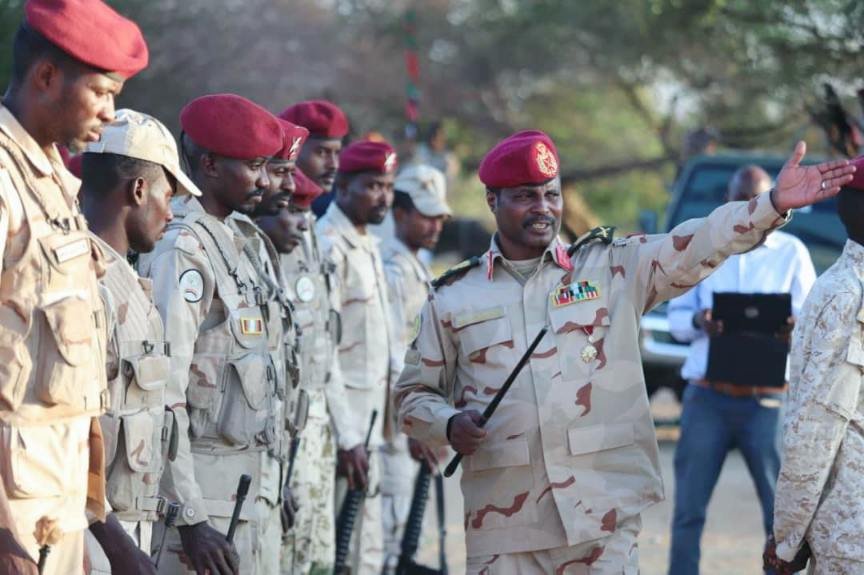
The Sudan Founding Alliance (TASIS) says its forces have captured the strategic area of Bao in Sudan’s Blue Nile state, just 59 kilometres from Damazin, the regional capital.
The reported advance comes amid renewed concerns over civilian casualties, following a Sudanese army airstrike in West Kordofan that was reported to have killed at least 13 civilians earlier this week.
TASIS forces, which include the Rapid Support Forces (RSF) and the Sudan People’s Liberation Movement-North (SPLM-N), also announced that they had secured three strategic areas, bringing them closer to Damazin.
In a statement, the alliance said its forces had inflicted heavy losses on the army and its allied Muslim Brotherhood groups.
It also claimed to have seized a substantial stockpile of military equipment.
The reported capture of Bao is significant because of the area’s strategic location. It links several parts of the region, including the state capital, Damazin.
Fighting intensifies around Damazin and Roseires Dam
Battles in Blue Nile state have intensified over the past two weeks.
On Monday, the Sudanese army deployed substantial reinforcements amid reports that it had brought chemical weapons into Damazin.
The allegation has not been independently established.
Over the past four days, TASIS forces have announced further territorial gains in the region, which shares borders with Ethiopia and South Sudan.
On Tuesday and Wednesday, the alliance said its forces had captured Sali and Maqaja, two areas near the Roseires Dam.
The dam supplies Sudan with more than one-third of its electricity output. It is also a major source of irrigation for the Suki and Gezira agricultural schemes, which support the livelihoods of more than five million people.
Any further fighting around the dam could therefore have consequences beyond the immediate battlefield, particularly for electricity generation and agricultural production.
Sudan’s war continues to deepen humanitarian crisis
The conflict between the Sudanese Armed Forces and the RSF erupted in April 2023 and has devastated large parts of the country.
Estimates of the total death toll vary widely, with analysts and humanitarian organisations citing figures ranging from 150,000 to 400,000.
The toll includes indirect deaths linked to starvation, disease and the collapse of healthcare services.
More than 13 million people have been forced to flee their homes, according to aid groups, creating the world’s largest displacement and hunger crisis.
Control of the country remains divided. The Sudanese army and its allies hold much of northern, eastern and central Sudan, including Khartoum, Port Sudan and Wad Madani.
The RSF and allied militias control nearly all of Darfur in the west, as well as much of West Kordofan.
The south remains contested, while the RSF and its allies have also expanded their presence in parts of Blue Nile state.
TASIS’s latest announced gains around Bao, Sali and Maqaja add another pressure point in a conflict where control of strategic locations and infrastructure could shape the next phase of fighting.