

If your SASSA grant has been suspended, the first step is to establish why your payments stopped.
A missed review, outdated personal details or missing documents could affect your grant.
However, a suspension does not automatically mean you must apply again.
With December 2026 SASSA payment dates approaching, beneficiaries who have not received their expected money should contact the agency without delay.
They need to establish the status of their grant and find out what is required to resolve the problem.
NOWinSA’s SASSA office directory for all nine provinces can help beneficiaries find their nearest office and relevant contact details.
This guide explains what to do next, which documents to prepare and when an appeal may be necessary.
Why would SASSA suspend a social grant?
A suspended grant means SASSA has stopped payments, usually because it needs to resolve an issue affecting the beneficiary’s eligibility or grant administration.
According to SASSA’s 2026 You and Your Grant booklet, social grants may be suspended for several reasons, including:
- Failure to complete a requested verification process.
- Failure to submit required or outstanding documents.
- Changes in the beneficiary’s marital status, residential address or financial circumstances.
- The outcome of a grant review.
- Failure to cooperate during a review.
- Improved financial circumstances that affect eligibility.
- Misrepresentation, falsification of information or suspected fraud.
- A grant that was approved in error.
These reasons do not mean every beneficiary whose payment is delayed has had their grant suspended.
SASSA may also be conducting a review or verification process.
In July 2026, the agency reminded beneficiaries selected for review that they could receive their payments on a separate fourth payment day while completing the process.
It warned that failure to respond to a review request could eventually lead to suspension or the grant lapsing.
Beneficiaries should therefore confirm their grant status before assuming that payments have been cancelled.
Suspended, lapsed or cancelled: What is the difference?
These terms describe different situations. Knowing which one applies is important because the next steps may differ.
- Suspended: Payments have been stopped while SASSA addresses an issue. Depending on the reason, the beneficiary may be able to resolve it and apply for restoration.
- Lapsed: The grant has ended because a condition for its continuation was no longer met. Reasons can include the death of a beneficiary, expiry of a temporary disability grant or failure to claim an approved grant within the prescribed period.
- Cancelled: SASSA has ended the grant following a decision that it should no longer continue. This may happen where a beneficiary no longer qualifies or where a grant was obtained through misrepresentation or approved in error.
A beneficiary should ask SASSA to confirm the exact status and provide the reasons for the decision.
Do not rely only on a payment-status message or an explanation given verbally at an office.
What should you do if SASSA suspends your grant?
Beneficiaries should deal with the issue as soon as possible.
Waiting can make it harder to resolve missing information or meet a restoration deadline.
1. Find out why your grant was suspended
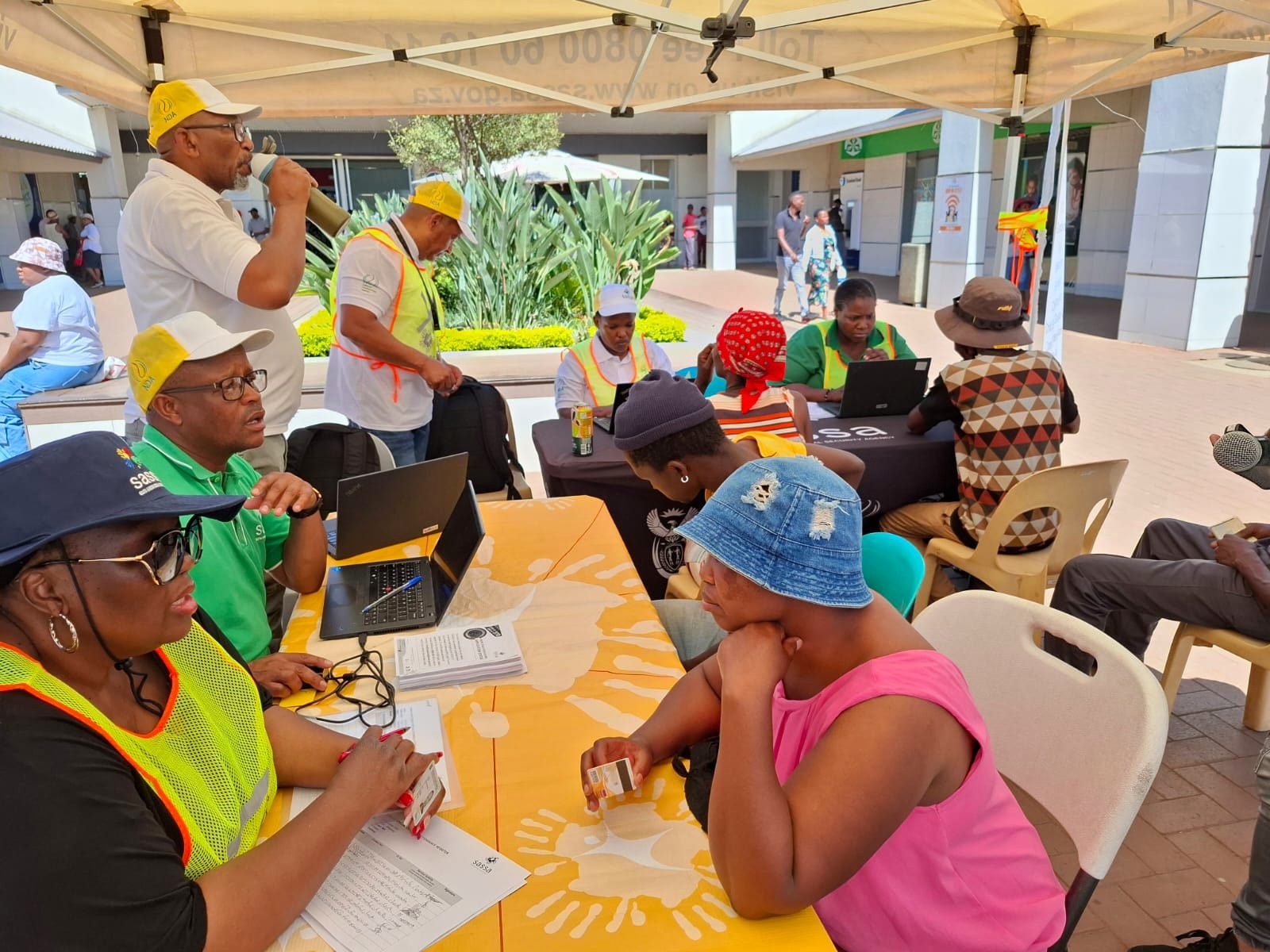
Contact SASSA or visit the nearest local office. Ask an official to explain the reason for the suspension and identify the outstanding issue.
In particular, ask:
- What is the current status of my grant?
- Why were my payments stopped?
- Was I selected for a review or verification process?
- Which documents or information must I provide?
- What is the deadline to apply for restoration?
- Do I need to make representations or lodge an appeal?
Ask for the explanation in writing, where possible. Record your reference number, the date of your enquiry and the details of the official assisting you.
2. Prepare the documents SASSA requests
The documents required will depend on the reason for the suspension and the type of grant.
Beneficiaries should follow the instructions in their notification rather than assume every case requires the same paperwork.
Depending on the issue, prepare:
- Your South African identity document or other SASSA-approved proof of identity.
- Your suspension or review notification, if you received one.
- Proof of your current residential address, if requested.
- Recent bank statements for the accounts SASSA needs to verify.
- Proof of income, employment or other financial circumstances, where relevant.
- Medical reports or supporting clinical information for a disability-related review.
- Birth certificates or court orders for child-related grants, where applicable.
- Any additional documents listed in SASSA’s communication.
For grant reviews, SASSA’s July 2026 notice advised beneficiaries to bring a valid ID, proof of income, bank statements for the previous three months, proof of residence and relevant supporting documents.
These may include proof of marital status or grant-specific records.
Keep copies of everything submitted. Request proof of receipt or confirmation that the documents have been captured on your grant record.
3. Complete the review or verification process
If your grant was suspended because you did not attend a review, contact SASSA and ask how to complete it.
Do not assume that the original appointment can simply be ignored or that a new grant application will resolve the problem.
Beneficiaries who have received review notices should also update their contact details.
This helps prevent further missed communication about appointments, documents or decisions.
If you cannot attend in person because of illness, disability or frailty, ask SASSA about appointing a procurator to act on your behalf.
The agency allows beneficiaries who cannot manage grant matters personally to appoint a representative, subject to its procedures and supporting documentation.
4. Apply for restoration where required
Once you have addressed the reason for the suspension, ask SASSA to guide you through the formal restoration process.
Submit the required documents and complete the relevant forms.
Do not assume that submitting missing documents automatically restarts payments.
Ask whether a separate restoration application is required and obtain confirmation that it has been received.
The Social Assistance Regulations allow SASSA to restore assistance from the date it was suspended in the circumstances covered by the restoration provision.
However, this does not mean every case automatically qualifies for backdated payments.
How long do you have to restore a suspended SASSA grant?
The restoration deadline depends on why the grant was suspended. Beneficiaries should not rely on a general 90-day rule without checking which provision applies to their circumstances.
SASSA’s 2026 You and Your Grant booklet says beneficiaries whose grants were suspended because they failed to complete a review, or because the grant had not been collected for more than three consecutive months, must apply for restoration within 30 days of the suspension.
The Social Assistance Regulations provide a separate deadline.
Where SASSA suspends payment because a beneficiary failed to provide requested information or documentation, the beneficiary must apply for restoration within 30 working days of the suspension.
These are different situations, so beneficiaries should ask SASSA to confirm the applicable deadline in writing.
The safest approach is to act immediately after discovering that payments have stopped.
Missing the applicable deadline can put the grant at further risk. If SASSA says the grant has lapsed or can no longer be restored, ask for the reasons and whether a new application is necessary.
Can you challenge a SASSA grant suspension or cancellation?
Yes. Beneficiaries who disagree with a decision affecting their grant can ask SASSA about the formal process for making representations or lodging an appeal.
The Social Assistance Regulations set out procedures for notifying beneficiaries about certain suspension or cancellation decisions.
They also require SASSA to investigate and verify the relevant facts and circumstances before taking action.
Where the regulations require notice, beneficiaries must be informed of the reasons for the proposed decision and given an opportunity to make representations.
This allows them to explain why their grant should continue and submit supporting information.
If the matter is not resolved and you disagree with the outcome, ask SASSA for the appeal procedure and the relevant forms.
The agency’s 2026 grant booklet lists Grantappeals@dsd.gov.za as an email address for appeals involving ordinary social grants.
Include the decision you are challenging, the reasons you believe it is incorrect and supporting evidence.
This may include bank statements, medical reports, proof of income, identity documents or records showing that you completed a review.
Keep proof that your representations or appeal were submitted. Ask the relevant office to confirm receipt and explain what happens next.
Where can you get help with a suspended SASSA grant?
Beneficiaries can contact SASSA through its national helpline or visit a local office to establish the status of their grant and request assistance with restoration.
- SASSA toll-free helpline: 0800 60 10 11
- Email: GrantEnquiries@sassa.gov.za
- Website: www.sassa.gov.za
For provincial office addresses and contact numbers, use NOWinSA’s SASSA office directory.
Beneficiaries can also read our guide explaining why permanent disability grants may be reviewed.
For the latest payment information, visit our December 2026 SASSA payment dates guide.
What beneficiaries should remember before reapplying
A stopped payment does not automatically mean that a beneficiary must start the grant application process again.
In many cases, the first step is to establish the reason for the suspension and complete the outstanding review, verification or restoration process.
Ask SASSA for the decision in writing, check the deadline that applies to your case and keep proof of every document submitted.
If you disagree with the outcome, ask about making representations and lodging an appeal.
Most importantly, do not leave the matter unresolved. Acting quickly can help eligible beneficiaries avoid further delays in receiving the social assistance they depend on.
Frequently asked questions about suspended SASSA grants
Can SASSA suspend my grant without telling me?
The Social Assistance Regulations provide for notice to beneficiaries in circumstances involving suspension or cancellation.
They also set out procedures for investigating the relevant facts and giving beneficiaries an opportunity to make representations.
The precise procedure depends on the circumstances of the case.
Can I restore my SASSA grant instead of applying again?
In many cases, yes. If the grant was suspended because of a missed review or missing information, ask SASSA about completing the outstanding process and applying for restoration.
Whether restoration is possible depends on the reason and the grant’s current status.
How long do I have to restore a suspended grant?
The deadline depends on the reason for suspension. SASSA’s 2026 grant booklet gives a 30-day deadline for certain missed-review and non-collection cases.
The Social Assistance Regulations provide 30 working days where payment was suspended because requested information or documents were not supplied.
Can I get back payments after SASSA restores my grant?
The regulations allow SASSA to restore social assistance from the date of suspension in the circumstances covered by the restoration provision.
Backdated payments are not automatic in every case. Ask SASSA to confirm whether you qualify.
Can I challenge a decision to cancel my grant?
Yes. Beneficiaries who disagree with a decision can ask SASSA for the formal representations or appeal process.
The agency’s 2026 grant booklet lists Grantappeals@dsd.gov.za for appeals involving ordinary social grants. Keep proof of any submission.
What should I do if SASSA has not paid my grant but I received no notice?
Contact SASSA or visit a local office to establish the exact status of your grant.
Ask whether it is suspended, under review, under investigation or affected by another payment issue. Request the reason and any steps required to resolve it.