


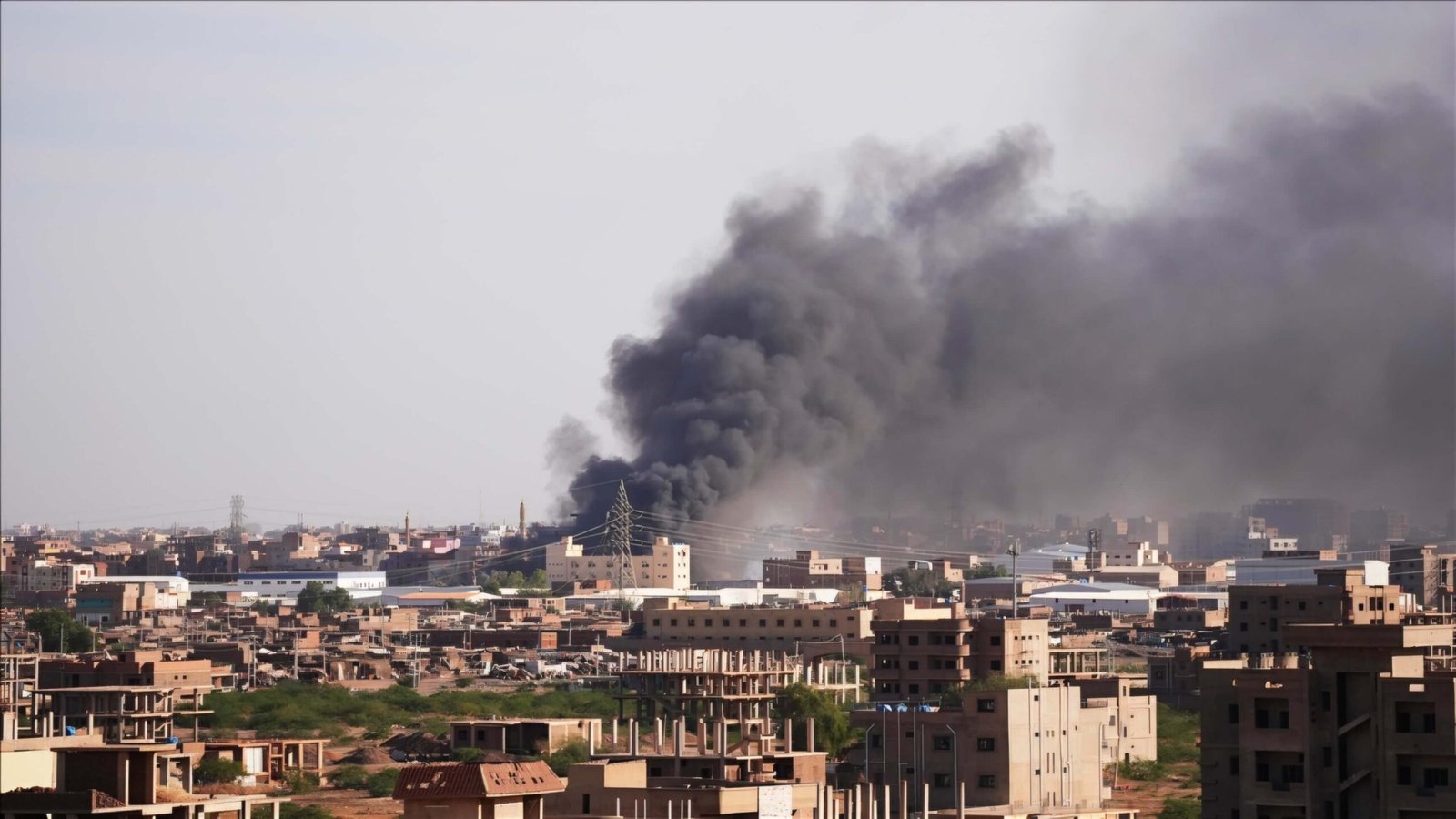
A Sudanese army airstrike has reportedly killed at least 13 civilians, including women and children, in West Kordofan, renewing concerns over attacks on residential areas and the growing use of drones in Sudan’s war.
The Sudanese rights group Emergency Lawyers said on November 16 that the strike hit the Abu Qalb area in Abu Zabad locality on November 15, destroying several homes.
The Associated Press (AP report on the West Kordofan airstrike) reported the preliminary death toll, citing Emergency Lawyers.
The agency said it could not independently verify the casualties.
A day later, the UN Human Rights Office said it had documented more than 2,230 civilian deaths across Sudan between January and October.
More than 1,630 of those deaths were attributed to drone strikes carried out by the warring parties.
The latest allegations have intensified scrutiny of the Sudanese army’s aerial warfare capabilities, its foreign military suppliers and the armed Islamist formations fighting alongside its forces.
Sudan army drone strikes raise concerns over civilian casualties
In September, the UN Fact-Finding Mission for Sudan concluded that there were reasonable grounds to believe the Sudanese army had used foreign-supplied drones in attacks targeting civilian sites.
Its analysis of images and video footage from Darfur and Kordofan suggested that Turkish-made Bayraktar Akıncı drones had been used.
The European Union Agency for Asylum also reported that the army had deployed Turkish Bayraktar TB2 drones, alongside Iranian-made Mohajer-6 and Ababil-3 drones.
These findings add to growing evidence of the role foreign military technology is playing in Sudan’s conflict, particularly as drone warfare increasingly threatens civilians.
The allegations also raise questions about the responsibilities of countries and companies supplying military equipment to the warring parties.
Islamist battalions fighting alongside Sudan’s army face scrutiny
Beyond the army’s military capabilities, the influence of Islamist formations fighting alongside its forces has attracted renewed international attention.
In a recording attributed to Islamist figure Naji Abdullah, reportedly filmed in Bao, Blue Nile State, Abdullah issued threats against Ethiopia.
He also claimed that his group was receiving reports from Sudanese security agencies.
In March, Abdullah declared that Islamist battalions were prepared to fight alongside Iran if the United States and Israel launched a ground intervention.
Washington has separately accused Iran’s Islamic Revolutionary Guard Corps (IRGC) of providing training and support to fighters from Islamist organisations operating alongside the Sudanese army, including the al-Baraa bin Malik Brigade.
In March 2026, the US designated the Muslim Brotherhood in Sudan as a Foreign Terrorist Organization (FTO), a classification that included the al-Baraa bin Malik Brigade.
The US State Department said the organisation had deployed more than 20,000 fighters to the war, many of whom had received training or support from Iran’s IRGC.
The designation has further intensified scrutiny of the relationship between Sudan’s military leadership and Islamist groups participating in the conflict.
Foreign arms supplies put Sudan’s military partners under scrutiny
The Sudanese army’s growing military capabilities have also drawn attention to its foreign suppliers.
Reuters has reported that the army acquired Iranian-made drones, while The Washington Post documented the delivery of drones and munitions to the army by Turkish defence company Baykar.
Saudi Arabia’s reported role in financing and facilitating military purchases for the Sudanese army adds another dimension to these developments. Our investigation into Saudi Arabia’s funding and military backing of Sudan’s army examines the alleged financial support, arms arrangements and shifting regional alliances behind the conflict.
The developments also come amid changing diplomatic and security relationships around the Red Sea.
As explored in our report on Saudi Arabia’s ties with Port Sudan, escalating tensions involving Yemen have added pressure to Riyadh’s regional relationships and its strategic calculations in Sudan.
The expanding use of foreign-supplied weapons raises questions about how suppliers monitor the deployment of military equipment and whether safeguards are sufficient to prevent attacks on civilian sites.
Meanwhile, the participation of Islamist battalions alongside the Sudanese army raises a separate accountability concern: who has the authority to issue orders to these formations, and who is responsible for investigating alleged violations committed by their fighters?
As civilian casualties mount, both questions are becoming increasingly difficult for Sudan’s military partners to ignore.