

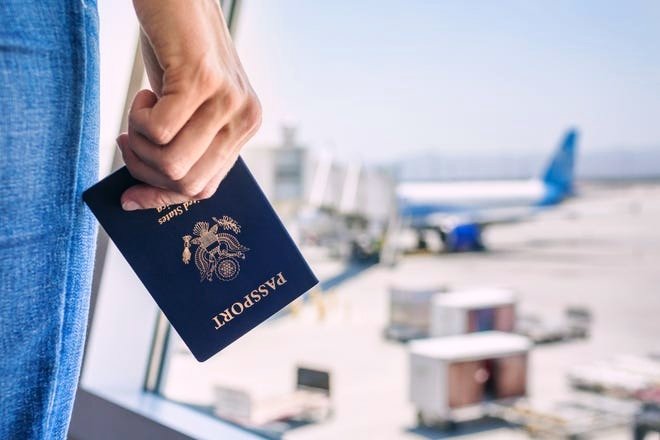
The United States has announced new visa restrictions targeting certain South Africans.
Washington says the measures will target people linked to race-based discrimination, incitement of violence and land expropriation without compensation.
The move is not a blanket travel ban on South Africans. Most South African travellers are not directly affected.
The announcement adds to growing tensions in South Africa-US relations over trade, land reform and foreign policy.
NOWinSA previously examined the wider dispute in South Africa’s 30% US tariff explained.
Who is affected by the US visa restrictions?
US Secretary of State Marco Rubio said the policy targets foreign nationals who enact or enable policies that promote race-based discrimination, incite violence or enable land confiscation without compensation in South Africa.
The US has not named the individuals who could face restrictions.
It has also not said how many people will be affected.
Certain family members of targeted individuals could also face restrictions.
The policy relies on Section 212 of the Immigration and Nationality Act. This provision allows the US to restrict entry on foreign policy grounds.
The US State Department’s annoucement of the new visa restriction policy sets out the categories covered by Washington’s decision.
For now, ordinary South African citizens are not automatically barred from travelling to the US.
Why has the US targeted South Africa?
Why has the US targeted South Africa?
The Trump administration has repeatedly criticised South Africa’s land reform, Black Economic Empowerment (BEE) and employment equity policies.
NOWinSA has previously examined claims comparing BEE with apartheid-era racial legislation.
Washington has also raised concerns about political rhetoric and violent crime affecting farming communities.
The US argues that some of these policies discriminate against Afrikaners and other minority groups.
Pretoria rejects that view.
The South African government says its post-apartheid laws address inequalities created by colonialism and apartheid.
NOWinSA previously examined the claims surrounding “white genocide” in South Africa in this fact-check.
What does South Africa say?
International Relations and Cooperation Minister Ronald Lamola said Pretoria had noted the restrictions “with concern”.
He called for respect for South Africa’s democracy and sovereignty.
The government says its post-apartheid laws aim to address historical racial injustice.
It also says crime affects South Africans across racial groups.
Pretoria wants disagreements with Washington resolved through constructive engagement, rather than unilateral action.
Former Public Protector Thuli Madonsela has also challenged the US administration’s framing of crime and racial disadvantage.
Responding on X, she wrote: “This is not true. Crime affects all and disproportionately affect black South Africans particularly African…”
Madonsela linked present-day inequality to the effects of colonialism and apartheid. She pointed to historical land dispossession, job reservation and restrictions on economic participation.
What does this mean for South African travellers?
For most South Africans, there is no new blanket US travel ban.
Travellers who are not covered by the policy can continue to apply for US visas under the normal process.
The uncertainty is greatest for officials, political figures and others who Washington determines fall within the new restrictions.
The measures could also affect people travelling to the US for business, diplomatic meetings and conferences.
Why the visa restrictions matter for business
The latest move comes as South Africa-US economic relations face wider pressure.
South Africa is the United States’ largest trading partner on the African continent.
More than 500 US businesses operate in the country, while about 30,000 US citizens are based in South Africa.
The dispute therefore goes beyond visas.
Trade, investment and access to the US market are also at stake as Pretoria and Washington try to manage their increasingly difficult relationship.
The US has warned that more measures could follow.
US Ambassador to South Africa Brent Bozell described the visa policy as “only the first step in a series of escalatory measures”.
For South Africa, the immediate question is how far the restrictions will go.
For travellers and businesses, much will depend on who is ultimately placed on the US restrictions list.