

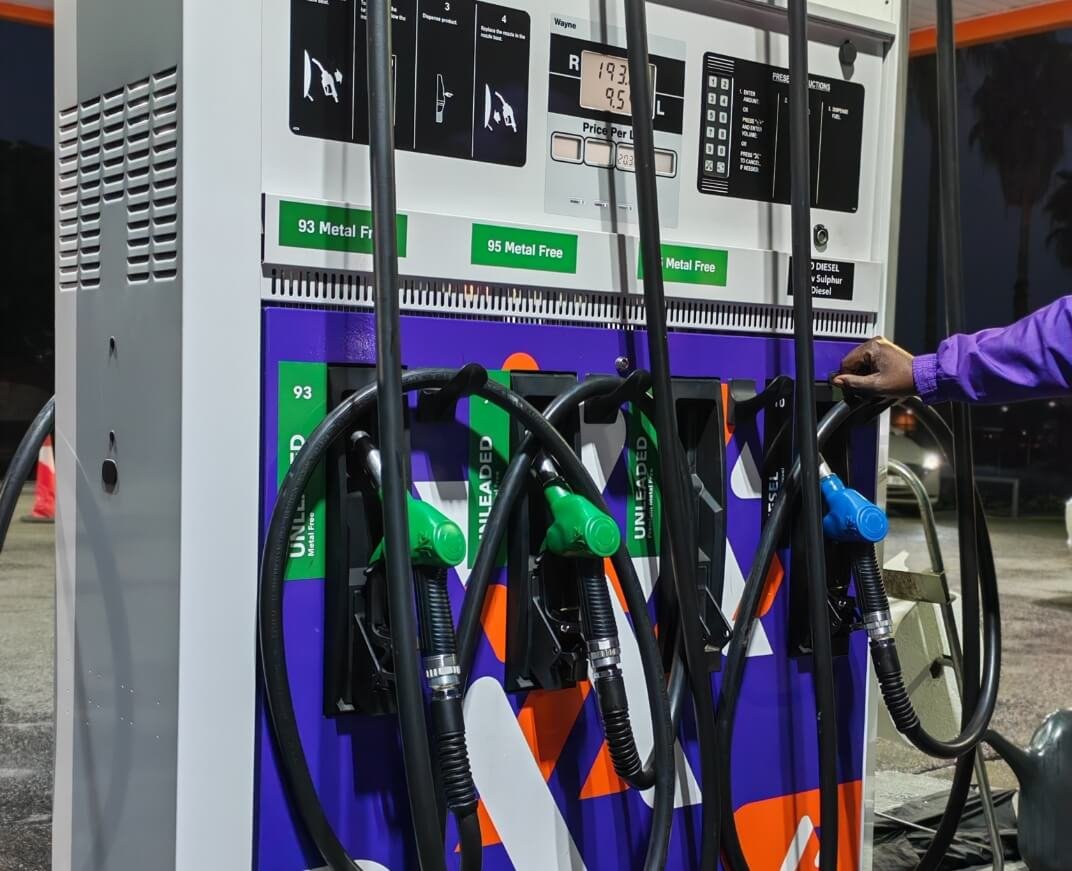
The final phase of the government subsidy / levy has now ended, restoring the general fuel levy to its full rate. Even so, the market over-recovery comfortably exceeds the tax increase, resulting in lower pump prices across every major fuel grade.
The latest adjustment also reverses months of rising fuel costs. South Africans paid substantially more at the pumps in June following earlier increases recorded during April and May. July now delivers the first meaningful fuel price relief in months.
What you need to know
- Market over-recovery: More than R3 per litre
- Fuel levy hike: R1.50 per litre on petrol and R1.96 per litre on diesel
- Expected petrol price decrease: Around R1.53 to R1.57 per litre
- Expected diesel price decrease: Around R3.15 per litre
Fuel levy reinstatement still results in lower July fuel prices
National Treasury has reinstated the remaining R1.50 per litre general fuel levy on petrol and R1.96 per litre on diesel. The temporary relief programme, introduced to cushion motorists from elevated global oil prices, cost government billions in foregone revenue before being phased out.
The return of the levy does not erase the gains delivered by international energy markets. A stronger rand, together with sharply lower crude oil prices, produced a substantial over-recovery during June that exceeded the additional tax.
Current projections show petrol prices decreasing by around R1.53 to R1.57 per litre, while diesel prices could decline by about R3.15 per litre.
Projected July 2026 fuel prices
Coastal fuel prices remain lower than inland prices because regulated transport costs are added to fuel delivered from coastal ports to the interior.
| Fuel type | Region | June price | Expected drop | Projected July price |
|---|---|---|---|---|
| Petrol 95 | Inland | R28.06/L | -R1.53/L | R26.53/L |
| Petrol 95 | Coastal | R27.19/L | -R1.53/L | R25.66/L |
| Petrol 93 | Inland | R27.95/L | -R1.57/L | R26.38/L |
| Petrol 93 | Coastal | Not available | -R1.57/L | R26.06/L |
| Diesel 50ppm | Inland | R28.75/L | -R3.15/L | R25.60/L |
| Diesel 50ppm | Coastal | R27.88/L | -R3.15/L | R24.73/L |
Lower fuel prices reduce monthly transport costs
The July fuel price adjustment will reduce transport costs for households, businesses and commuters.
A driver filling a standard 50-litre petrol tank twice each month will save between R153 and R157 every month compared with June prices.
Motorists using diesel-powered vehicles with the same monthly fuel consumption could save approximately R315 per month.
Lower fuel costs also reduce operating expenses across logistics, retail and food distribution. Those savings help ease inflationary pressure and support more stable household spending.
Global oil prices drove the fuel price over-recovery
The sharp decline in international oil prices remains the biggest reason behind July’s lower fuel prices.
The market correction followed easing geopolitical tensions during June, weaker global demand and improved supply conditions. A stronger rand further reduced South Africa’s cost of importing petroleum products.
According to the International Energy Agency’s June Oil Market Report, global oil demand is expected to decline by almost five million barrels per day during the second quarter of 2026.
Average demand for the full year is projected to fall by 1.1 million barrels per day as consumers reduce energy use and economies adjust to changing market conditions.
The agency also notes that governments around the world have introduced measures to shield households and businesses from high energy costs while markets stabilise.
Africa and South Africa continue strengthening energy security
Countries continue reshaping long-term energy strategies as global energy markets remain volatile.
More than 50 countries recently agreed in Colombia to pursue trade measures aimed at reducing fossil fuel demand over time. The discussions focused on balancing energy security with long-term climate commitments.
In Africa, the Democratic Republic of Congo has established a US$100 million security force to protect mining operations and strengthen supply chains for critical minerals such as cobalt and coltan.
The initiative supports investment while improving security across the country’s resource sector.
South Africa continues implementing its Just Energy Transition Investment Plan (JET IP), balancing long-term decarbonisation with economic growth, employment and energy security. Government maintains that developing economies require affordable climate finance before accelerating the transition away from fossil fuels.
At the same time, South Africa has diversified crude oil imports beyond the Middle East by increasing purchases from Nigeria, Brazil, Europe and the United States. The strategy reduces supply risk while strengthening long-term energy resilience.