


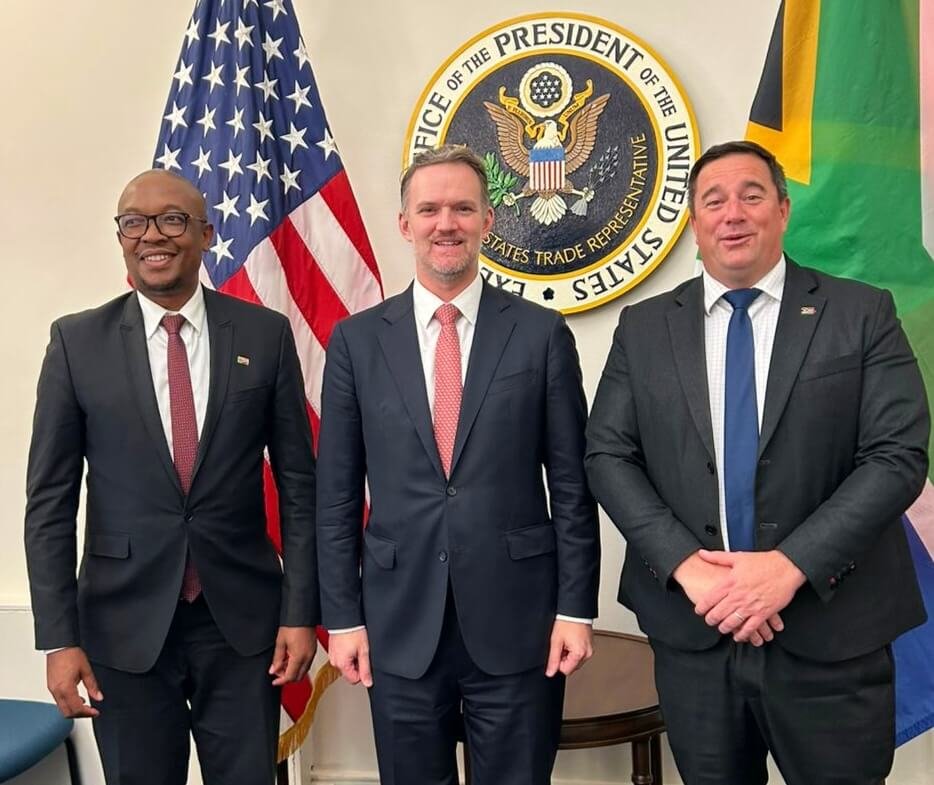
President Cyril Ramaphosa’s decision to reposition John Steenhuisen within the economic cluster signals more than a political reshuffle.
It reflects a deliberate attempt to tighten South Africa’s export machinery at a time of global trade volatility.
Read more context in our breakdown of the just announced Cabinet changes.
The move highlights a growing focus on aligning agriculture, industrial policy, and trade negotiations into a single economic strategy.
Agriculture and trade convergence under pressure
For years, South Africa’s export performance has been shaped by fragmentation between agriculture policy and trade diplomacy. That gap is now narrowing.
Steenhuisen’s new positioning inside the Trade, Industry and Competition portfolio places agricultural export experience closer to the centre of market access negotiations.
That matters because agriculture remains one of South Africa’s most consistent export earners, from citrus and wine to grains and livestock products.
The shift also reflects lessons learned during the formation of the Government of National Unity, where coordination between economic portfolios became essential for stability.
Our earlier analysis of the GNU Cabinet formation showed how policy silos slowed early economic coordination in 2024.
A portfolio shift rooted in economic strategy
Ramaphosa’s reshuffle does not introduce new policy on its own, but it changes how economic decisions are likely to be coordinated inside government.
As Deputy Minister, Steenhuisen will now support Minister Parks Tau across industrial development, investment promotion, and trade policy.
These areas directly intersect with agricultural export systems he previously oversaw.
The practical implication is closer alignment between production capacity and trade negotiation strategy.
Instead of agriculture lobbying from the outside, expertise on export constraints now sits inside the department responsible for unlocking global market access.
That internal shift could improve responsiveness in areas such as phytosanitary negotiations, export certification, and tariff barriers.
South Africa’s trade tensions with major partners in recent years, including tariff disputes and market access restrictions, have shown how quickly export sectors can be affected by global policy shifts.
Our coverage of the US tariff dispute highlighted how exposed South African exporters can become when negotiations stall.
Why this matters for exporters
Export-driven sectors operate on tight margins and long planning cycles. Any delay in market access decisions can affect entire supply chains, from farmers to logistics providers.
By placing agriculture-linked expertise inside the Trade portfolio, government is effectively attempting to shorten the feedback loop between production realities and trade negotiations.
This may be particularly relevant for high-value export markets such as the European Union, China, and the Middle East, where compliance standards and trade protocols frequently change.
It also reflects a broader shift in how South Africa is positioning itself in global value chains, moving away from siloed sector policy toward integrated export strategy.
Also read: ANC fires back over US tariff tensions
What comes next for South Africa’s export policy
Whether this structural adjustment delivers measurable economic gains will depend on execution rather than appointment alone.
Policy alignment between departments, consistency in trade negotiation strategy, and stronger coordination with industry stakeholders will determine outcomes.
The key test will be whether South Africa can expand export volumes while maintaining compliance with increasingly complex global trade rules.
Legal basis for executive authority
All Cabinet appointments and reshuffles are made under powers granted to the President by the Constitution of the Republic of South Africa, which vests executive authority in the President and the national executive.