

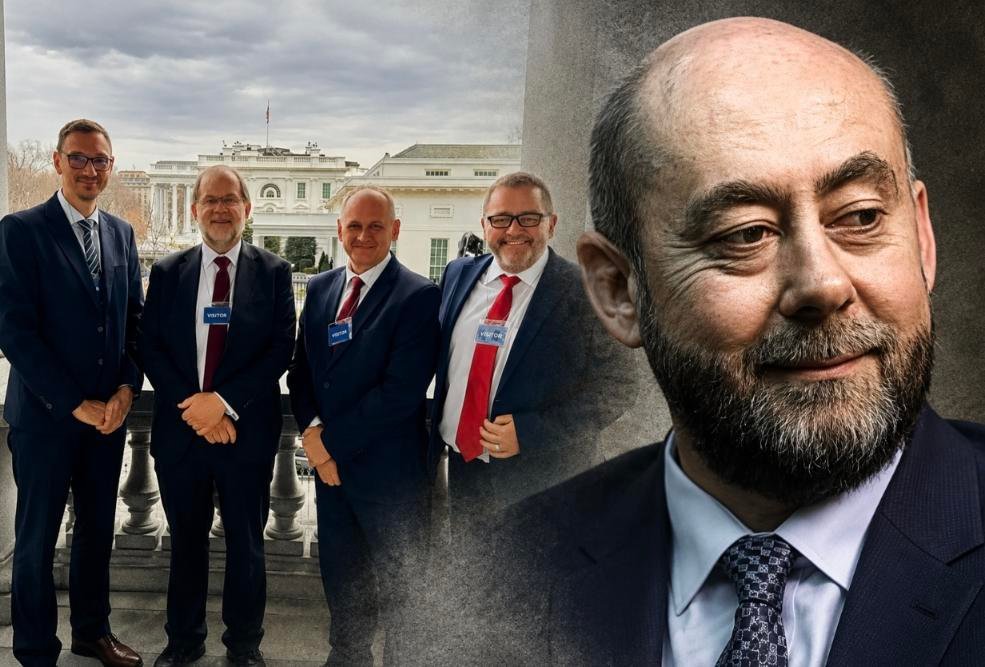
A 380-seat theatre in Menlo Park, Pretoria, has sold out ahead of Friday’s event featuring Wouter Basson, the apartheid-era military doctor known as “Dr Death”.
He is expected to give his personal account of leading Project Coast, the former South African Defence Force’s chemical and biological warfare programme. Tickets cost R180.
The sell-out comes just weeks after the controversial meeting between AfriForum and March and March that sparked widespread debate across the country.
That earlier meeting has now taken on a new significance.
While AfriForum is accustomed to criticism, March and March and its founder, Jacinta Ngobese-Zuma, are facing fresh questions about the political message sent by their engagement with the organisation.
Why the Basson event is controversial
Basson headed Project Coast from 1980 to 1995, during the final years of apartheid. The programme was officially presented as a defensive chemical and biological warfare initiative.
Investigations later found that its activities went beyond that stated purpose, including work involving chemical agents, poisons and other methods intended for use against opponents of the apartheid state.
Basson became one of the most controversial figures associated with the programme.
His criminal trial ended in an acquittal in 2002, but the outcome did not settle questions about his role in Project Coast.
The current event has therefore revived debate about apartheid accountability and the public rehabilitation or normalisation of figures associated with the former regime.
March and March’s AfriForum link under scrutiny
The strongest political fallout is not necessarily landing on AfriForum.
Instead, per the below X post by pseudonymous political commentator @matigary (publicly linked to Taurai Chinyamakobvu, a Zimbabwen angel investor based in the US), March and March and Ngobese-Zuma are again facing questions over their decision to engage with AfriForum.
The organisation has faced years of criticism over its positions on race, land and South Africa’s political direction.
Critics have also accused AfriForum of selective outrage on issues affecting different communities.
Its international activities have added another layer to that criticism.
AfriForum’s engagement with US officials, including its lobbying around South Africa’s land reform policies, came amid worsening diplomatic tensions between Pretoria and Washington.
Critics accused the organisation of helping promote unsubstantiated claims about a so-called “white genocide” in South Africa, allegations that became part of its controversial US advocacy.
March and March’s meeting with AfriForum therefore placed the grassroots movement in an uncomfortable political conversation.
A movement already under scrutiny
March and March has built its public profile around activism, particularly its opposition to undocumented immigration and its calls for stronger action to protect South African jobs and services.
The movement made headlines again when it led a controversial June 30 march against undocumented migrants.
The demonstrations attracted significant security and policing resources, with the cost becoming another source of public debate.
The June 30 protest and its reported R600 million taxpayer cost further intensified scrutiny of the organisation.
That history has made the relationship with AfriForum more politically sensitive.
Critics now question whether March and March can maintain its grassroots, non-aligned image while engaging an organisation with such a contested political reputation.
The Basson event has given those critics another reason to revisit that question.
Reaction to the ‘Dr Death’ event
The response has cut across political and ideological lines.
Journalist Redi Tlhabi described the sell-out as unsettling and linked the event to what she saw as “a broader normalisation of reactionary nostalgia” and the resurfacing of figures associated with South Africa’s darkest period.
Poet and Johannesburg mayoral candidate Ntsiki Mazwai was more direct, accusing AfriForum and March and March of “celebrating an apartheid murderer”.
That description needs context. Basson was acquitted of the criminal charges brought against him, including allegations relating to the murder of apartheid opponents.
A later medical disciplinary case, however, dealt separately with his professional conduct during the apartheid era.
Other social media users focused on the audience expected at the sold-out event.
Some questioned why ordinary members of the public would choose to attend a programme centred on Basson’s personal account of Project Coast.
Others argued that the interest itself showed how unresolved South Africa’s apartheid history remains.
AfriForum’s role in the event
There is also an important distinction between hosting an event at the AfriForum Theatre and organising the event.
AfriForum has maintained that the theatre is simply the venue and that the organisation is not responsible for the event’s content.
That distinction does not, however, prevent criticism of the decision to make the venue available for a Basson appearance.
For March and March, the issue is different.
The movement does not appear to have organised the Basson event either, but its recent engagement with AfriForum has placed it inside the wider conversation.
That is why the controversy is now reaching beyond Basson himself.
A backlash bigger than one theatre event
Basson’s appearance has collided with a much wider argument about South Africa’s unresolved apartheid history, political alliances and public memory.
His criminal acquittal remains an important part of the record. So does the later HPCSA finding that he had committed professional misconduct, which was subsequently set aside on procedural grounds.
Basson’s latest legal challenge has also failed. In July 2026, the Gauteng High Court dismissed his application for leave to appeal after he sought to permanently halt the HPCSA disciplinary proceedings.
The court rejected his arguments that the delays and the death of a key expert witness had prejudiced his defence, clearing the way for the professional misconduct inquiry to proceed.
For more on the latest legal battle, the four HPCSA charges and what the ruling means for Basson’s medical licence, see our companion explainer on who Wouter Basson is, and why he is skill practicing medicine.