

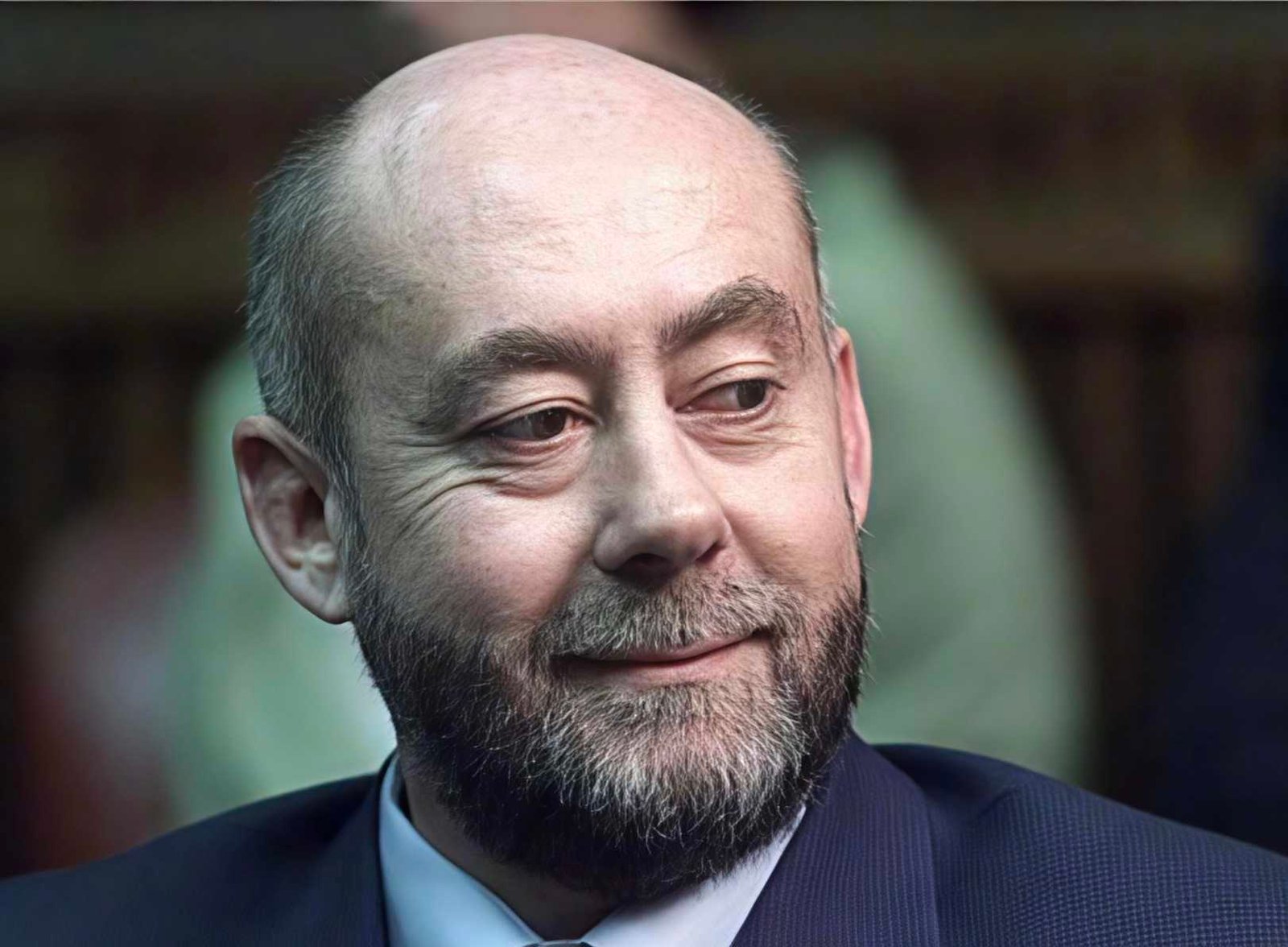
Ahead of Friday’s sold-out event at the AfriForum Theatre in Pretoria, Wouter Basson remains one of the most controversial figures associated with apartheid South Africa.
Basson headed Project Coast, the apartheid government’s secret chemical and biological warfare programme, from the 1980s until 1995.
The programme was presented as defensive, but investigations later exposed activities that went beyond that description.
For more on why the event has caused a fresh political backlash involving March and March, read our companion report on the sold-out Basson event and backlash.
What was Project Coast?
Basson served in the South African Defence Force and became the senior figure associated with Project Coast, a highly secretive chemical and biological warfare programme.
The programme officially focused on developing defensive capabilities.
Later investigations, however, found evidence of offensive research involving chemical and biological agents, poisons and other methods.
The programme operated during the final years of apartheid, as resistance to white minority rule intensified.
The Truth and Reconciliation Commission later examined aspects of the programme and Basson’s activities.
The TRC hearing that revealed the allegations
Details of the criminal case emerged publicly in 1998, when the Truth and Reconciliation Commission examined the activities surrounding the former chemical and biological warfare programme.
A TRC report published by the Department of Justice recorded allegations ranging from instigation to murder and assault to the manufacture of Mandrax and ecstasy.
The allegations also included conspiracy to murder involving poison and a possible fraud case involving about R50 million.
The charges related, among other things, to the alleged killing of Renamo official Orlando Christina in the late 1980s.
Basson was scheduled to appear before the TRC during the same week, although he ultimately refused to cooperate with the commission.
Basson faced 67 criminal charges
The criminal case eventually grew to 67 charges.
The allegations covered a wide range of conduct linked to Project Coast and Basson’s activities during apartheid.
They included murder-related allegations, drug manufacturing, fraud and conspiracy charges.
Basson maintained that he had acted within his military role and under orders from the former South African Defence Force.
In 2002, the Pretoria High Court acquitted him on all the remaining charges.
The Constitutional Court challenge
The state pursued the matter after the acquittal.
The case eventually reached the Constitutional Court, which considered whether South African courts had jurisdiction over conspiracy allegations connected to crimes committed outside the country.
The court found that the trial court had wrongly dismissed some of those conspiracy charges.
It held that there was a real connection between South Africa and the alleged offences.
The ruling did not overturn Basson’s acquittal or result in a retrial.
The National Prosecuting Authority ultimately did not reopen the criminal case.
That distinction remains important: Basson was not convicted in the criminal case, despite the serious allegations brought against him.
Why was Basson called ‘Dr Death’?
The nickname “Dr Death” emerged after details of Project Coast became public.
Basson’s role as a military doctor made the allegations particularly controversial because they raised questions about the responsibilities of medical professionals working within military and state structures.
The later HPCSA case focused specifically on his conduct as a doctor.
Among the allegations were that Basson coordinated the production of Mandrax, ecstasy and teargas, supplied substances used in cross-border kidnappings and provided cyanide capsules to apartheid operatives.
Basson’s own defence: ‘for the benefit of mankind’
Basson did not deny his involvement in Project Coast.
Instead, he defended the reasoning behind his actions.
Giving evidence before an HPCSA professional conduct committee in March 2012, he said he had acted “for the benefit of mankind and to limit loss of life.”
Basson argued that the teargas programme offered a less lethal alternative to methods such as whips, rubber bullets and live ammunition.
He also explained how he believed he had viewed his role at the time.
“If I had to reconstruct what I felt and thought [30 years ago],” Basson said, he believed he could make a difference by limiting the size of crowds and reducing the potential for violence.
He described himself as a project manager who implemented guidelines from the military surgeon-general rather than as a scientist conducting the laboratory work himself.
Basson also argued that medical ethics and the standards applied to his activities in the 1980s differed from those applied today.
The HPCSA found Basson guilty
The criminal acquittal did not end the controversy.
In 2007, the Health Professions Council of South Africa (HPCSA) opened disciplinary proceedings into Basson’s conduct as a doctor during the apartheid era.
The case focused on four allegations involving the production of drugs and teargas, the weaponisation of mortars, substances used in cross-border kidnappings and cyanide capsules.
In December 2013, a committee chaired by Professor Jannie Hugo found Basson guilty of unprofessional conduct.
The committee found that his conduct breached basic medical ethics, including the principles of beneficence, non-maleficence, justice and autonomy.
It also said those principles were particularly important during times of war and conflict.
Khulumani argued for a severe sanction
Basson’s sentencing arguments followed almost a year later.
In November 2014, Dr Marjorie Jobson, then director of the Khulumani Support Group for apartheid victims, testified in aggravation of sentence.
Jobson challenged Basson’s argument that his activities had not caused lethal consequences.
She argued that sanction could force perpetrators to reflect on the consequences of their actions.
Jobson pointed to the case of former Vlakplaas commander Eugene de Kock as an example of how accountability could create an opportunity for reflection and responsibility.
She said a punitive sentence would be “fitting” and told the hearing that people around the world struggled to understand how Basson had avoided sanction for so long.
Her criticism went beyond the criminal question.
Jobson argued that Basson had not conceded that his actions breached medical ethics and had not demonstrated meaningful reflection or responsibility.
The South African Medical Journal also reported that a petition signed by 230 doctors and medical and human rights organisations called for Basson to be struck from the medical roll.
Why is Wouter Basson still practising medicine?
This is where the disciplinary case became more complicated.
Basson challenged the HPCSA proceedings and argued that the panel had been biased.
A court subsequently set aside the 2013 disciplinary finding, meaning the case had to restart rather than proceed directly to final punishment.
The disciplinary process then continued through years of legal challenges and postponements.
Basson’s latest attempt to stop the HPCSA case
In 2026, Basson again approached the court seeking a permanent stay of the disciplinary proceedings.
He argued that the decades-long delay had prejudiced his defence and that the death of a key expert witness had further weakened his ability to answer the allegations.
In July 2026, the Gauteng High Court dismissed his application for leave to appeal, rejecting all four grounds advanced by Basson.
Acting Judge Irene de Vos found that the delays were largely justified and that the seriousness of the ethical allegations weighed against permanently stopping the proceedings.
The court also made an important distinction between Basson’s criminal acquittal and professional accountability.
His acquittal on the criminal charges in 2002 did not prevent the HPCSA from considering whether his conduct breached the ethical standards expected of a medical professional.
The full July judgment is available on SAFLII.
What the HPCSA inquiry is about
The disciplinary inquiry concerns Basson’s activities during the 1980s, when he headed Project Coast, the apartheid government’s chemical and biological warfare programme.
The four charges relate to allegations involving the weaponisation of drugs, the manufacture of substances for crowd control, the supply of substances connected to cross-border operations and the provision of cyanide suicide capsules to operatives.
Basson has maintained that he acted as a soldier under military orders rather than as a medical doctor and has argued that his conduct did not involve violations of doctor-patient relationships.
With his latest interdict and appeal attempts unsuccessful, the HPCSA’s second professional misconduct inquiry can proceed.
The outcome could ultimately affect his registration to practise medicine, including his continued practice as a cardiologist.
Basson’s Project Coast legacy remains contested
More than three decades after apartheid ended, Basson remains a deeply divisive figure in South Africa.
His criminal acquittal means the allegations brought against him did not result in a criminal conviction.
But the separate medical disciplinary case established that his conduct was serious enough to warrant professional scrutiny, even though that original finding was later set aside.
The unresolved HPCSA proceedings have kept those questions alive.
Now, with Basson preparing to give his personal account of Project Coast at a sold-out Pretoria event, his history has once again moved to the centre of public debate.
The controversy is no longer only about what happened during apartheid. It is also about accountability, professional ethics and who gets to tell the story of South Africa’s past.
ALSO READ
‘I would do it again’: Chris Hani killer Waluś remains unapologetic
Janusz Waluś, deported to Poland after serving a life sentence for the 1993 assassination of Chris Hani, sparked outrage after saying in a 2025 eNCA interview that he would kill Hani again. Waluś remains unapologetic.