

Water and Sanitation Minister Pemmy Majodina says the City of Tshwane failed to warn Bronkhorstspruit residents that their tap water was unsafe after the treatment works stopped chlorinating its supply.
Authorities reported 408 cases of gastrointestinal illness between October 7 and October 18, 2026. Most patients were children under four.
The Bronkhorstspruit Water Treatment Works supplied water without chlorine from September 24 to October 14, following problems with the City’s chlorine supplier.
Our companion report details the 5 affected areas and Tshwane’s plan to fix the crisis.
Investigation exposes Tshwane’s water treatment failures
The Department of Water and Sanitation (DWS) found that the City failed to warn residents that their water supply had not been chlorinated.
A joint government statement said the City had “failed to warn residents in the affected areas of Bronkhorstspruit”.
The investigation found that the City had not met the 2025 Compulsory Standards for Water Services, which require appropriate warnings when water is unsafe.
Residents should have been told not to drink the water or use it for cooking, washing or bathing, even after boiling. Instead, the unchlorinated supply continued for about three weeks.
DWS has initiated accountability measures against those responsible for the failures.
Laboratory tests by the National Institute for Communicable Diseases (NICD) detected Norovirus, Campylobacter and Shigella in three of four stool specimens tested.
No cholera bacteria were found in those samples.
The NICD works with government to provide disease surveillance, specialised diagnostic services and outbreak response.
Separate water tests conducted by DWS on October 14 detected extremely high levels of E. coli and total coliforms in water from the treatment works and the Ekandustria and Zithobeni reservoirs.
Investigators also found that the Bronkhorstspruit River, the plant’s water source, was badly polluted by sewage from dysfunctional upstream wastewater treatment works and failing Tshwane sewage pump stations.
Several components at the plant, including pumps and sand filters, were also not working.
What Tshwane has done since the water contamination outbreak
The City closed the treatment works on October 14, restored its chlorine supply by October 15 and reopened the plant on October 16.
However, the water remained unsafe to drink.
Authorities reported no deaths by October 19. Most patients had received rehydration treatment and been discharged within a day.
Following an October 18 meeting involving the water and health ministers, Gauteng Premier Panyaza Lesufi and Tshwane Mayor Nasiphi Moya, the City was instructed to improve its communication with affected residents.
Tshwane issued an improved advisory on October 19. It is also increasing its supply of safe drinking water through tankers, with 36 vehicles planned in total.
What Bronkhorstspruit residents must do about unsafe water
The warning remains in force until authorities confirm that the water is safe.
Residents supplied by the affected treatment works must follow these precautions:
- Do not drink tap water or use it for cooking, bathing, brushing teeth, washing food or washing clothes. Boiling does not make it safe.
- Use the tap water only to flush toilets.
- Discard previously stored water and disinfect water containers with household bleach.
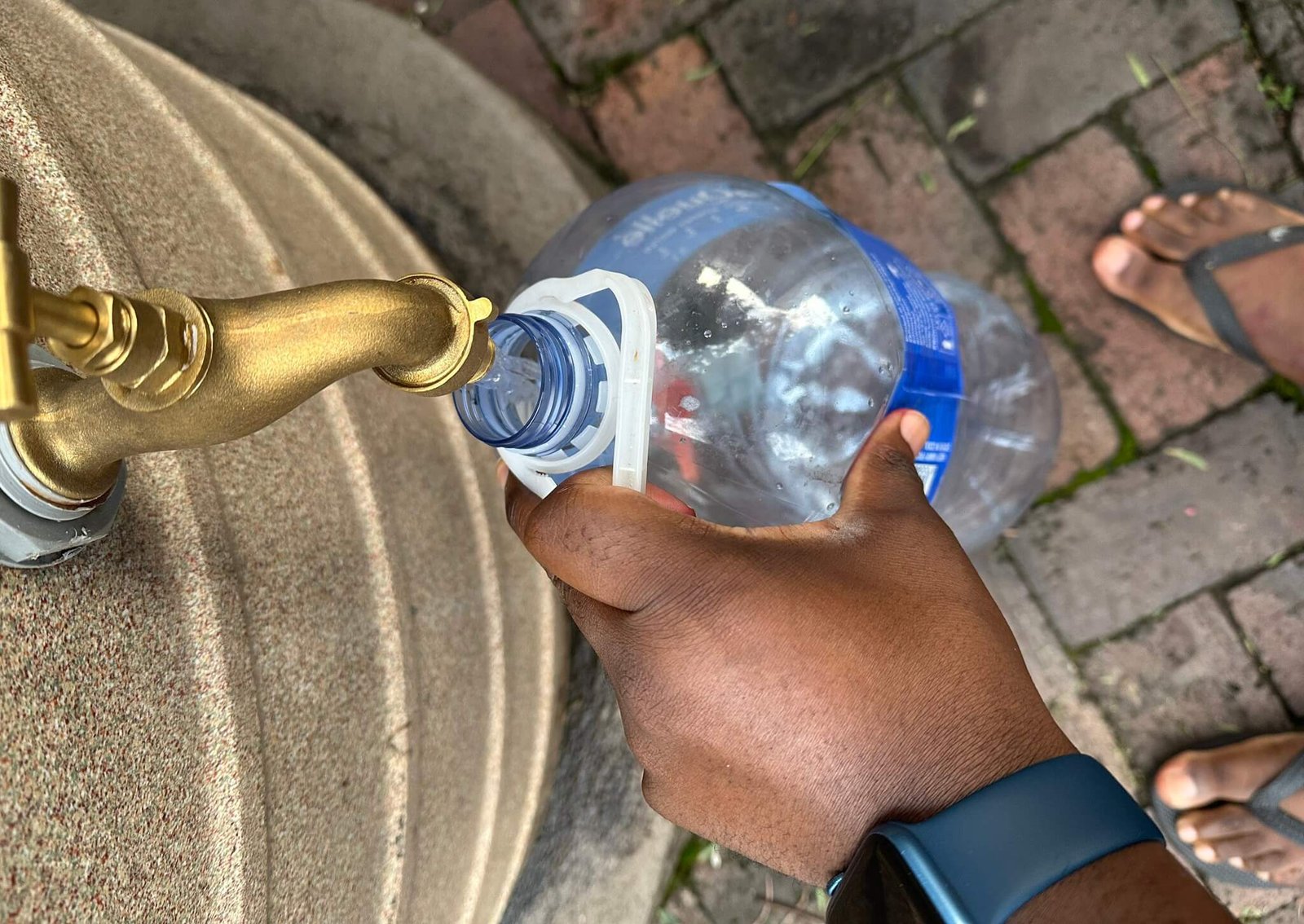
- Collect drinking water from the City’s tankers and store it in clean, covered containers.
- Seek medical attention early if anyone develops stomach cramps or diarrhoea. Report suspected cases to the nearest healthcare facility or local health authority.
ALSO READ: How a listed property group approached water-saving and efficiency
The immediate priority in Bronkhorstspruit remains protecting residents while authorities establish when the supply can be made safe.
The Water Research Commission began independent testing on October 18, with results expected from Wednesday, October 21.
Its investigation into the causes of the contamination is due by October 28.
ALSO READ: Johannesburg water contamination: Immediate actions residents must take