

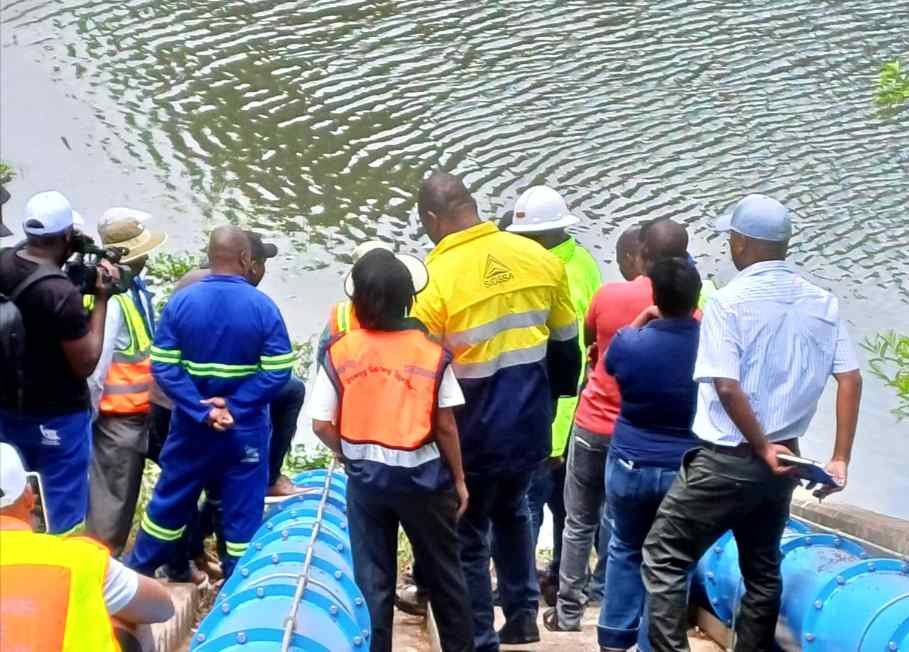
Contaminated water from the Bronkhorstspruit Water Treatment Works has been linked to 408 gastrointestinal illness cases reported in Tshwane between October 7 and 18, 2026.
Most patients were children under four.
The outbreak followed a chlorine supply disruption and treatment plant failures.
A government investigation also found that the City of Tshwane failed to warn residents that their water was unsafe.
Read the full investigation into the City’s failure to issue warnings.
Which areas are affected by Tshwane’s water crisis?
The five communities identified as affected are Zithobeni, Bronkhorstspruit, Dark City, Rethabiseng and Sokhulumi.
Other areas in Region 7 include Ekangala, Zithobeni Heights, Vleiland, Bella Vista, Oude Zwaankraal and Rustfontein.
Residents should follow official notices and confirm whether their supply comes from the affected treatment works.
The Department of Water and Sanitation (DWS) found extremely high levels of E. coli and total coliforms in water samples from the plant and reservoirs serving the area.
The plant supplied unchlorinated water from September 24 to October 14 because of problems with its chlorine supplier.
The number of new cases peaked at 72 on October 13 before falling to 16 on October 18.
No deaths had been reported by October 19.
What must Tshwane fix at the water treatment plant?
Investigators identified faulty pumps, sand filters and other equipment, alongside severe sewage pollution in the Bronkhorstspruit River linked to dysfunctional wastewater works and pump stations upstream.
The investigation found that the City had not met the 2025 Compulsory Standards for Water Services, which require appropriate warnings when water is unsafe.
The City closed the plant on October 14, restored chlorine supplies by October 15 and reopened the works on October 16. However, the water remained unsafe.
Authorities have planned for 36 water tankers to supply residents with safe water drawn from the Cullinan Water Treatment Works.
The City must also improve communication about tanker locations and delivery times, repair the plant and address the sewage pollution.
Until authorities confirm that tap water is safe, residents must not use it for drinking, cooking, bathing, brushing their teeth or washing food and clothes — even after boiling. It may only be used to flush toilets.
Residents should discard previously stored water, disinfect containers with household bleach and collect tanker water in clean, covered containers.
Anyone experiencing diarrhoea or stomach cramps should seek medical attention.
NOWinSA previously outlined practical steps residents should take during a water contamination crisis.
What is the government’s plan to restore safe water?
The City is in the process of appointing Rand Water as an implementing agent to help address the treatment plant’s problems.
However, authorities have not provided a date for the restoration of safe tap water.
The Water Research Commission began independent testing on October 18, with initial results expected on October 21. Its investigation report is due by October 28.
Meanwhile, the City and DWS are continuing water-quality testing.
The City has cited R21 million in funding for the current financial year and more than R107 million in expenditure and planned investment over three years.
For now, residents must continue using alternative safe water sources until authorities confirm that the supply is fit for use.