


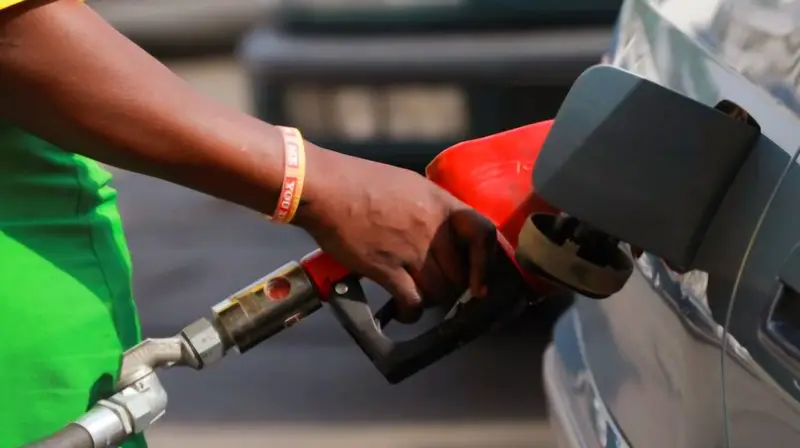
South African motorists are facing another steep fuel price increase in October, with the latest Central Energy Fund (CEF) data pointing to petrol and diesel hikes significantly higher than R2.60 a litre.
If the current trend holds, petrol could move close to R30 a litre, while the price of 0.005% diesel could climb above R33 inland.
The projected increases would add more than R130 to the cost of filling a 50-litre tank, depending on the fuel grade.
The figures are still projections and can change before the final October adjustment is announced.
For more on how these changes will affect your pocket, follow our South Africa fuel price coverage as the numbers shift during the month.
October fuel prices: current vs projected
| Fuel | Current inland price | Projected increase | Projected price |
|---|---|---|---|
| 93 petrol | R26.76 | ±R2.70 | ±R29.46 |
| 95 petrol | R26.92 | ±R2.88 | ±R29.80 |
| 0.05% diesel | R29.11 | ±R2.61 | ±R31.72 |
| 0.005% diesel | R30.05 | ±R3.01 | ±R33.06 |
The projections would push both petrol grades close to R30 a litre, while 0.005% diesel could move above R33 inland.
That would mean motorists paying roughly R2.70 to R3.01 more per litre if the current trend holds.
For someone filling a 50-litre tank, that translates to roughly R135 to R151 more per tank compared with current prices.
The projected increase follows a sharp September rise. NOWinSA reported on the September petrol and diesel price increase after petrol rose by R1.29 a litre and diesel by almost R3 a litre.
What’s driving the October fuel price hike?
Higher international oil and petroleum product prices are putting the biggest pressure on the October outlook.
Brent crude has been approaching $100 a barrel, while tensions involving the US and Iran have added to concerns about global energy supplies.
Ongoing US-Iran tensions are therefore another factor to watch.
The rand has provided limited relief against the higher international costs.
The latest CEF figures show under-recoveries of about R2.70 for 93 petrol and R2.88 for 95 petrol, indicating that current pump prices are below the calculated replacement cost.
How fuel prices are set in South Africa
South Africa’s petrol price is regulated and adjusted monthly. The CEF calculates daily price indicators using international petroleum product prices and the rand-dollar exchange rate.
The fuel price structure also includes domestic costs such as the fuel levy, Road Accident Fund levy, transport costs and regulated margins.
When international costs rise above the price being recovered locally, an under-recovery develops. This creates upward pressure on the next monthly adjustment.
When international costs fall, an over-recovery can develop, creating room for a price reduction.
Diesel differs because its retail price is not regulated in the same way as petrol, allowing individual service stations to set their own pump prices.
For now, the October figures remain projections.
The final adjustment will depend on movements in international fuel prices and the rand during the remainder of the pricing period.