

In Sudan, the war has not been limited to artillery, drones and the confrontation between the army and the Rapid Support Forces (RSF).
The conflict that erupted in April 2023 has become an arena for alleged violations of international law, foreign military involvement and growing calls for a civilian-led transition.
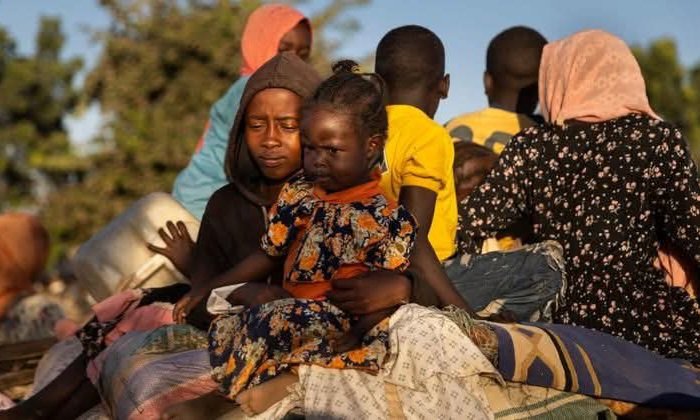
The war has killed nearly 200,000 people, according to estimates cited by humanitarian organisations, while more than 14 million people have been displaced.
The United Nations has said nearly 34 million people inside Sudan need humanitarian assistance.
Meanwhile, dozens of Sudanese recently demonstrated outside the United Nations headquarters in Geneva, calling for an international investigation into allegations that the Sudanese army used chemical weapons.
The protest also highlighted the civilian cost of foreign military support for the conflict.
It coincided with the 63rd session of the United Nations Human Rights Council, held in Geneva from September 7 to October 7.
The demonstrators said the international response must go further to establish what happened, prevent any further use of chemical weapons and protect civilians.
The United Nations has indicated that it is prepared to investigate the allegations if given a formal mandate.
Stephane Dujarric, spokesman for UN Secretary-General António Guterres, told The National that, if the UN were given such a mandate, “we will” investigate.
He also condemned the continued use or discussion of chemical weapons in modern warfare.
Sudan chemical weapons allegations face fresh scrutiny
Sudan has been a state party to the Chemical Weapons Convention since 1999, which prohibits the development, production, stockpiling and use of chemical weapons.
The United States determined in 2025 that the Sudanese government had used chemical weapons in 2024 and imposed sanctions as a result.
Washington reiterated its concerns at the Organisation for the Prohibition of Chemical Weapons (OPCW), saying Sudan had violated its obligations under the convention.
In September 2026, investigations by The Washington Post and The New York Times provided fresh evidence relating to the allegations.
The reports were based on extensive documents, photographs, videos and intercepted communications.
They described an alleged Sudanese military programme that developed and tested chlorine-based munitions during 2024.
The Washington Post reported that experts who reviewed the material considered it credible evidence of a chemical weapons programme, while stressing that a conclusive assessment would require access to suspected sites and witnesses.
Sudanese authorities have denied the allegations.
The reported evidence included references to a stockpile of chemical munitions, weapons testing in remote areas and efforts to conceal the programme.
The Sudanese government has rejected the claims and said it remains committed to the Chemical Weapons Convention. It has also maintained that its own investigation found no evidence of chemical contamination.
The allegations therefore remain an issue requiring independent technical verification.
The OPCW is the international body responsible for implementing the Chemical Weapons Convention.
The organisation has said countries have requested clarification from Sudan over allegations of chemical weapons use, with the process ongoing.
International investigation remains a key demand
Despite the seriousness of the allegations, an independent international investigation on the ground has remained limited.
Sudan has conducted a national investigation that concluded it found no evidence proving the use of chemical or radioactive weapons.
The United States has argued that international verification is still required.
The latest evidence has strengthened calls for an independent investigation capable of examining weapons remnants, environmental evidence, witness accounts and military records.
The issue also comes against a wider backdrop of alleged human rights and international humanitarian law violations.
The UN has repeatedly called for investigations into alleged violations during Sudan’s war.
Foreign military support adds to Sudan war concerns
The Geneva demonstration also focused on civilian suffering and the role of foreign military support in sustaining the conflict.
Egypt has played a role in diplomatic efforts to end the war but has increasingly been associated with support for Sudan’s army.
Reuters reported in February that Egypt had deployed Turkish-made Bayraktar Akıncı drones to East Oweinat, near its border with Sudan.
Satellite imagery showed the drones at the airbase, while experts said they may have been used in strikes inside Sudan.
The development marked a shift from Egypt’s earlier emphasis on mediation towards a more direct military posture, amid concerns over RSF advances near Egypt’s border.
The Akıncı is one of Baykar’s advanced combat drones. It can operate at high altitude and carry a range of munitions.
Saudi Arabia changes its position
Saudi Arabia’s recent moves in Sudan have also been linked to Riyadh’s efforts to protect its interests in the Red Sea and wider Horn of Africa.
Riyadh initially played a prominent mediation role through the Jeddah talks. Its relationship with Sudan’s army leadership has since become more politically significant.
On March 28, 2025, Crown Prince Mohammed bin Salman received Sudan’s Sovereignty Council chairman, Abdel Fattah al-Burhan, in Mecca.
The two sides agreed to establish a joint coordination council covering economic, security and development cooperation.
Reuters reported in April 2026 that Saudi Arabia had objected to a proposed $1.5 billion Pakistani arms deal for Sudan’s army and decided not to finance the agreement.
Pakistan subsequently placed the deal on hold.
Saudi officials have cited Sudan’s proximity across the Red Sea and the importance of stability along its ports and coastline to regional navigation, energy and trade.
Turkey and Baykar’s role in the war
Turkey has also become closely associated with the military technology being used by Sudan’s army.
A Washington Post investigation published in March 2025 reported that Turkish defence company Baykar supplied $120 million in drones to the Sudanese army.
The investigation was based on documents, communications, commercial records and flight data. It reported that Turkish-made weapons and drones reached Sudan during the war.
The Sudanese Defense Industries System signed a contract worth about $120 million with Baykar for drones and munitions, according to the investigation.
The shipments reportedly arrived in Sudan in 2024, with Turkish technicians present to assist with operating the equipment.
Ankara has denied providing military support to either side of the conflict, according to the investigation.
The allegations add another layer to concerns about the role of external actors in Sudan’s war, particularly as advanced drones have increased the ability of the warring parties to conduct long-range attacks.
Foreign support continues to fuel Sudan’s war
The United Nations Independent International Fact-Finding Mission for Sudan has also raised concerns about external military and logistical support.
The mission has been examining foreign actors supplying weapons, drones and other forms of assistance to the warring parties.
It has said such support can strengthen military capabilities and enable increasingly sophisticated attacks, with civilians bearing the consequences.
The UN has also received information concerning foreign military and logistical support, including the use of mercenaries and related actors in Sudan’s conflict.
The chemical weapons allegations have therefore emerged alongside a much broader international debate over arms transfers, foreign intervention and accountability in Sudan.
For civilians, the consequences remain severe. The UN says nearly 34 million people inside Sudan need humanitarian assistance, while millions have been forced from their homes by the conflict.
The latest evidence has renewed pressure for an independent investigation into the alleged use of chemical weapons.
It has also sharpened questions over the international response to the wider flow of weapons and military support sustaining Sudan’s war.