

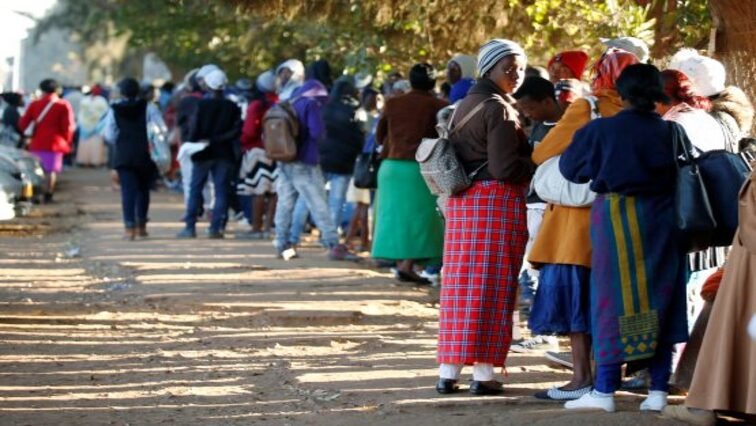
South Africa has finally opened a long-awaited door for thousands of Zimbabwean nationals living under the Zimbabwe Exemption Permit (ZEP) system — but the offer comes with strict conditions.
The Department of Home Affairs confirmed on Tuesday that ZEP holders can now apply for permanent residency through normal immigration channels, as long as they meet all legal requirements. This move marks a major shift after years of uncertainty over the permit system’s future.
Eligible applicants can start the process via the official government platform, where the apply for permanent residency permit page outlines the strict qualification criteria.
No blanket approval — officials assess each application individually
Deputy Home Affairs Minister Njabulo Nzuza made it clear: this decision does not create an automatic pathway to residency.
“The exemption permit itself was meant to be a temporary arrangement,” Nzuza said. “If they seek to stay within the country, they must apply for other forms of entrance.”
That means officials will assess each application case-by-case, looking at factors like employment history, skills, family ties, or long-term residence.
Legal pressure shaped this policy shift
The announcement follows years of legal and advocacy pressure — including the landmark Helen Suzman Foundation court challenge, where civil society challenged the government’s decision to terminate the ZEP programme.
That court case showed how deeply rooted many ZEP holders have become in South Africa. After more than a decade under the scheme, they have families, careers, and livelihoods tied to the country.
Advocate Simba Chitando, representing the ZEP Holders Association, welcomed the development but urged caution.
“There is simply no other lawful and political solution to this crisis besides allowing ZEP holders… to apply for permanent residence in the country they have given all their productive lives,” he said. Chitando added that he remains “cautiously optimistic” until the government formalises the policy in writing.
Years of uncertainty take their toll
The South African government first launched the ZEP system in 2009, allowing Zimbabweans fleeing economic collapse to live, work, and study in South Africa. Over time, the community grew to roughly 180,000 people.
But repeated extensions — including the current one running until May 2027 — left many in limbo. Advocacy groups warned that uncertainty had real consequences, with families struggling to access jobs, schooling, and healthcare. Many of those affected have built their entire lives in South Africa, with children born or raised locally and limited ties to Zimbabwe.
Relief — and a message beyond borders
This decision offers relief, but it also sends a broader signal. Recent debates — from the Scooby Nero apology to his viral “trolling” claim about owning a block nof RDP houses — have fuelled perceptions that South Africa is increasingly hostile to foreign nationals. That perception makes this policy shift particularly significant: South Africa is opening a legal door at a moment when many assumed it would lock everything shut.
Against that backdrop, the decision presents a more measured approach. It reinforces South Africa’s commitment to legal migration pathways rather than blanket exclusion.
What applicants must prove
Under existing immigration law, applicants must demonstrate eligibility before the state grants them permanent residency. This includes proving they are not undesirable persons and meeting one of several qualifying criteria:
- A minimum of five years on a valid work visa
- Critical or exceptional skills
- A permanent job offer
- Business investment plans
- Family ties to South African citizens or permanent residents
Hope, but not certainty
While the announcement marks a turning point, it does not resolve everything overnight. Applications will take time. Legal clarity still eludes applicants. And not all ZEP holders will qualify. For many, this shift represents an opportunity to submit a permanent residency application — not a guarantee the state will grant it.
Still, after years of legal battles and policy reversals, this decision signals a move toward a more structured and lawful resolution to one of South Africa’s most complex migration issues.
📌 For related context on broader legal frameworks affecting residents, see our explainer on RDP Property rights — including whether you can sell or rent.