


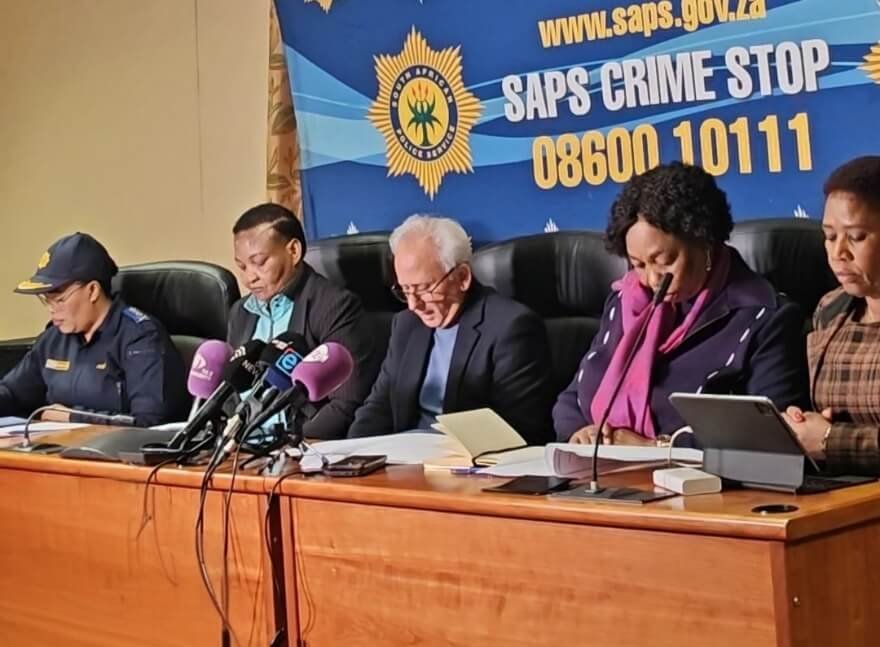
JOHANNESBURG — South Africa will spend more than R600 million policing the planned June 30 anti-migrant protests, Acting Police Minister Firoz Cachalia announced on Monday.
Police and defence leaders briefed journalists on government’s readiness for the nationwide demonstrations.
The protests follow weeks of mobilisation by anti-illegal immigration groups and regional marches across the country.
Thousands joined a recent eMalahleni anti-immigration March in Mpumalanga, one of several protests linked to June 30 deafline.
Organisers say they are protesting against illegal immigration and undocumented foreign nationals.
They insist the movement is not directed at migrants who live legally in South Africa.
June 30 anti-migrant protests carry a R600 million price tag
Cachalia said the nationwide policing operation will require substantial resources.
“I can tell you that it’s going to cost the South African Police Service over R600 million,” he said.
Police have intensified deployments in all provinces. Officers will monitor identified hotspots and respond to any incidents that threaten public safety.
As seen in the X post below, police have also issued strict warnings on prohibited weapons during the demonstrations.
Authorities will also engage premiers, mayors, metro police departments, community policing forums and private security companies.
“There has been mobilisation around this issue over a period of time, and we expect it to continue after June 30, so we have plans in place,” Cachalia said.
Police prepare for possible unrest amid migration tensions
Government says officers are preparing for any scenario that may emerge during or after the demonstrations.
Cachalia warned that criminal groups could exploit otherwise lawful gatherings.
“Everyone has the right to protest peacefully and within the confines of the law,” he said.
“However, criminality, intimidation, incitement to violence, destruction of property and any attempt to undermine public safety will not be tolerated.”
Police continue to monitor developments following attacks on foreign nationals in some communities and repatriation programmes launched by several African countries.
In recent weeks, Ghana, Malawi and Nigeria announced initiatives to assist citizens who wish to return home from South Africa.
Officials also remain mindful of the July 2021 unrest in Gauteng and KwaZulu-Natal, which left more than 300 people dead.
“We don’t want a repeat of that, so we’re not going to take any chances,” Cachalia said.
SANDF remains on standby should SAPS need support
Defence Minister Angie Motshekga had previously said current assessments do not justify military deployment.
She urged organisers to comply with legal requirements governing public marches, including notifying authorities, appointing marshals and providing expected attendance figures.
Cachalia nevertheless confirmed that the South African National Defence Force could be called upon if operational conditions deteriorate.
“The South African Police Service remains the lead law enforcement agency responsible for maintaining public order,” he said.
“Should the operational environment require additional capacity, the South African Police Service may request the support of the South African National Defence Force to augment existing policing capacity and ensure that sufficient operational resources are available, particularly to protect critical infrastructure.”
What the R600 million could cover
The exact breakdown of the more than R600 million deployment has not been disclosed.
Large-scale security operations typically include overtime, fuel, accommodation, transport, rations and specialised public order policing resources.
Should SAPS require military support, the deployment of troops is governed by Section 18(1)(a) of the Defence Act, 2002, which allows the President to authorise the SANDF to assist police and preserve life, health and property during domestic operations.
Any additional military deployment costs would ultimately be funded from the National Revenue Fund through the normal budget process, meaning the expense is borne by taxpayers.
External sources: Defence Act 42 of 2002 | National Revenue Fund