


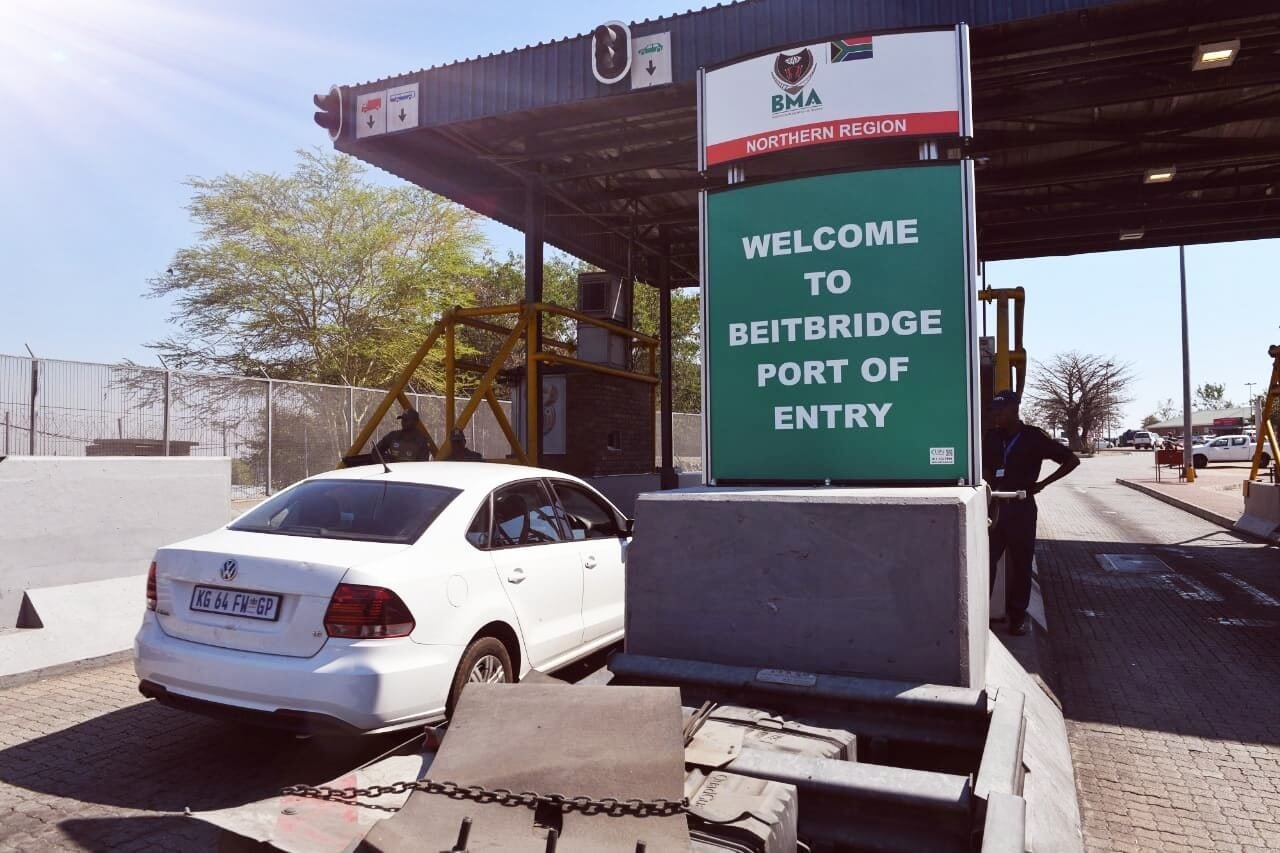
JOHANNESBURG — Cross-border travel between South Africa and neighbouring states is set for major disruption as the SARS rolls out stricter compliance rules for motorists using foreign-registered vehicles.
From June 1, 2026, all drivers entering or leaving the country in foreign-registered cars or motorbikes must first capture their travel and vehicle details online through the Traveller Management System (TMS) before arriving at any land border post.
The move forms part of a broader digital overhaul by SARS aimed at closing gaps in border enforcement and improving the tracking of cross-border trade activity.
The new regulations effectively end the long-standing informal system that allowed motorists from the Southern African Customs Union (SACU) — Botswana, Lesotho, Namibia and Eswatini — to pass through border posts using mainly manual declarations.
Under the stricter policy, motorists who fail to complete the online declaration process risk vehicle detention, fines, processing delays or possible assets forfeiture.
SARS targets undeclared commercial cargo at SA borders
SARS says the tighter controls are grounded in Section 15 of South Africa’s Customs and Excise Act No. 91 of 1964.
The Act requires travellers to declare all goods in their possession, notably the vehicle used for transport.
Although the legislation itself is not new, customs authorities say abuse of passenger channels has increased sharply in recent years.
Investigations have increasingly found that commercial traders use foreign-registered vehicles to move undeclared stock across borders while avoiding import duties.
Under the new customs rules, anyone transporting commercial goods, high-value items, temporarily exported assets or goods on behalf of third parties must complete a Traveller Declaration Form DA 331.
The cargo must then be processed through formal customs channels instead of passenger lanes.
According to SARS, the crackdown is designed to protect state revenue while disrupting illicit regional trade networks.
SARS Commissioner Dr Johnstone Makhubu said motorists who fail to comply could face serious enforcement action.
“Compliance is not optional; vehicle owners who do not declare foreign-registered vehicles or who provide false or incomplete information expose themselves to enforcement consequences and prolonged processing at the border,” Makhubu said.
“Where vehicle owners comply with all the legal requirements, the process will be seamless. However, where compliance is low, this may lead to delays in border crossings.”
Foreign vehicle owners fear border delays and vehicle seizures
The June 1 implementation deadline has already sparked concern among cross-border commuters, transport operators, students and regional logistics companies.
One of the biggest concerns involves thousands of foreign-registered vehicles already operating legally inside South Africa. Many belong to regional university students, temporary workers and dual citizens from countries such as Namibia and Botswana who entered the country months or even years before the digital system was introduced.
Some motorists now fear that traffic officials or customs teams could impound their vehicles because no historical electronic declaration records exist on the new platform.
Pressure is also mounting at smaller land border posts, where travellers say officials are applying inconsistent procedures.
At border crossings including Alexander Bay, Onseepkans and Oranjemund, some Namibian motorists reportedly received instructions to reroute through the larger Vioolsdrif border post to secure valid clearance permits.
Transport and logistics operators warn that inconsistent implementation could create long detours, delays and additional fuel costs for regional freight movement.
How to register foreign-registered vehicles on the SARS Traveller Management System
To ease congestion at major ports of entry, SARS will issue qualifying motorists with a Temporary Import Permit (TIP) valid for up to six months.
The permit will allow multiple entries into South Africa without requiring a fresh application for every trip, particularly benefiting regular commuters, students and business operators.
Motorists must complete the following steps before reaching the border:
- Step 1: Visit the official SARS Traveller Management System portal or use the SATMS MobiApp before travelling.
- Step 2: Capture all required travel and vehicle details, including passport information, travel dates, engine numbers and vehicle registration details.
- Step 3: Complete the Traveller Declaration Form DA 331 if transporting commercial goods, high-value electronics or currency exceeding R25,000.
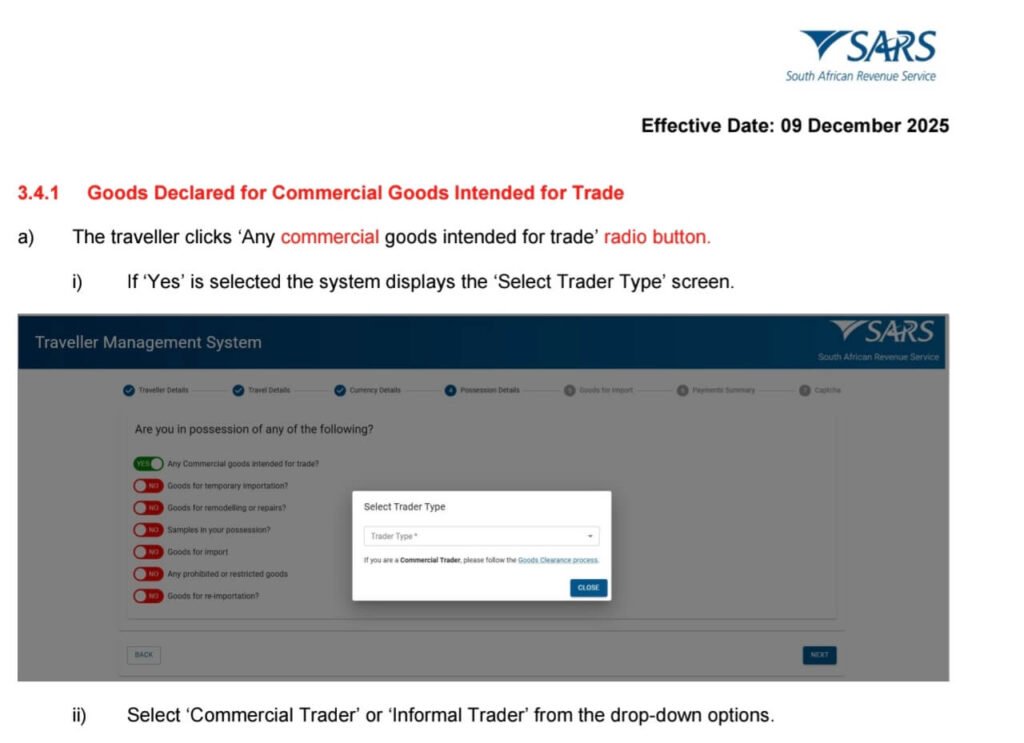
- Step 4: Submit the declaration to receive an SMS or email confirmation code, which border officials will scan on arrival.
Important Notice: To avoid unnecessary delays at the border, make sure to download the official SARS Traveller Management System PDF Guide directly to your phone or dashboard tablet before you set off. This gives you an offline, step-by-step walkthrough of the digital declaration process. Please remember that completing your online pre-clearance will fast-track your paperwork, but you will still need to clear standard physical border security checks.
SARS has further stressed that digital pre-clearance does not replace physical inspections. Customs officials still retain full authority to stop and search vehicles at any border post.
The revenue service also plans to deploy digital support teams at major land borders to assist travellers struggling with the online system.
Authorities are urging owners of foreign-registered vehicles to complete the process before enforcement begins on June 1.
SARS traveller declaration portals and support contacts
For policy queries, technical support or border-related disputes, motorists can contact SARS through the following official channels:
- Traveller Declaration Portal
- Customs and Excise Information
- National Call Centre: 0800 00 7277
- International Enquiries: +27 11 602 2093