


Key takeaways
- Food and non-alcoholic beverage inflation fell to 0,9% in July, its lowest reading in more than 16 years.
- South Africa’s headline CPI eased to 4,3% in July from 5,0% in June, ending a five-month run of increases.
- Cereal products and meat drove the food slowdown, with maize meal prices falling 3,1% month-on-month.
- Softer municipal tariff increases and lower fuel prices also helped ease cost-of-living pressures.
- Petrol and diesel remain significantly more expensive than a year ago, up 19,3% and 28,8%, respectively.
- At 4,3%, inflation remains above the 3,5% rate recorded during February’s Budget Speech, showing that some of the pressure from the mid-year spike remains.
South African households got some relief in July as food inflation fell to its lowest level in more than 16 years, helping headline inflation cool to 4,3%.
According to Stats SA, annual consumer inflation fell to 4,3% in July from 5,0% in June, marking its first decline in five months.
The consumer price index increased by 0,2% month-on-month, compared with 0,7% in June.
The slowdown came mainly from softer food and non-alcoholic beverage inflation, lower municipal tariff increases and falling fuel prices.
Food inflation hits 16-year low
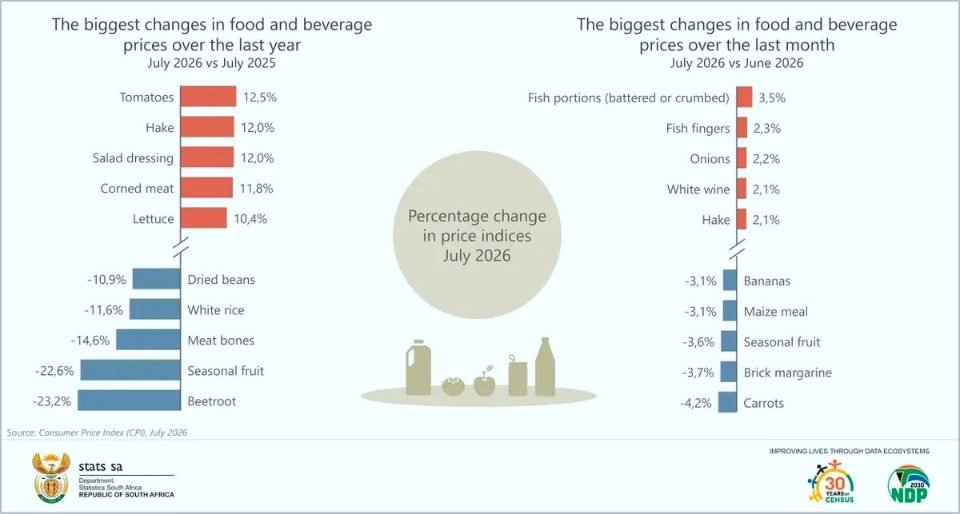
Food and non-alcoholic beverage inflation dropped to 0,9% in July, the lowest reading since June 2010.
Cereal products and meat led the improvement.
Cereal products recorded annual deflation of 2,0%. Maize meal prices fell 3,1% month-on-month, while macaroni declined 0,7% and white bread fell 0,6%.
Meat inflation also slowed sharply, falling to 1,5% from 5,1% in June. Several unprocessed beef products recorded lower prices.
The trend was not universal, however. Fish and seafood, vegetables, oils and fats, and dairy products all recorded higher annual inflation rates in July.
Lower tariffs and fuel prices ease cost-of-living pressures
Lower municipal tariff increases also eased some pressure on household budgets.
Electricity prices rose 8,1% this year, compared with 10,4% increase a year earlier. Water and refuse tariffs also increased at softer rates.
Fuel provided another source of relief. Annual transport inflation fell to 8,9% from 12,7% in June, following sharp monthly declines in petrol and diesel prices.
Petrol prices fell 7,1% between June and July, while diesel prices dropped 11,7%.
But the relief at the pumps has not erased the annual increase. Petrol remains 19,3% more expensive than a year ago, while diesel is up 28,8%.
Why the 4,3% inflation rate still matters
July’s inflation reading represents a significant improvement from June’s two-year high of 5,0%. It also puts headline inflation back within the South African Reserve Bank’s 3% to 6% target range.
However, 4,3% is still above the 3,5% level recorded earlier in the year.
Low fuel prices helped keep inflation at that level during the first quarter. Sharp fuel increases between April and June pushed headline inflation higher before the July reversal.
The latest figures therefore point to easing price pressures rather than a complete return to the lower inflation environment seen earlier in 2026.
For households, the immediate relief is clearest in food and fuel. But electricity, water, insurance and other essential costs continue to put pressure on household budgets.
ALSO READ: 2027 minimum wage review: government wants your say
For more on the prices affecting South African households, visit NOWinSA’s consumer news hub.